
How to Actually Value a CS2 Skin
Ask five tools what your skin is worth and you'll get five numbers spread 30% apart. All of them are "right" — they're just answering different questions. Valuation is knowing which question you're asking.
Start with the question, not the price
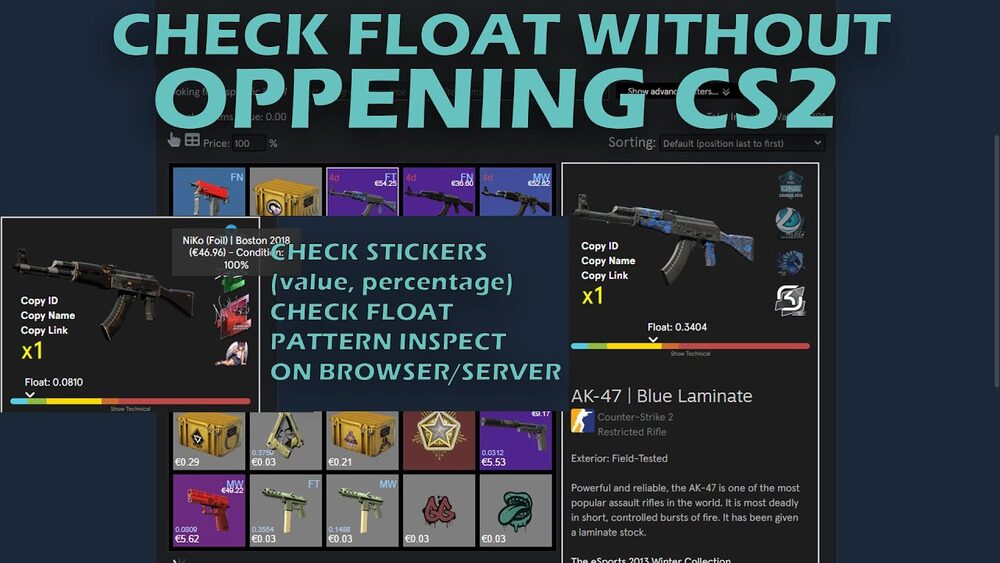
"What is this skin worth?" is really three questions. What could I sell it for today (liquidation value)? What would a patient sale fetch (fair market value)? And what does a comparable listing ask (replacement cost)? For a liquid item these numbers sit close together. For a rare pattern or a high-tier knife they can differ by half. Every valuation mistake in this market is someone using one number when they needed another — usually marking their inventory at asking prices and discovering the bid side at the worst possible moment.
The price source hierarchy
Not all quotes deserve equal weight. As of mid-2026 the working hierarchy looks like this:
- Chinese platforms (Buff, YouPin) — the marginal price setter. For most liquid skins, the deepest order books and the largest buyer pool sit in China. When western and Chinese prices diverge, western prices usually converge toward China, not the other way. If you weight one source most heavily for liquid items, weight this one.
- Cash marketplaces (CSFloat, DMarket, SkinBaron, etc.) — real, spendable prices. Sales here settle in withdrawable money, so they reflect what buyers actually pay in currency that exists outside Steam. Spreads between these venues are themselves information — see our marketplace comparison.
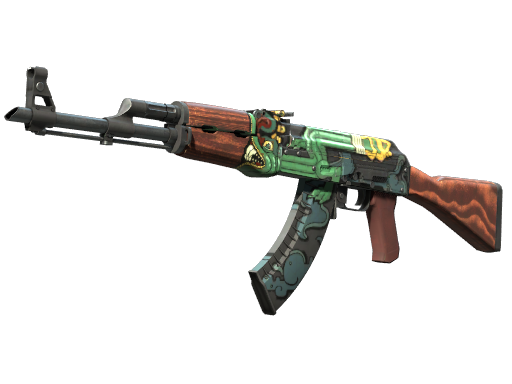
- Steam Community Market — a reference, not a value. Steam prices run structurally high because proceeds are trapped: sellers demand more wallet dollars than cash dollars, and the ~15% fee is baked into asks. A Steam quote overstates cash value by the full wallet-to-cash discount — commonly 20–30% for liquid items. Steam is excellent for one thing: volume history. The sales chart tells you how liquid an item really is.
Price aggregators that pull all of these into one view are the practical starting point; the data-stack article covers the tooling. But an aggregator gives you a base price for the generic item. The rest of valuation is adjustments.
The adjustment stack: float, pattern, stickers
Two listings of the same skin in the same wear tier are not the same asset. Three adjustment layers, in decreasing order of universality:
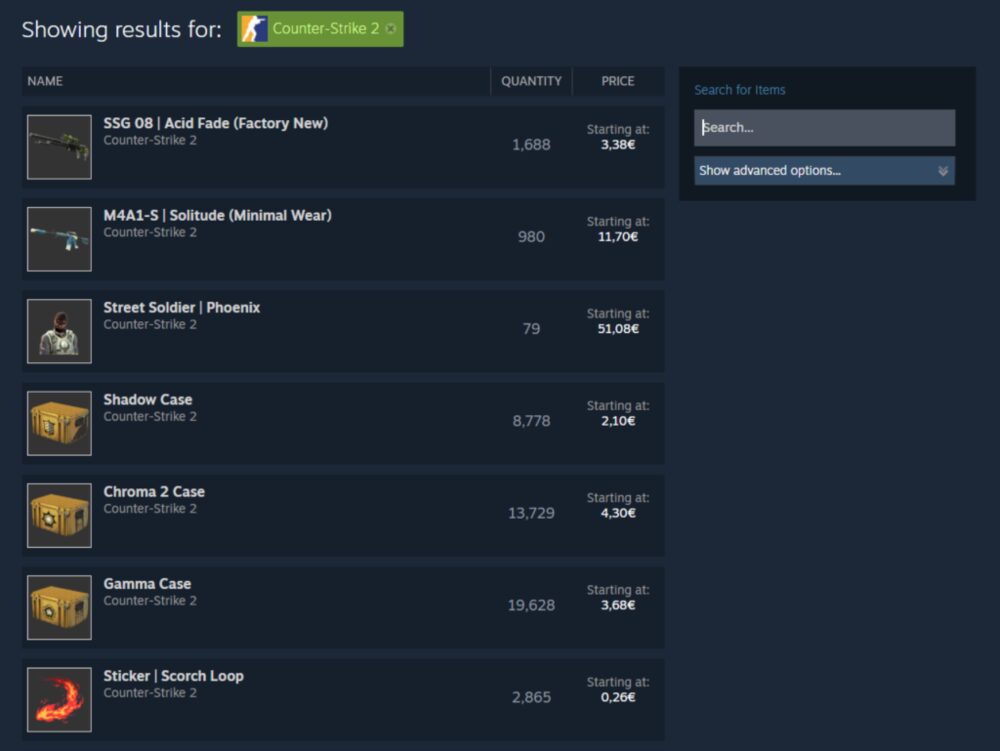
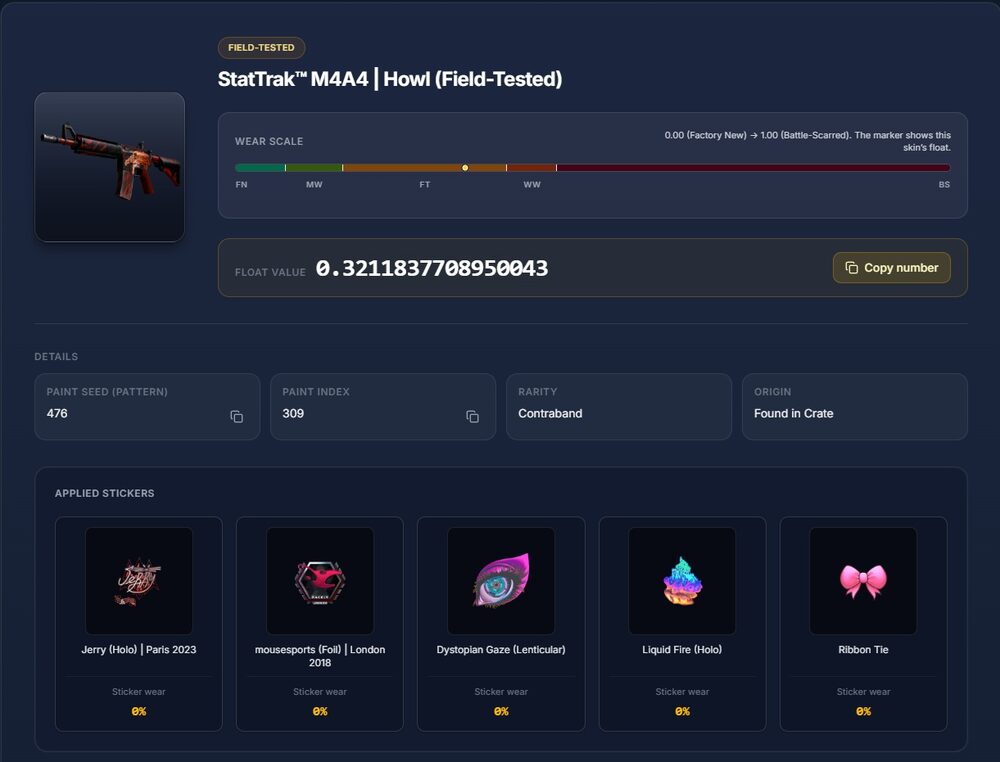
Float. Wear tiers are coarse buckets over a continuous 0–1 value, and the market prices the continuum, not the bucket. A 0.070 Minimal Wear and a 0.149 Minimal Wear carry the same label and can differ meaningfully in price; a 0.0009 Factory New can trade at multiples of an ordinary FN. Per-skin float caps make some wear tiers rare or impossible for specific skins, which creates premiums the bucket price never shows. The mechanics are covered in our float guide — for valuation purposes the rule is: always inspect the actual float, and price extreme floats against sales of comparable floats, not against the tier median.
Pattern. For most skins the pattern seed is worth nothing. For a handful — Case Hardened blue gems, Fade percentages, Crimson Web webs, Doppler phases — it's worth more than the skin. Pattern premiums are collector-driven and thinly traded, so comparable sales are scarce and stale; value conservatively and expect wide spreads. The taxonomy is in the pattern guide, and the extreme end of what patterns do to price is the $1.5M Karambit.
Stickers. The market's least efficient corner. The default is brutal: applied stickers usually add a small fraction of their standalone value. The exceptions — clean Katowice 2014-era crafts, matching quads on grail skins — can multiply an item's price. In between sits a judgment zone where "sticker percentage" arguments settle trades. Unless a craft has documented comparable sales, value the skin as if the stickers add 5–15% of their capsule price and treat anything more as upside.
The liquidity haircut
The final adjustment is the one trackers never apply: how fast do you need the money? Liquidity varies enormously by tier — a $2 case exits in seconds at the quoted price, a $200 knife in days with mild negotiation, a five-figure pattern in months through brokers. A reasonable rule of thumb for marking a portfolio honestly:
| Item type | Mark at | Typical time to exit at that mark |
|---|---|---|
| Cases, liquid capsules | Cash-market bid, roughly as quoted | Minutes to hours |
| Popular skins, low-tier knives | ~5–10% under cash asks | Days |
| High-tier knives, gloves | ~10–20% under asks | Weeks |
| Rare patterns, grails | Last verified comparable sale, minus a real margin | Months |
This is also why the composition of a portfolio matters as much as its headline number — a book of cases marked at $5,000 and a single grail marked at $5,000 are very different $5,000s, a point developed in the diversification guide.
A worked habit, not a formula
In practice, valuing an item takes two minutes once the habit forms: pull the aggregator base price, weight toward Buff and cash markets, inspect float and pattern, discount the stickers, then apply the liquidity haircut for your time horizon. Do it before every buy and you'll stop overpaying for tier medians; do it before every sale and you'll stop anchoring on Steam asks nobody pays in cash. The traders who consistently buy well aren't running better models — they're just refusing to act on a single number. That same discipline is why systematic accumulation strategies like DCA compare prices across venues on every single purchase: small valuation edges, repeated hundreds of times, are the whole game.