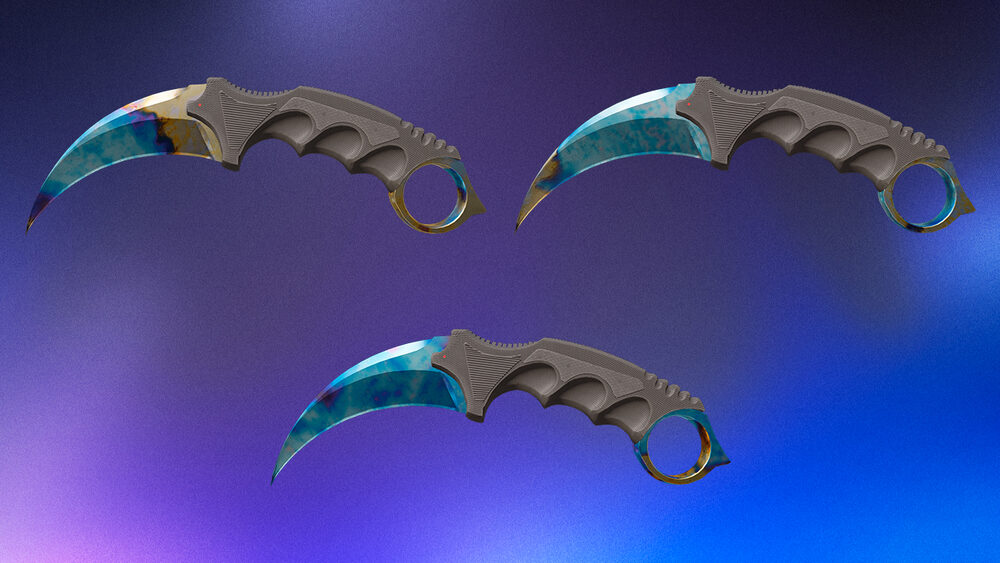
The $1.5M Karambit: Case Hardened Pattern 387
One knife, one seed number, and a standing refusal of seven figures. Pattern 387 is what happens when a random integer becomes the rarest object in a multi-billion dollar economy.
Why one number out of a thousand matters
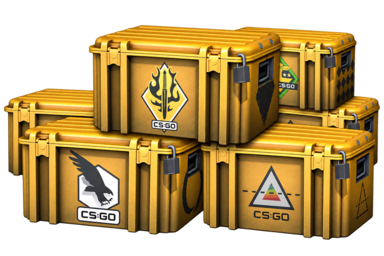
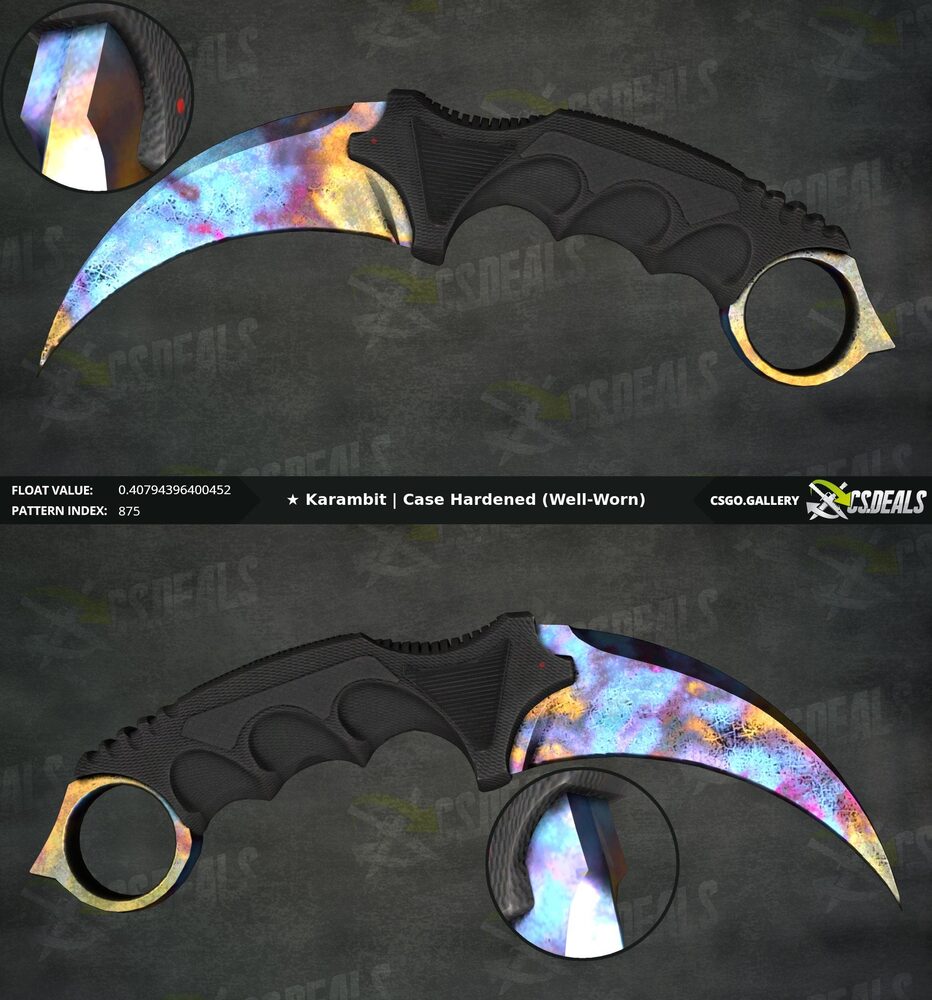
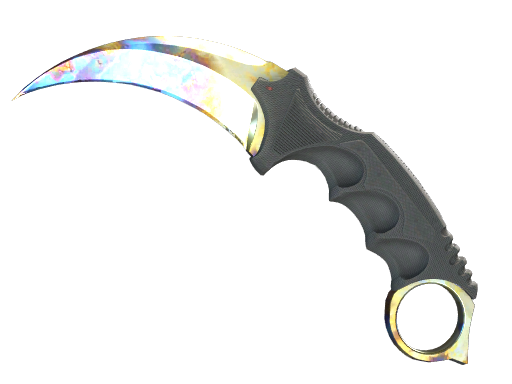
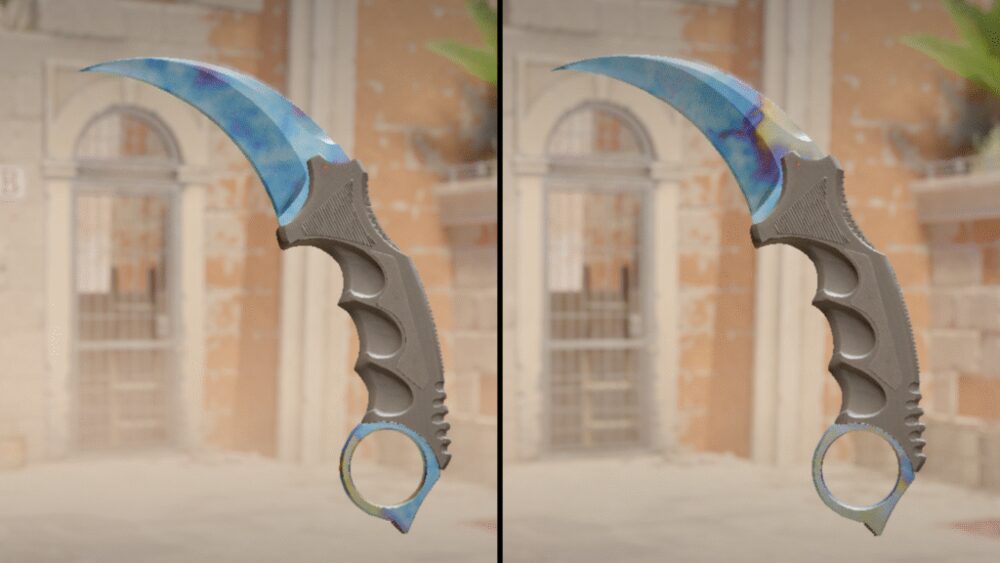
Case Hardened is one of the original finishes from the 2013 Arms Deal update, shipped in the very first CS:GO Weapon Case. The finish is a single mottled texture of blue, purple, and gold, and every item carries a pattern index from 0 to 999 that decides which slice of that texture lands on the weapon. Most seeds produce a muddy mix. A handful line up so that the visible side — the playside — comes out almost entirely blue. The community calls these blue gems, and it has spent a decade cataloguing every seed on every weapon into tier lists ranked by playside blue percentage. The pattern system was never designed to create rarity; it created it anyway, and more of it than Valve ever put into drop odds.
On the Karambit, the consensus number one is pattern 387. The playside blade is effectively solid blue, edge to spine, with none of the gold bleed that knocks lesser seeds down the tier list. There is no second copy waiting to be unboxed at a better float — every Karambit 387 that exists is the population, and the famous one is a specific, known knife.
The knife that said no to $1.5 million
The specimen everyone means when they say "the 387" was unboxed in the mid-2010s and has sat with a collector well known in the blue gem scene ever since. Over the years it has reportedly drawn offers of $1.5 million and above — all refused. No verified public sale has ever taken place, which is exactly why every serious write-up, including this one, keeps the word reportedly attached. What is not in dispute is its status: it is routinely described as the most expensive Counter-Strike item known, ahead of souvenir Dragon Lores and Kato 14 crafts on every credible list of the biggest items in the game.
A price that has never been paid is still a price. The refused offer is the only quote the market has — and the market treats it as a floor, not a ceiling.
That is the strange accounting of grail items. With no sale, there is no realized price, no comps, and no way to mark the item to market in any honest sense. The valuation rests on a chain of reported private offers, and on the owner's continued refusal — which itself signals that insiders believe the number keeps going up.
Context makes the number less absurd than it first sounds. The knife sits at the intersection of every scarcity vector the game has: the rarest item class (a knife, back when a ★ drop broke forums), from the first case ever shipped, on the finish with the deepest pattern culture, at the consensus best seed for that weapon. Nothing else in the economy stacks all four. Whoever eventually buys it isn't buying pixels — they're buying the single most documented object in a market that runs on documentation.
How blue gem culture prices the unpriceable
Beneath the one famous knife sits an entire valuation subculture, and it is more rigorous than outsiders expect. As of mid-2026 the working framework looks like this:
- Tier lists. Community databases assign each seed a tier (Tier 1 down to Tier 3 and unranked) per weapon, based on playside blue coverage. A Tier 1 AK seed means nothing on a Karambit — every weapon maps the texture differently.
- Playside versus backside. The side you see holding the weapon carries nearly all the value. A full-blue backside with a gold playside is a curiosity, not a gem.
- Float interaction. Wear dulls the blue toward grey, so float and pattern multiply rather than add. A Factory New Tier 1 is a different asset class from the same seed at Field-Tested.
- Screenshot services. Because in-client inspection lighting flatters some seeds and buries others, standardized screenshot tools are the de facto grading system — the closest thing skins have to third-party authentication.
It is provenance culture, in other words — closer to how the art market treats a named painting than how the Steam Market treats a commodity skin. That is also the strongest argument in the skins-as-asset-class debate: pattern rarity is verifiable on-chain-style, in the item's own immutable seed.
The liquidity problem at the top
The 387 also illustrates the ceiling of this market's liquidity. The pool of people able and willing to wire seven figures for a virtual knife is tiny, the venues that can escrow such a deal are informal, and every transaction is a bespoke negotiation between collectors who mostly already know each other. Compare the tiers below and the pattern is obvious: the rarer the item, the less its quoted price means.
| Item tier | Example | Exit reality |
|---|---|---|
| Commodity | Any FT Case Hardened Karambit | Sells in hours at a known price |
| Ranked gem | Tier 2–3 blue seed | Sells in weeks to pattern collectors |
| Named grail | Karambit 387 | No market — only reported offers, years apart |
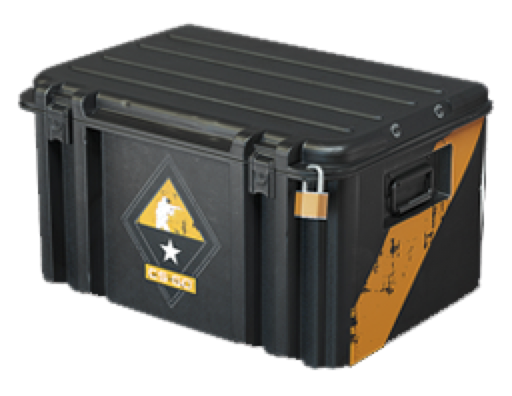
For everyone who is not the owner of the 387, the practical lesson is about position structure, not knives. Grails are lottery tickets that already won; buying into that tier means buying illiquidity and story risk. The boring end of the same market — sealed cases with measurable supply and daily volume — is where valuation actually works and exits actually clear. The 387 is the market's Mona Lisa: proof of what the ceiling looks like, and proof that you don't build a portfolio out of ceilings.