Pattern Seeds Explained: Blue Gems, Fades, and Full Webs
Float tells you how worn a skin is. The pattern seed tells you which of up to a thousand versions of the texture you got — and on a handful of finishes, that lottery is worth more than a house.
How the seed works
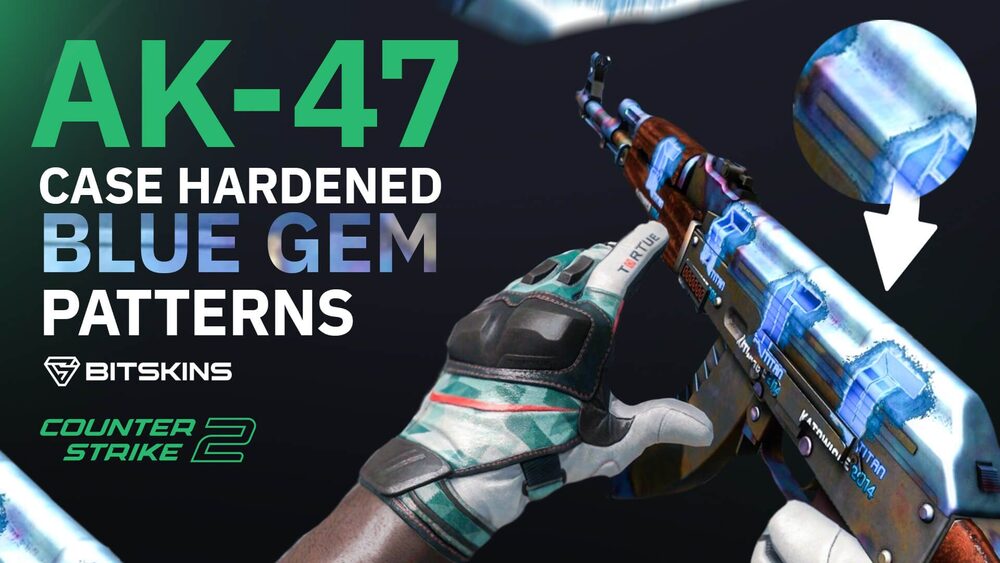
Alongside its float, every skin instance carries a pattern index — an integer from 0 to 1000, rolled at creation and fixed forever. The seed controls where the finish's texture is positioned when it wraps onto the weapon model. For most skins this is trivia: a Redline is a Redline at seed 42 or seed 942, because the texture is uniform enough that placement doesn't matter. Value lives in the exceptions — finishes where the texture varies dramatically across its surface, so the seed decides which part of it lands on the visible side of the gun.
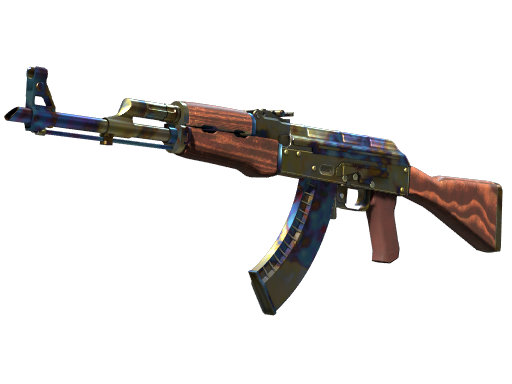
That's the entire mechanism: a deterministic texture offset. Everything else — blue gems, full fades, centered webs — is the community assigning a price hierarchy to the outcomes.
Because the seed is rolled fresh whenever an item is created, trade-up contracts are a legitimate pattern-hunting instrument: ten cheap inputs buy you a new roll on the output's seed. Dedicated hunters run Case Hardened trade-ups in bulk precisely because the expected value of the occasional high-tier blue outcome can carry dozens of dud rolls — a lottery, but one with published odds of exactly 1-in-1001 per specific seed.
Case Hardened and the blue percentage
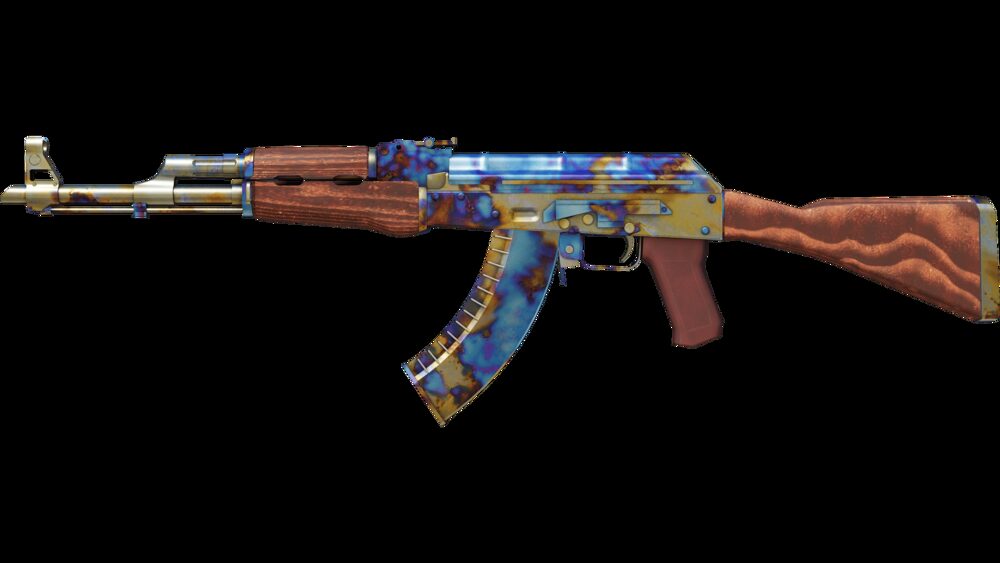
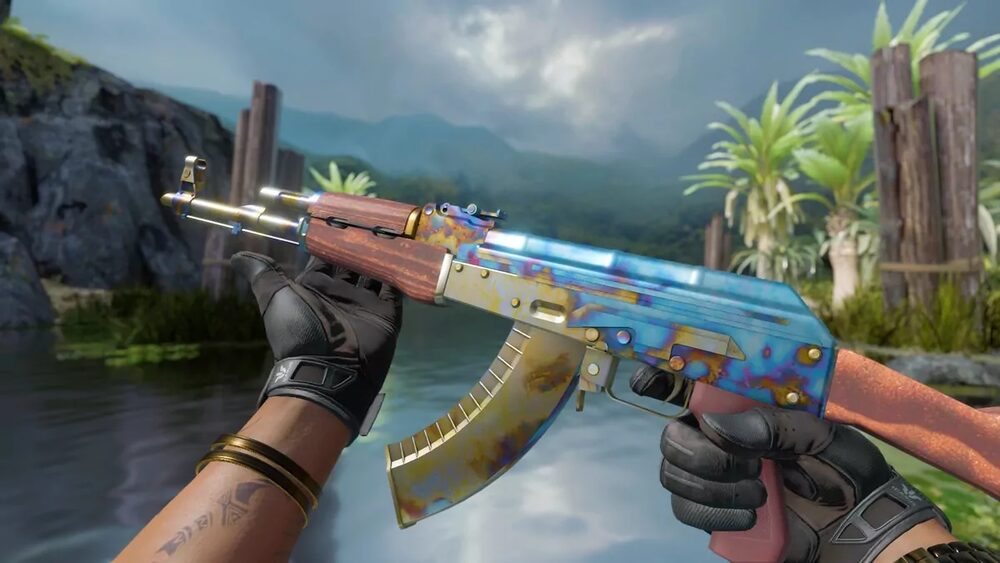
Case Hardened is the pattern market's founding asset, shipped in the very first case in 2013. Its texture is a mottled sheet of blue, purple, and gold; most seeds serve up the gold-heavy sludge, a few serve up mostly blue — and "blue gems" were born. The community grades them by playside blue percentage, with tier lists, seed databases, and genuine price discontinuities between "90% blue" and "95% blue."
The ceiling is famous: pattern 387 on a Karambit — a nearly full-blue playside — whose owner reportedly declined offers north of $1.5 million. On rifles, the scar pattern, #661, turned a $50 AK into a six-figure asset. These aren't different skins from the base item in any mechanical sense. Same finish, same odds at creation; the seed did all of it.
The rest of the pattern zoo
Case Hardened is the deepest pattern market, but not the only one:
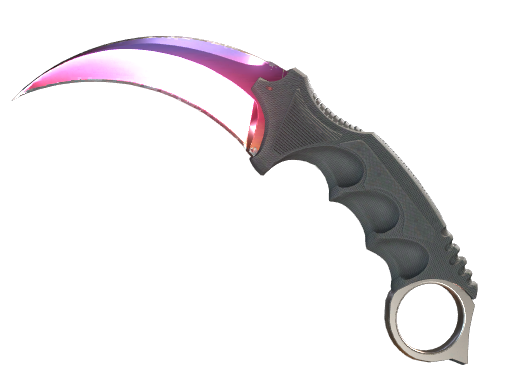
- Fade percentages. Fade skins run a gradient, and the seed decides how much of the rare end (typically the pink/purple) survives onto the model. "Full fades" — conventionally 98–100% — carry a clean premium over 80% copies, and the grading is unusually objective as pattern metas go.
- Crimson Web. Value scales with web count and placement: a single centered web on the playside outprices a copy whose webs hide on the underside. On knives this stacks brutally with float, which is how the StatTrak M9 Crimson Web FN became a unicorn.
- Doppler phases. Dopplers are technically different paint indexes rather than seed outcomes, but the market treats them as one family: Phases 1–4, then the gems — Ruby, Sapphire, Black Pearl — introduced with the Chroma cases and priced at multiples of the ordinary phases.
- Marble Fade fire & ice. On knives, seeds that produce clean red-and-blue transitions with no yellow — "fire and ice" — top the hierarchy, with the rarest first-max variants commanding grail prices.
| Finish | What the seed controls | Grail form |
|---|---|---|
| Case Hardened | Blue/gold coverage | Full blue playside ("blue gem") |
| Fade | Gradient position | 100% full fade |
| Crimson Web | Web count & placement | Centered triple web |
| Marble Fade | Color transition mix | Fire & ice |
Checking a pattern before you pay for it
The pattern index is readable from any item's inspect link, and the tooling around it is mature: seed databases with playside renders per pattern, screenshot services, and marketplace filters that let you search by seed directly. Before paying any pattern premium, verify the seed yourself and check it against the community tier lists — a listing calling itself a "blue gem" is marketing until the render says otherwise. The relevant tools are covered in our data stack guide, and remember that pattern is only one axis: float can make or break the same seed, since wear physically degrades the pattern you're paying for.
The market reality
Pattern premiums are pure social consensus. Nothing in the game acknowledges that 387 is special; the price rests entirely on a community agreeing about blue percentages, and tier metas have shifted over the years. Liquidity is correspondingly thin — a top blue gem can take months to sell because its buyer pool is a handful of collectors, while the generic copy of the same skin moves in minutes.
What the top of the market does have is provenance culture. Grail-tier patterns are tracked items: their ownership histories are documented, big sales are community events, and a known name in an item's past genuinely adds to its price. That makes the high end behave more like the art market than a commodity market — negotiated, relationship-driven, and mostly settled in private rather than on an order book.