StatTrak: What the Orange Counter Is Really Worth
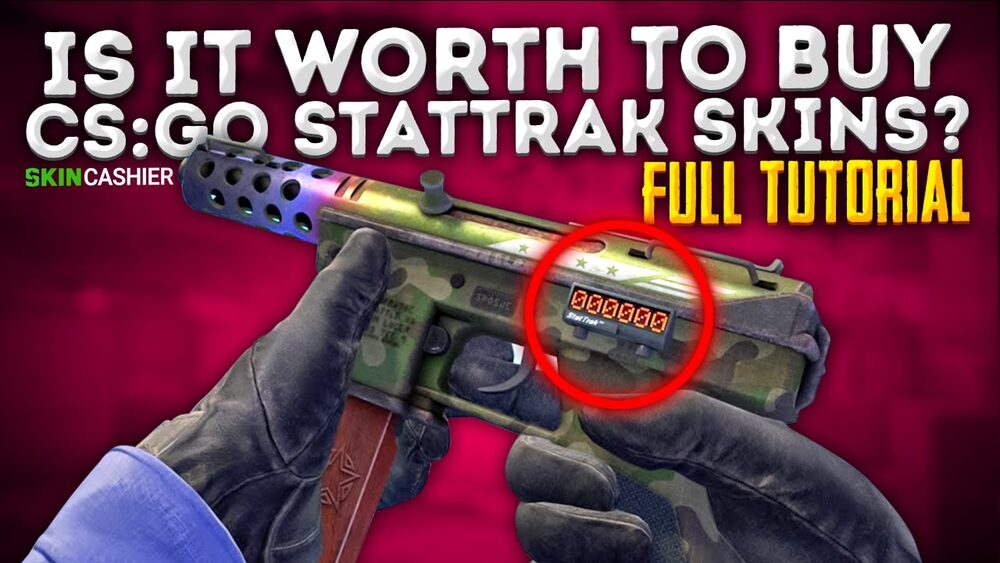
StatTrak is the market's simplest rarity multiplier and its most misunderstood one. The same orange module adds 20% to one item and 300% to another — and on a few items it subtracts.
Where the scarcity comes from
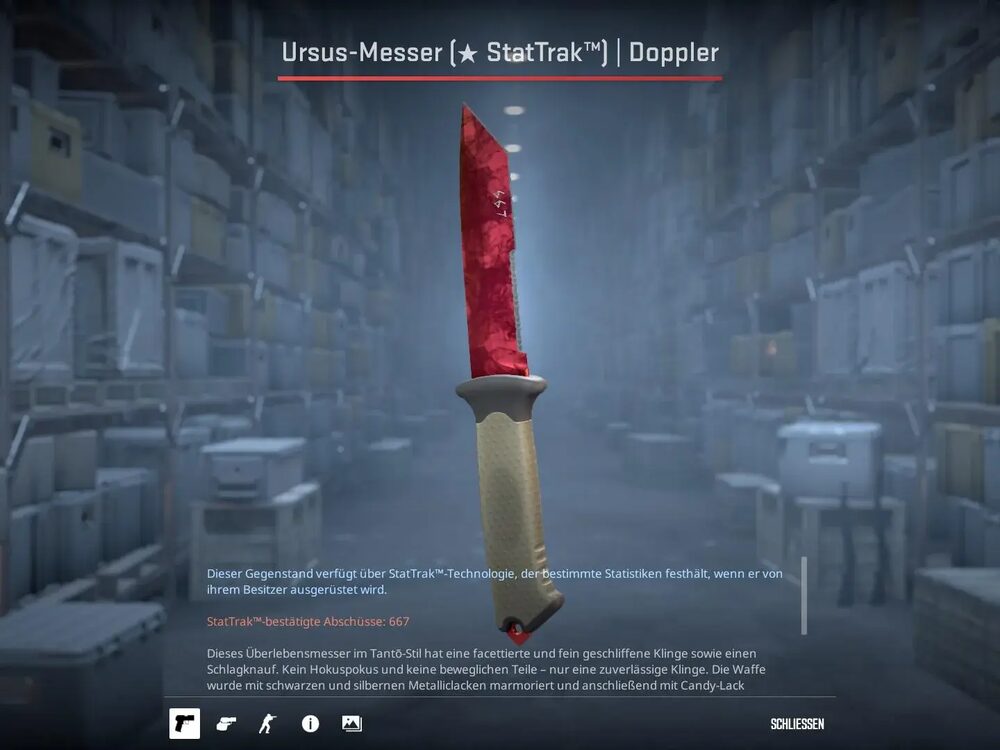
Roughly 10% of case unboxings come out StatTrak. That single number does most of the work: for every StatTrak copy of a skin, about nine non-ST copies exist from the same case. A fixed 1-in-10 supply ratio across every quality tier means the counter is a uniform scarcity layer stacked on top of everything else — wear, float, pattern. And because the ratio is set at unboxing, StatTrak supply inherits the same burn dynamics as the cases themselves: when a case is discontinued and openings slow, new ST supply of its contents slows with it.
The naive conclusion — "9x scarcer, so it should cost more" — is where most people stop. The market doesn't price scarcity; it prices scarcity times demand. StatTrak demand is wildly uneven across item classes, and that's the entire story of the premium.
The premium, by item class
Numbers below are directional patterns, not quotes — the spread moves with the market. But the ordering has been stable for a decade.
| Item class | Typical ST premium | Why |
|---|---|---|
| Knives | Modest — often 10–30% | Knife buyers pay for the finish and float; the counter is incidental |
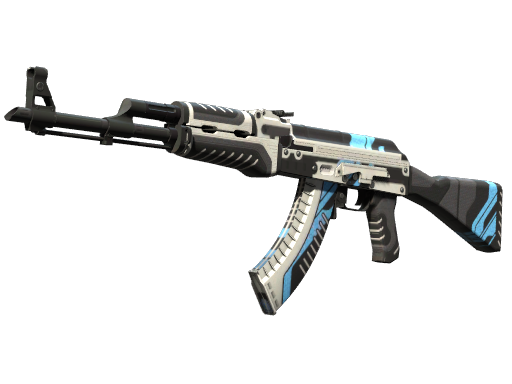
| Popular rifles (AK, M4, AWP) | Strong — often 50–150% | These are the guns people actually rack kills on; ST is a flex that gets used |
| Pistols and utility SMGs | Weak to negligible | Low emotional attachment; few people care about a counted P250 |
| Grail-tier rifles | Extreme — multiples, not percentages | Tiny ST populations meet collector demand; see below |
The pattern is demand-side, not supply-side. Everyone's ST supply is the same ~10%; what differs is whether anyone wants their kills counted on that item. A StatTrak AK-47 Redline is a status object. A StatTrak Negev is a curiosity.
Wear interacts with the premium too. The ST multiple tends to be strongest on wear tiers people actually play — Field-Tested and Minimal Wear rifles — and softest at Battle-Scarred, where buyers are already optimizing for price over presentation. At the Factory New end it depends on the item: on playable skins the FN + ST combination stacks two premiums, while on display-tier items the collector logic below takes over. If you're comparing ST premiums across listings, always compare within the same wear tier, or the float effect will contaminate the read.
Where StatTrak actually hurts
There are corners of the market where the counter is a liability:
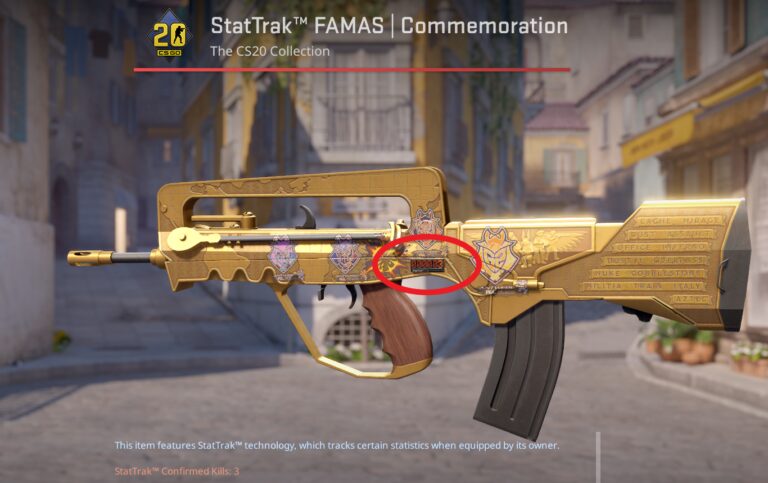
- Souvenir-adjacent and collector aesthetics. Some buyers of clean, high-value display pieces consider the orange module visual clutter. On items bought to be looked at rather than played, ST can narrow the buyer pool.
- Sticker-craft canvases. Crafters hunting a specific look sometimes skip ST versions — the module competes with the craft for attention, and the ST premium inflates the base cost of an item they intend to "ruin" with applied stickers anyway.
- Liquidity. Even where the premium is real, ST versions trade thinner. Fewer copies means wider spreads and slower exits — a real cost if you ever need to sell into a bad week.
The swap tool and what it does to fungibility
One more supply nuance: not everything can be StatTrak. Souvenir items never carry the counter, collection drops don't roll it, and some item classes (gloves, most agents-era cosmetics) exist outside the system entirely. StatTrak is specifically a case-unboxing phenomenon — which means its supply is coupled to case-opening volume, and slows whenever opening activity does.
The StatTrak Swap Tool — a purchasable item — lets you move a counter between two copies of the same weapon and skin. Its market effect is subtle but real: it makes the ST module semi-portable within a skin line, which arbitrages away float-based mispricings. If a battle-scarred ST copy trades far below the "module value" implied by the FN version, someone will eventually buy the cheap ST, buy a clean non-ST, and swap. As of mid-2026 this keeps the implied price of the module itself roughly consistent across wear tiers of liquid skins — one of the market's quieter examples of tooling enforcing price coherence.
StatTrak on grails: where percentages break down
At the top of the market, ST stops being a premium and becomes its own asset class. Take the Case Hardened pattern #661: a StatTrak copy with the right pattern is a set-intersection so small that single units make news — one reportedly traded around $400k in the 2021 era. The StatTrak M9 Crimson Web in Factory New is the canonical unicorn: float, pattern, and the 1-in-10 ST roll all have to land at once, and only a handful exist. On these items you can't talk about an "ST premium" — there's no liquid non-ST comparable at the same pattern-and-float tier to measure against. Pricing becomes an auction among a dozen people, which is a different game entirely; the biggest recorded sales are full of ST line items for exactly this reason.
For portfolio purposes, treat these as collectibles with skin-shaped wrappers: enormous upside variance, near-zero liquidity, and valuation by comparables that barely exist. If your strategy is systematic accumulation — the DCA-into-cases playbook — grail-tier ST is the opposite end of the spectrum: sized as a lottery ticket, never as a core position.
The practical takeaway for everyone else: when valuing a skin, price the ST module separately in your head. Ask what the non-ST copy is worth, then ask whether this specific item class carries a real counter market. If the answer is "not really," the orange text is decoration you're being asked to pay for.