
The Deflationary Mechanics of CS2 Cases
Every case opened is a case that no longer exists. Every week, fewer replace it. That one-way ratchet is the closest thing the skin market has to a law of physics.
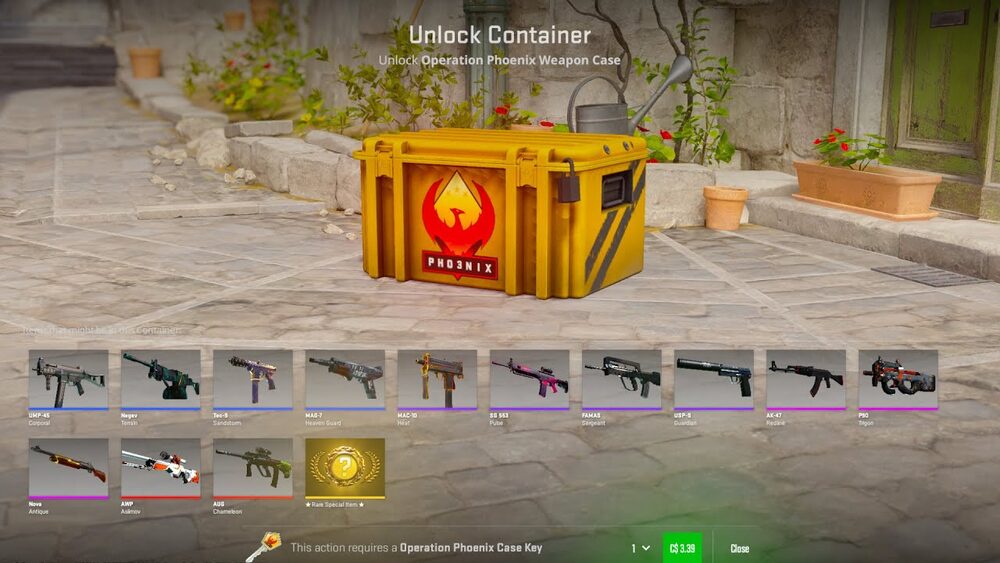
Opening is burning
Start with the mechanic everything else hangs on: a case is consumed when it's opened. The skin comes out; the container is destroyed, permanently and irreversibly. There is no re-minting, no reissue of that unit, no way to put the skin back in. In crypto terms, every key turn is a burn transaction — except the burn rate isn't set by a protocol, it's set by millions of players' appetite for gambling, an appetite that has never shown signs of fading.

This is what separates cases from nearly every other collectible. Sealed trading-card boxes get opened too, but printers can run again. Valve never reprints a case; once a design's inflow stops, the population only moves in one direction. The expected value of opening is famously terrible for the opener — but every opener is doing supply-side work for every holder.
The drop pool: how new cases enter
Inflow is just as engineered as the burn. Cases don't come from a store shelf; they drop to players as they play, and Valve throttles this hard:
- Weekly limits. Case drops are gated by a weekly reward cadence per account — playtime beyond the cap earns nothing. Inflow scales with the number of active players, not with how much anyone plays.
- The active pool. At any moment, only a handful of recent cases drop at normal rates. This is where supply floods happen and why new releases crash to cents and stay there for years.
- The rare pool. Since Valve's 2021 drop-pool rework, older cases were moved to a "rare" pool with drastically reduced drop odds. They still technically drop — but so infrequently that inflow became a rounding error next to daily openings.
- Gated channels. The Armory system added a paid, grind-limited channel for specific cases — supply that's metered by pass sales rather than playtime.
Put burn and inflow together and each case sits somewhere on a spectrum. Active-drop cases are inflationary: drops outpace openings, prices pin near the floor. Rare-pool cases are deflationary: openings outpace the trickle, and the float shrinks every single day. The market's entire blue-chip tier is just the far end of that spectrum — cases like Bravo whose inflow effectively ended years ago, mapped in our supply ranking.
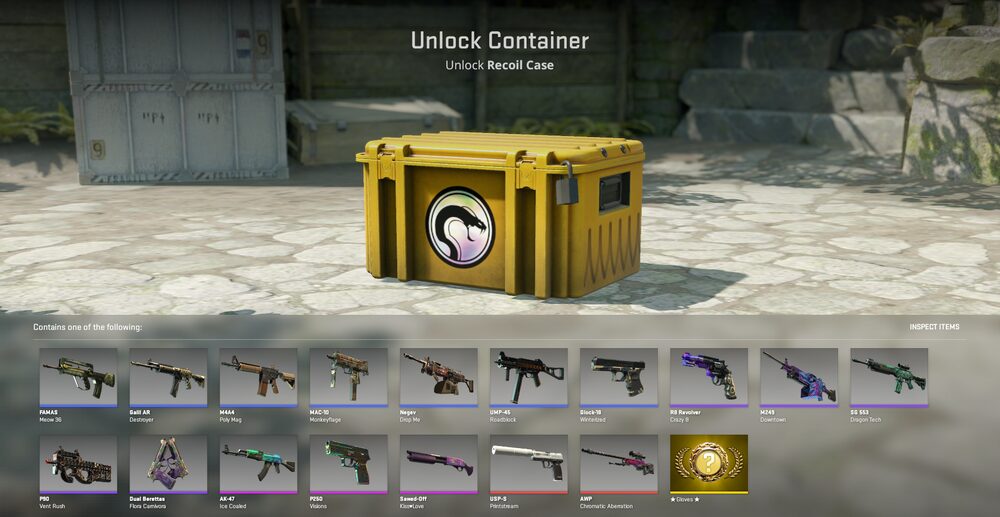
Watching the ratchet turn
The burn isn't hypothetical — it's visible. Opening volume can be inferred from the constant stream of unboxed items entering the market, and case-supply trackers that sample Steam Market listings show the same picture for rare-pool cases year after year: listings thin out, price floors step up, and sell-offs get absorbed faster each cycle. When a rare-pool case dips on a market-wide scare, the recovery is usually quicker than for active-drop cases for a mechanical reason — every day of the dip, openers were still burning supply into it. Time works for the holder in a way that has no equivalent in most markets.
The demand side never got the memo
A shrinking float only matters if demand holds. It has done better than hold. Counter-Strike's player base kept setting concurrent records through the CS2 era, and more players means more of everything that consumes cases: more opening-video viewers, more gamblers, more collectors, more first inventories. More players also means more weekly drops — but drops only add active-pool supply, while new demand reaches every case ever made. The asymmetry compounds quietly, which is how the market produced the 2021–2026 growth story without a single dramatic supply event.

The asterisk: Valve owns the ratchet
The honest version of this thesis includes its failure mode. The burn is a game mechanic, and the company that wrote the mechanic can rewrite it. Valve has already demonstrated every lever: it moved cases into the rare pool in 2021 (bullish for those cases), rerouted supply through the Armory in 2024 (bearish for the cases it revived), and repriced adjacent markets overnight with the 2025 trade-up update. A case's "discontinued" status is a policy, not a promise.
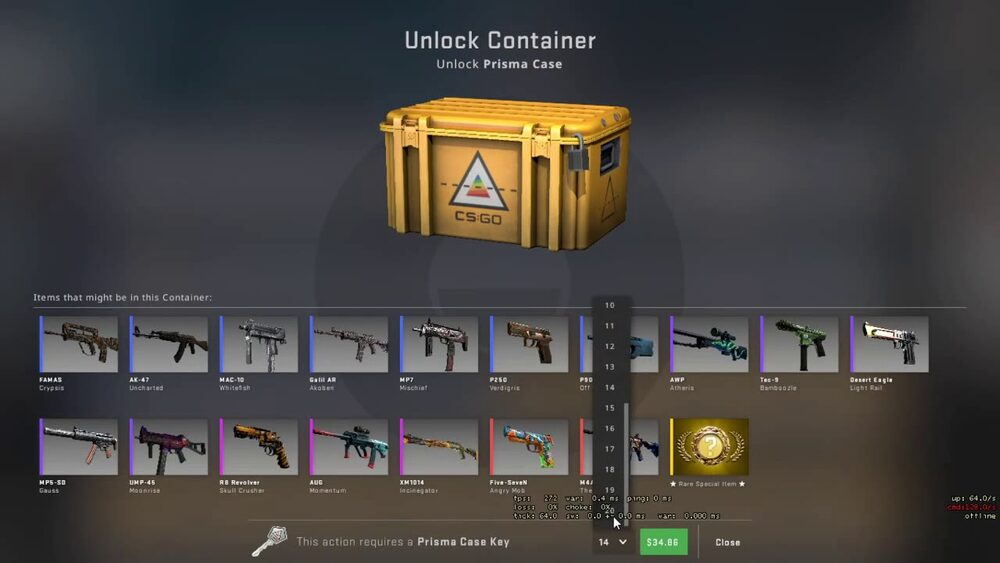
Scarcity that depends on one company's restraint is still scarcity — it has just never been tested by that company needing money badly.
In practice, the market prices this as a background risk and mostly ignores it, because Valve's incentives lean toward protecting the economy that funds its ecosystem. But it's the reason case portfolios diversify across many designs instead of concentrating in one, and the reason steady accumulation beats all-in entries: if a patch note ever hits your case, you want it to be one line of your ledger, not the whole thing. That, in miniature, is the argument behind DCA-ing into cases rather than sniping them.
As of mid-2026, the ratchet is intact: openings keep burning, the rare pool keeps trickling, and the oldest cases keep getting scarcer. It's the simplest structural story in the market — and the one every other article on this site eventually points back to.