
Why Discontinued Cases Are the Blue Chips of CS2
Most assets in this market are stories. Discontinued cases are arithmetic: supply only goes down, and it has never once gone up.
The moment the economics flip
While a case sits in the active drop pool, it's an inflationary asset. Millions of weekly drops land on the ask side, and price is pinned to the floor where opener demand meets that flow — the plateau phase of the standard case lifecycle. The day Valve rotates it out of active drops, the equation inverts. Historically, rotated cases moved to a "rare" drop tier where they appear only as an infrequent alternative to active drops — a trickle against the prior flood.
Meanwhile the burn continues at full speed. Every opening consumes a case permanently; there is no re-mint, no reissue, no secondary print run. A discontinued case is a fixed-and-shrinking float facing a player base that has kept growing through the CS2 era. That's the entire thesis, and it's why the deflationary mechanics of old cases get compared to a burn schedule: openings are the burn, and the rate is set by gambling demand that has proven remarkably durable.
The track record
The reason "blue chip" stuck as a label is that the oldest discontinued cases have the longest and cleanest appreciation curves in the market:
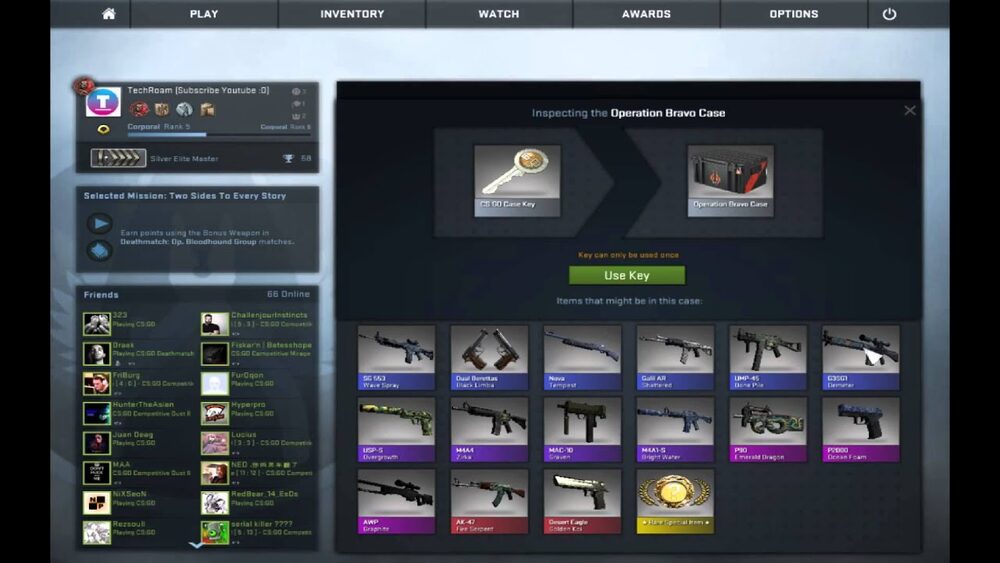
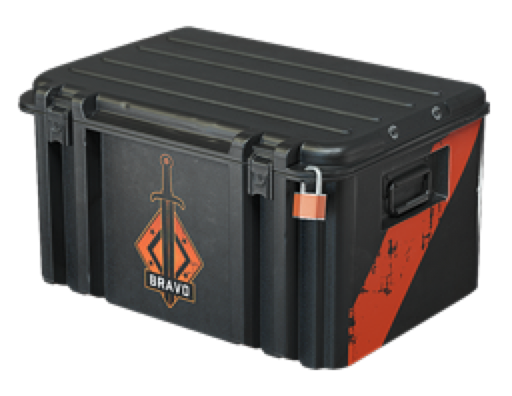
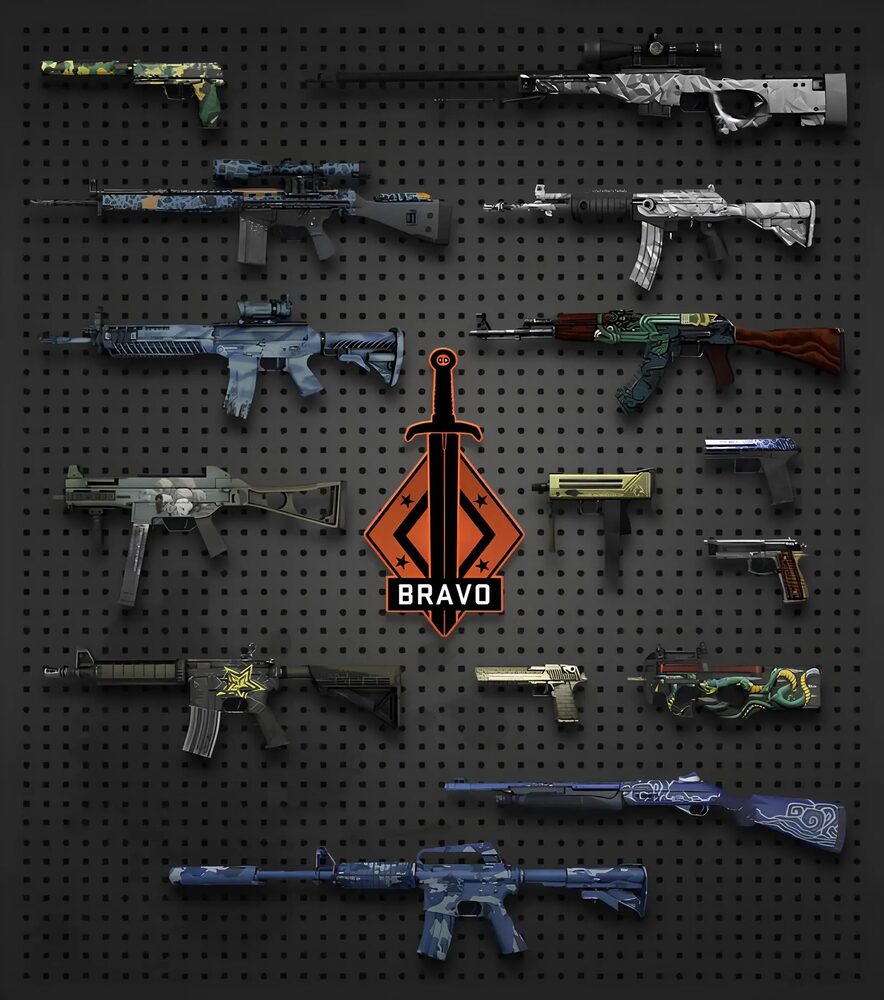
- Operation Bravo Case — operation-exclusive drops in 2013, home of the Fire Serpent. From under a dollar in its drop era to a persistent grind into the tens and then dozens of dollars; per third-party trackers it's compounded across a full decade with drawdowns that recovered every time.
- CS:GO Weapon Case (and Weapon Cases 2–3) — the original 2013 series. Weapon Case 1's first-edition status and thin surviving float have made it one of the strongest long-horizon performers in the economy.
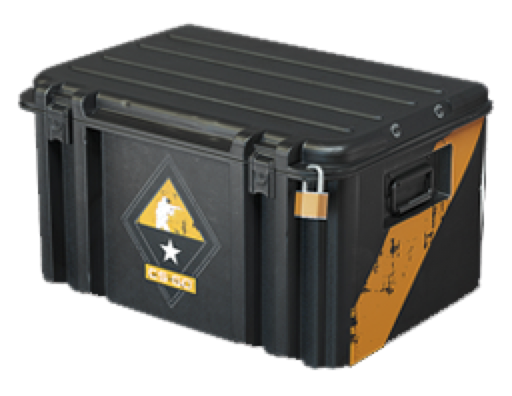
- eSports 2013 series — among the thinnest supply profiles of any case line, with volatility to match. Small absolute float means single large buyers can move the price.
- Post-2016 operation and rotation cases — Glove Case, Spectrum-era, and later rotations repeated the pattern at smaller magnitudes: removal, quiet accumulation, repricing.
Exact multiples vary by tracker and by whether you measure from the drop-era floor or the removal date, but the direction has been consistent: across the 2021–2026 window, discontinued cases as a group outpaced almost every other sub-class of the skin economy, with many older cases reportedly compounding at rates that embarrass traditional assets. The pattern has repeated often enough — across different vintages, different contents, different market regimes — that it's hard to attribute to the contents of any single case. The common factor is the supply mechanic, not the knife inside.
Why the demand side doesn't dry up
Shrinking supply only matters if demand persists, and case-opening demand has outlived every prediction of its death. Three structural supports:
- Openers don't price-discriminate much. The gambling appeal of a case is its contents, not its unit cost. A case going from $2 to $8 doesn't proportionally reduce opening volume the way an $8 sandwich would reduce lunch sales.
- Contents age into desirability. Old cases contain discontinued knife finishes and skins that no longer drop anywhere else. As those skins appreciate, the case becomes a lottery ticket on more valuable prizes — which supports more opening, which burns more supply.
- Collector demand stacks on top. First-edition and operation-exclusive cases carry a provenance premium independent of opening EV, the same dynamic that drives the rarest case tiers.
The risks the thesis glosses over
Blue chip does not mean risk-free, and the honest version of this article lists what can break it.
| Risk | Mechanism | Precedent |
|---|---|---|
| Drop reactivation | Valve returns a case to active drops; supply flood resumes | Valve has reshuffled rare drop pools before; any rotation is a patch note away |
| Distribution changes | New systems change how old cases enter circulation | The Armory update put select older cases behind credit redemption, adding supply where none was expected |
| Market-wide shocks | Update-driven crashes correlate everything | The 2025 trade-up update repriced entire asset classes in hours; cases weren't exempt from the turbulence |
| Platform risk | Items exist at Valve's discretion, full stop | The 2019 key ban showed Valve will freeze an asset class overnight when policy demands it |
How investors actually play it
The standard structure treats discontinued cases as the mid-and-top tiers of a case ladder: cheap recently-rotated cases for volume, established mid-tier discontinued cases for the core position, and a small slice of Bravo-tier veterans for the long hold. Diversifying across several cases and vintages blunts the single-case reactivation risk, and buying on a schedule rather than in lumps smooths entry into an asset class that repriced violently around every major Valve update.

Timing matters less here than in any other corner of the market, but entry price still compounds. The same discontinued case routinely shows a few percent of spread between Steam and cash marketplaces at any given moment, and because a blue-chip position is built from hundreds of small buys over months, venue selection is one of the few edges that's fully within your control. Paying 4% less on every purchase is mathematically identical to the case appreciating 4% more — except it's guaranteed.
Liquidity is the underrated advantage. Unlike pattern grails or high-tier knives, discontinued cases trade in deep, continuous markets across Steam and third-party venues — thousands of units a day for the popular ones, per marketplace listings. You can build a five-figure position a few dollars at a time, and unwind it the same way. Blue chips aren't just the assets that go up; they're the ones you can actually exit.