
Building a Case Ladder: A Budget-Tiered Buying Plan
One case is a bet. A ladder is a portfolio: cheap volume at the bottom, supply squeezes in the middle, blue chips on top — each rung doing a different job.

Why a ladder instead of a single pick
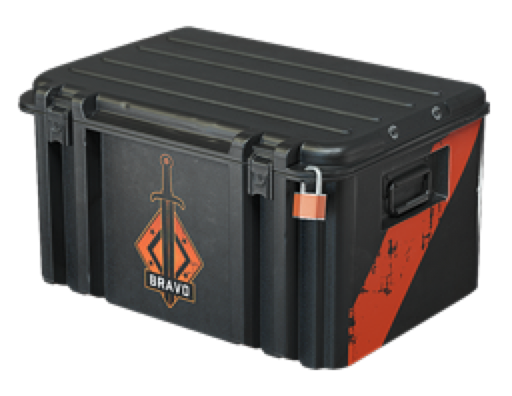
Most case investors start by hunting for "the best case" and putting everything into it. The problem is that no single case is best at everything. Cheap active-drop cases give you unit volume but face ongoing supply. Discontinued mid-tier cases have the deflationary supply mechanics working for them but cost more per unit. Old blue chips like Operation Bravo have the longest track record and the thinnest supply — and the highest ticket, the widest spreads, and the least room to be wrong on entry.
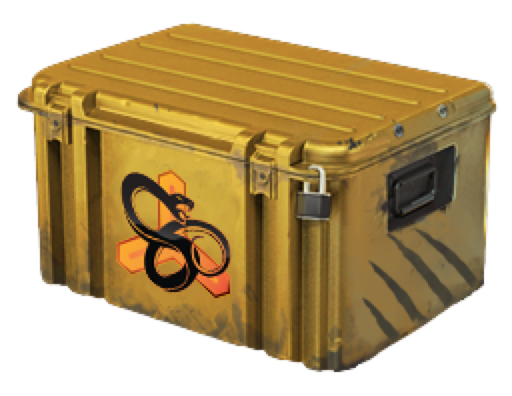
A ladder allocates across all three tiers on purpose. Each rung has a distinct risk: the bottom is exposed to continued drops, the middle to Valve reactivating a drop pool, the top to liquidity. Those risks don't fire at the same time, which is the entire argument for holding all three.
The three rungs
| Rung | Profile | What it gives you | Main risk |
|---|---|---|---|
| Bottom — cheap active drops | Sub-$1 cases still in the drop pool (think Fracture-style high-supply cases) | Unit volume; cheap exposure to the eventual discontinuation flip | Supply keeps flowing; years of flatline |
| Middle — discontinued mid-tier | Cases recently out of active drops, low single-digit dollars | The core appreciation engine; burn-vs-drops math already flipped | Valve re-adds the case to a drop pool |
| Top — premium blue chips | Old operation cases, Bravo-tier and adjacent | Longest history, thinnest supply, strongest scarcity narrative | Illiquidity; big bid-ask spreads on exit |
A common starting split is roughly 50/35/15 by budget — volume-heavy at the bottom because that's where per-unit mistakes are cheapest, thin at the top because exit liquidity shrinks as price rises. There's no magic in those numbers; the discipline of having fixed numbers at all is what matters.

Executing with a daily budget
A ladder is an allocation; dollar-cost averaging is how you fill it. Split a daily budget — say $15 — across the rungs by your target weights and buy on schedule, regardless of price. This does two things a lump sum can't:
- It smooths your entry on every rung at once. Case prices move on Valve news, and the tiers don't move together day to day. A fixed daily buy captures whichever rung is cheap this week.
- It handles indivisibility. You can't buy 0.3 of a Bravo. A daily plan accrues the premium rung's budget until it covers a unit, while the bottom rung buys every single day.
- It forces venue discipline. Per-buy price comparison across cash marketplaces saves a few percent per purchase — small daily buys mean many chances to capture that edge, and Steam's ~15% fee plus wallet lock-in means the Steam price is rarely the real price anyway.
Set a per-case price ceiling on every rung. Thin order books — especially on old cases — occasionally spike, and a schedule without a ceiling will happily buy the spike.
Rebalancing and the patience math
Rungs drift. A mid-tier case that doubles becomes an oversized position; a fresh discontinuation might deserve promotion from watchlist to middle rung. Rebalance by redirecting new budget, not by selling — round-trip fees and spreads make sell-to-rebalance expensive, and redirecting future buys achieves the same drift correction for free. Actual selling belongs to your exit framework, not your maintenance routine.
The patience math is worth stating plainly. Discontinued cases have historically compounded strongly per public trackers — but the bottom rung can flatline for years before its discontinuation moment, and the whole structure assumes you keep buying through drawdowns. A ladder built with money you'll need next spring isn't a ladder; it's a forced sale waiting for the worst week to happen.
A worked example
$15/day, 50/35/15: $7.50 to two or three cheap active-drop cases, $5.25 to two discontinued mid-tiers, $2.25 accruing toward one premium case that gets bought roughly every couple of weeks when the accrual covers the ask. Twelve months of that is ~$5,475 deployed across five or six cases and three risk profiles, with an entry price that's the market's average rather than your luckiest or unluckiest day. No forecasting required — just the structure, the schedule, and the discipline to keep both running.

Two operational details make the difference between a plan and a mess at that scale. First, storage: a year of daily buying produces hundreds of units, and Steam's inventory UI was not built for portfolio management — storage units, labeled by rung, keep the ladder legible. Second, the record: every fill should land in a ledger with date, venue, price, and fees, because twelve months from now the only way to know whether a rung is working is to compare its market value against what you actually paid, not against what you remember paying. The ladder is a simple idea; the compounding comes from running it without gaps, without hype detours, and without ever having to reconstruct your own history from screenshots.