
CS2 Marketplaces Compared: DMarket, SkinBaron, CSFloat & Co
There is no "best marketplace" — there's a best venue per trade, per region, per item. What follows is the comparison framework, minus the affiliate links.
Why third-party venues exist at all
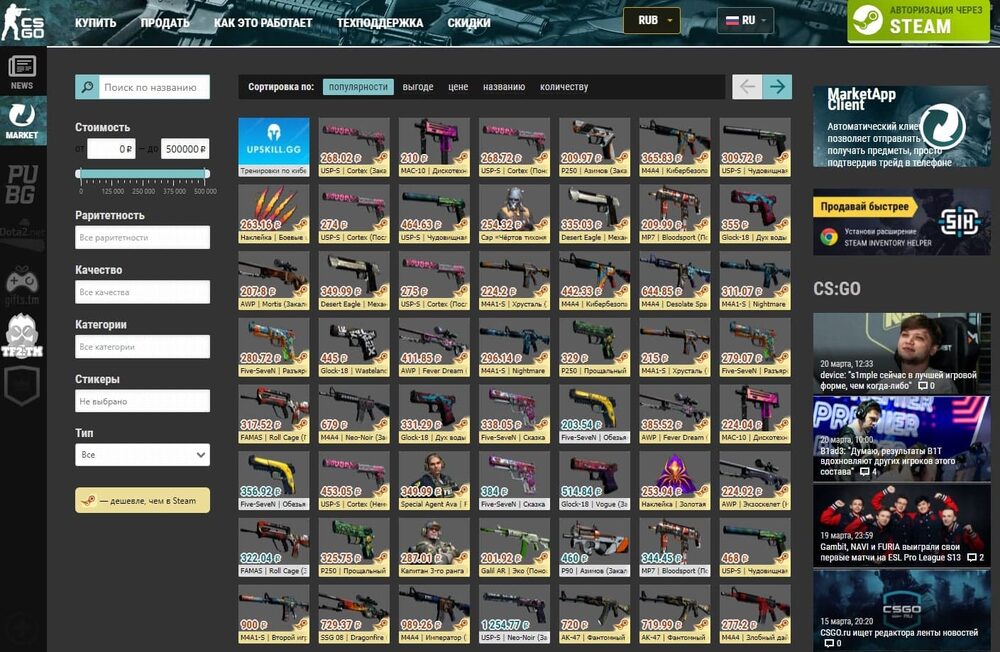
Every cash marketplace is an answer to two Valve decisions: the ~15% Steam Market fee and the rule that Steam wallet funds can never be withdrawn. Third-party venues escrow real trades between real accounts, charge commissions that typically land in the mid-single digits, and pay sellers in money that reaches a bank account. In exchange, you accept counterparty structures Valve doesn't bless: bot inventories, escrow balances, and platform risk that the OPSkins story made concrete when Valve trade-banned the biggest venue of its era overnight.
Prices on cash venues sit structurally below Steam prices — that gap is the cash-out discount, not a bargain bin. The comparison that matters is between the cash venues themselves, and they differ more than their landing pages suggest.
It's worth being precise about what "third-party" means mechanically. None of these venues hold your items on Valve's blessing; they operate through ordinary Steam accounts — bot inventories or peer sellers — moving items via the normal trade system. That's why every Valve policy change lands on them first: the 2018 trade holds rewired their logistics, and the trade protection changes of 2025 added reversal windows to reckon with. A marketplace is best understood as a layer of payments and escrow built on top of infrastructure it doesn't control.
The five dimensions that actually differ
- Fees. Seller commissions vary by venue, by item price tier, and by promotional period — as of mid-2026 the major venues typically charge somewhere in the mid-single digits, with discounts for high-volume sellers. Precise schedules change often enough that checking the venue's current fee page before a large sale is mandatory, not paranoid.
- Liquidity. Depth varies enormously by item. A liquid case sells anywhere; a five-figure knife has real depth on perhaps two or three venues. Where the buyers are matters more than a point of commission.
- Cash-out rails. Bank transfer, PayPal-style wallets, and crypto are each supported by some venues and not others, with different minimums, delays, and verification requirements per region.
- Trust model. Instant-sale to the platform, peer-to-peer with escrow bots, or listing-based marketplaces each fail differently. Peer-to-peer models mean interacting with bot accounts — which is also what scammers imitate, so venue-native flows beat anything arriving via chat link.
- Region. Payment rails and KYC make marketplaces regional creatures whether they admit it or not.
The venues, briefly and honestly
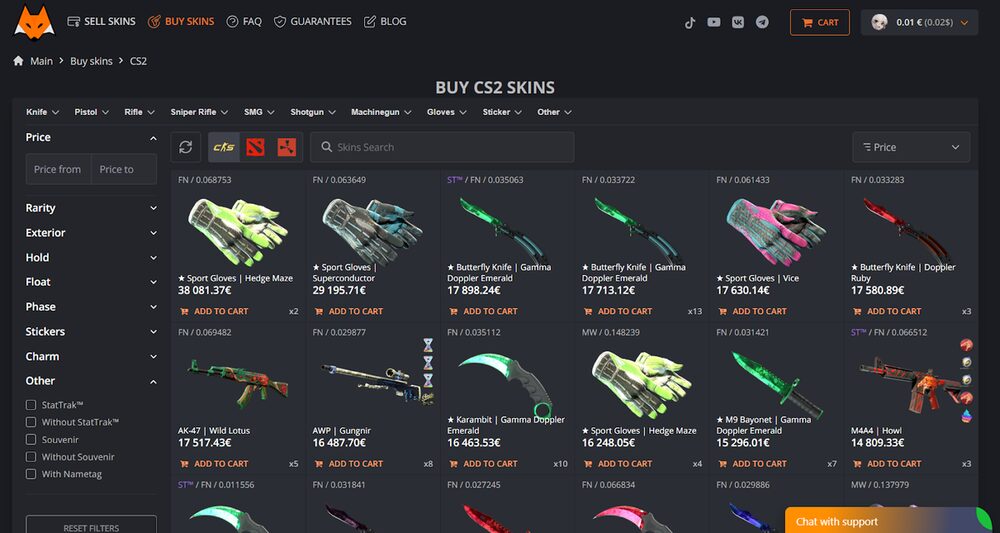
| Venue | Strength | Watch for |
|---|---|---|
| DMarket | Broad inventory, active buy orders, crypto-friendly rails | Depth varies by item tier |
| SkinBaron | EU-centric, SEPA-friendly payouts, German-regulated operator | Thinner outside European hours |
| CSFloat | Float/pattern-literate listings, strong for collectors | Specialist inventory skews the catalog |
| Buff / YouPin | Enormous Chinese demand; often sets the marginal price | Access and payments are hard outside China |
The China column deserves emphasis: for many liquid items, Chinese platforms are where the marginal buyer lives, and Buff pricing functions as a reference rate that western venues drift around. You may never sell there, but you should know what your item quotes there — it's a core input to valuing anything above trinket tier.
A note on instant-sell buttons: most venues offer both a listing flow (you set the ask, wait for a buyer, pay commission on fill) and an instant-sale flow (the platform or its market makers buy immediately at a quoted price). Instant sale is convenience priced as a discount — typically several points below what a patient listing fetches. For small items the convenience often wins; for anything meaningful, the patient listing usually does. Treat the instant-sell quote as the venue's bid, not the item's value.
Same item, different price — permanently
Because arbitrage between venues costs fees on both legs plus a week of trade-hold risk, cross-venue spreads of a few percent persist indefinitely. For a one-off buyer this is trivia; for a systematic accumulator it's yield. A daily DCA buyer making hundreds of purchases a year captures the spread every time they route an order to the cheaper venue, and those few percent compound exactly like market growth. This is, for transparency, the mechanical reason cs2stack exists: as of mid-2026 it compares DMarket and SkinBaron on every scheduled purchase and fills at whichever is cheaper. Two venues is not the whole map — but they are two of the deepest cash markets for the case-tier items a DCA strategy actually buys.
How to choose, in practice
Two hygiene rules apply everywhere. First, bookmark venues and navigate to them directly — the highest-yield scam in this economy is a pixel-perfect clone of a legitimate marketplace reached through a chat link or a poisoned search ad. Second, never hold more balance on a platform than you're actively deploying; marketplace balances are IOUs from a company, not deposits, and the history of this market includes venues that stopped honoring them with little warning.
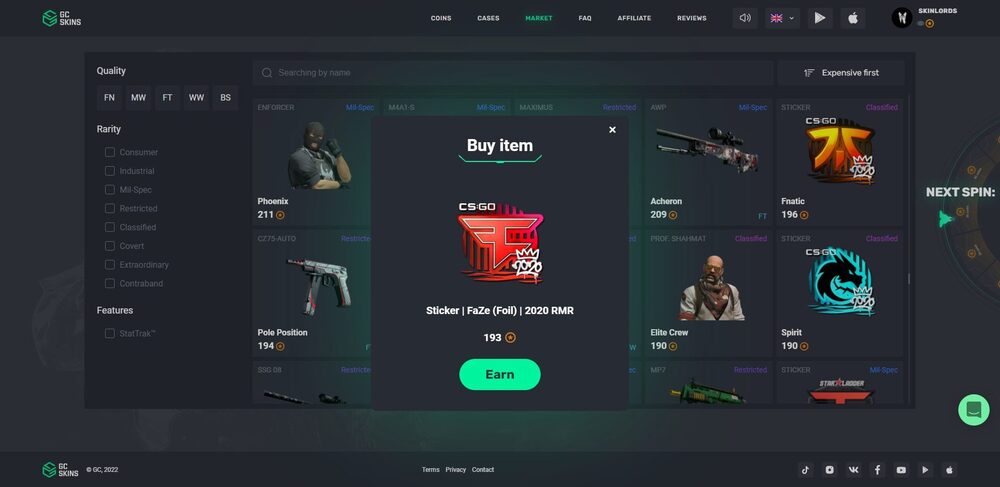
Skip the "which marketplace is best" threads and ask three questions per trade. Where is the real depth for this item? Which venue's payout rail actually reaches your bank at acceptable cost? And is the venue's all-in price — after commission, after withdrawal fees, after any trade-lock discount — better than the alternative? For selling large positions, the cash-out guide covers the safety half of the equation. For buying, the answer is simpler: compare before every purchase, because the venue that was cheapest last week frequently isn't this week. Loyalty to a marketplace is a small ongoing tax; the venues certainly feel no loyalty to you.