
OPSkins: The Rise and Fall of the Skin Cash-Out King
For three years, one site was the de facto exit door of the entire skin economy. Then Valve revoked its accounts overnight — and gave every trader since a permanent lesson in platform risk.
How OPSkins became the exit door
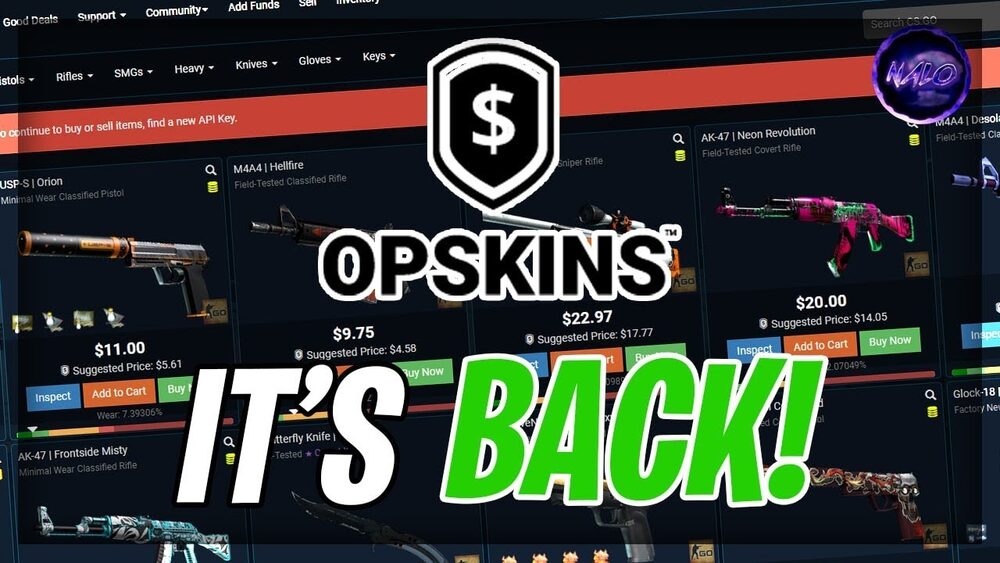
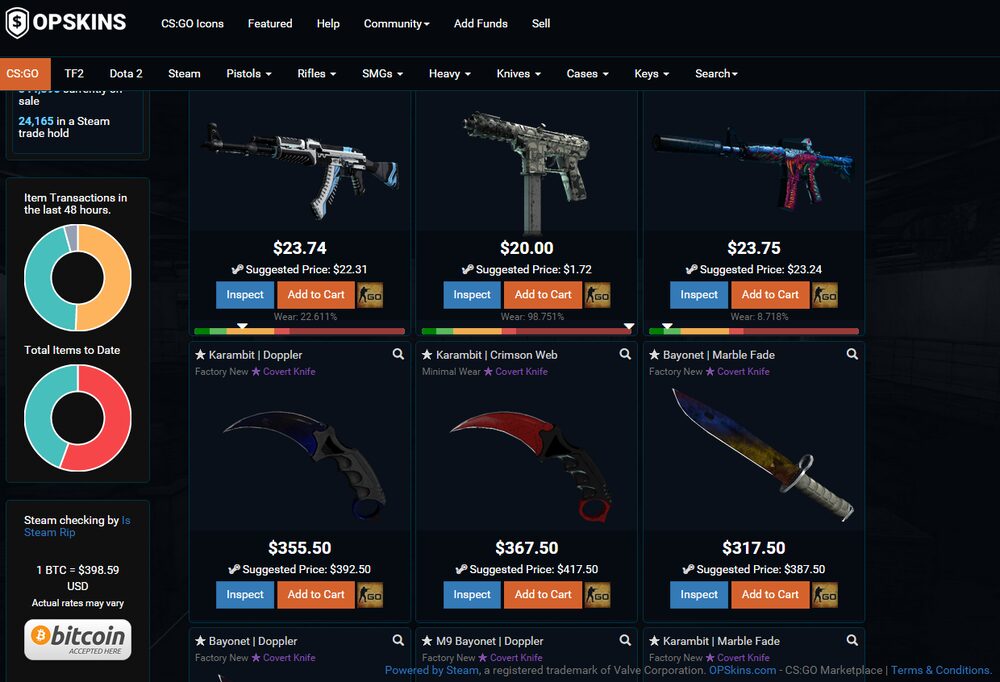
The Steam Community Market has always had a fatal flaw for anyone treating skins as money: proceeds are trapped in Steam Wallet. OPSkins, launched in 2015, solved exactly that. Sellers deposited items to OPSkins' network of Steam bot accounts, buyers paid in actual currency, and sellers withdrew real money. It was the cash settlement layer Valve refused to build.

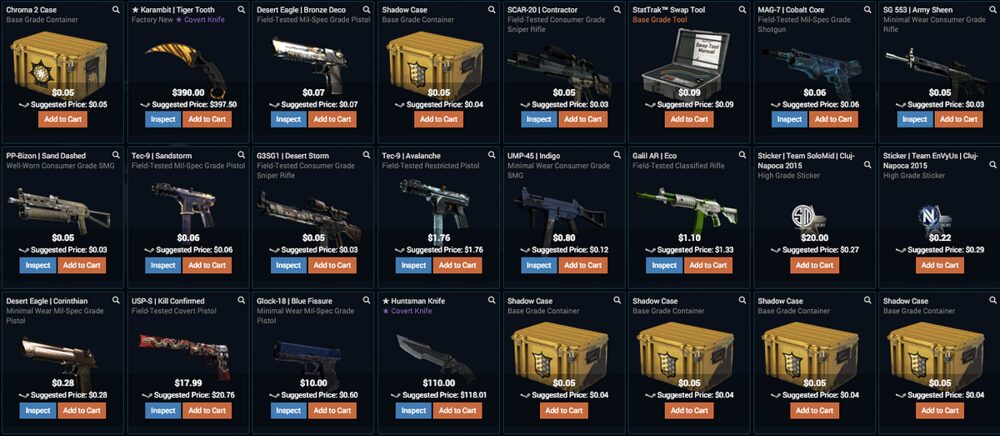
Through 2015–2018, OPSkins grew into the dominant cash marketplace of its era. Its published prices became the reference "cash price" for CS:GO items — the number traders quoted when Steam's wallet-inflated listings weren't credible. At its peak the site claimed millions of registered users and moved enormous daily volume through its bot inventory, which itself became one of the largest concentrated item holdings in the game. Lower fees than Steam's ~15% cut and genuine fiat withdrawal made the pitch simple: why sell for wallet funds you can never touch?
The site's success was also structural: after the 2016 gambling crackdown shuttered betting sites, plenty of inventory needed liquidating, and OPSkins was where it went. For a while, being the biggest legitimate off-ramp looked like a defensible business.
The dependency problem
Every part of that business ran on infrastructure OPSkins didn't control. Deposits, escrow, and delivery all happened through ordinary Steam accounts operating as trade bots — tolerated, never sanctioned. Valve's introduction of seven-day trade holds in March 2018 was the first squeeze: instant delivery died, and OPSkins responded by keeping sold items parked in its own bots so buyers could trade "instantly" from pre-held inventory. The workaround deepened the very dependency that would kill it.
June 2018: the hammer
In June 2018, Valve announced it would ban OPSkins' Steam accounts, stating that the operation violated the Steam terms — with OPSkins' newly announced plans around trading infrastructure widely reported as the trigger. The bans landed that month. Items still sitting in OPSkins' bot accounts at cutoff were effectively stranded; the company scrambled to return what it could before the deadline, but users who didn't withdraw in time lost access to real value. Reports at the time put the stranded inventory in the millions of dollars — treat exact figures with caution, but nobody disputes it was substantial.
The immediate market effect was a shock to cash-side liquidity. The largest fiat venue disappeared in weeks, spreads between Steam prices and achievable cash prices widened, and volume scattered across successors — BitSkins in the short term, and eventually the modern constellation of DMarket, SkinBaron, CSFloat and peers that split the role between them.
The VGO/WAX pivot
OPSkins' response was audacious: if Valve owned the rails, build new rails. The company launched WAX, a blockchain platform, and VGO — case-style items that imitated CS:GO skins but lived on-chain, deliberately outside Valve's reach. ExpressTrade, its no-hold trading system, briefly found an audience among gambling sites hungry for instant transfers after trade holds.
The mechanics were genuinely clever. VGO cases mimicked CS:GO's rarity tiers, wear values, and even pattern variance, minted as blockchain assets with provable scarcity. Opening odds were published on-chain — more transparent than Valve has ever been. For a few months in 2018, VGO volume was real, marketed hard through the same influencer channels that had sold skin gambling two years earlier.
It didn't stick. VGO items had the aesthetics of skins but none of the substance — no game to use them in, no player base generating organic demand, no decade of cultural weight. Demand was almost purely speculative, and it decayed accordingly. The episode remains one of the cleanest natural experiments the space has produced: skin value does not come from scarcity mechanics alone. It comes from scarcity attached to a game people play. Strip out Counter-Strike and you're holding a JPEG with a rarity color.
What OPSkins still teaches
- Custody is risk. Items sitting in a marketplace's bots are a claim on that marketplace, not an inventory. The 2018 bans converted that abstraction into losses in one announcement.
- Platform risk is binary and unhedgeable. Valve doesn't taper. OPSkins went from market leader to banned in a single news cycle — the same shape as the 2019 key ban.
- The cash-out discount is structural. The gap between Steam prices and real-money prices that OPSkins monetized still exists; it's now spread across its successors. Understanding it is step one of cashing out safely.
- Value lives in the game. VGO proved that skin-like assets without Counter-Strike underneath are worth approximately nothing over time.
What's striking in retrospect is how little of the OPSkins story was about mismanagement. The site was, by the standards of its era, competently run: functional escrow, real fiat withdrawal, prices the whole scene treated as reference data. It failed because its foundation was borrowed, and the owner called in the loan. That distinction — between businesses Valve merely hasn't stopped and businesses Valve cannot easily stop — remains the sharpest due-diligence question you can ask about any service in this ecosystem.
As of mid-2026, no single marketplace has recaptured OPSkins' share of the cash market — arguably a healthier equilibrium. The Steam Market remains the walled garden, third-party venues compete on fees and trust, and every serious trader diversifies across them. That diversification habit is OPSkins' real legacy.