A Short History of the Steam Community Market
Before December 2012, selling an item meant trusting a stranger on a forum. Valve replaced that with an order book — and accidentally built the settlement layer for the biggest virtual item economy in existence.
2012: an order book for hats
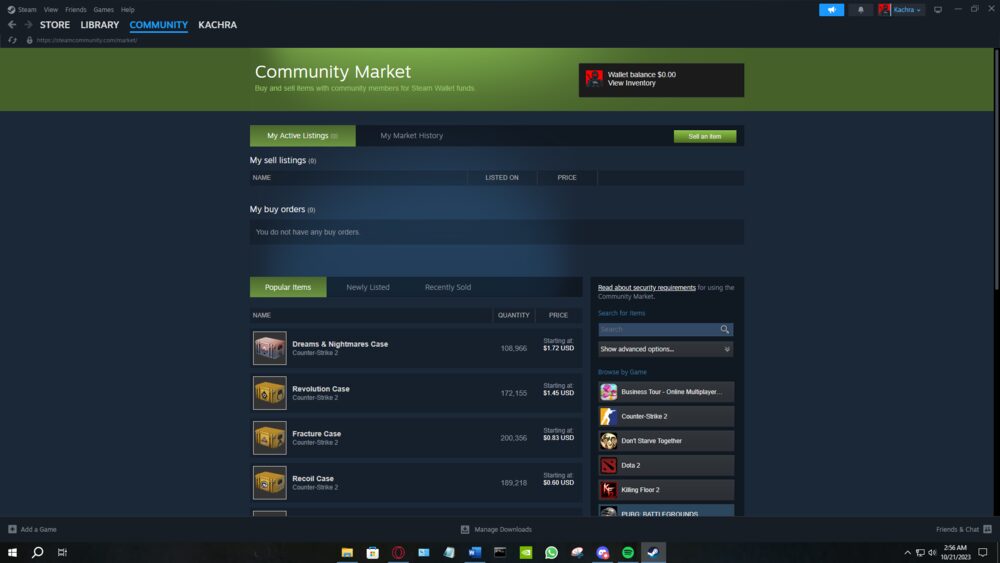
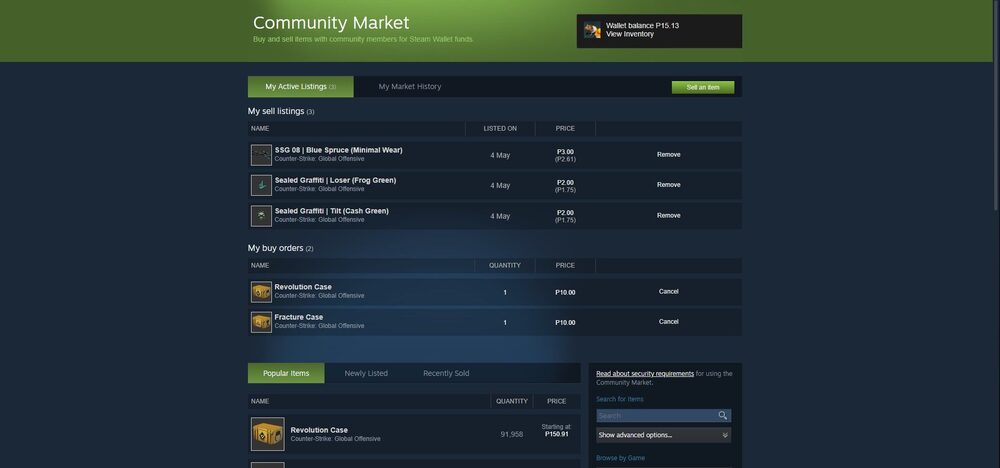
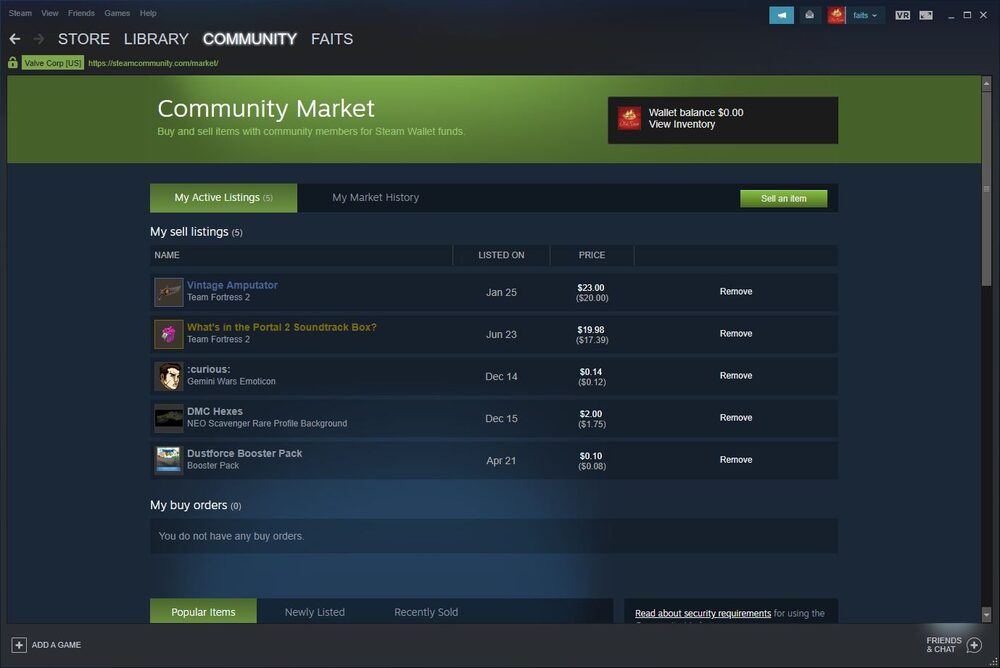
The Steam Community Market launched in beta in December 2012, and its first tradable asset class was Team Fortress 2 items. The design was minimal and has barely changed since: listings, buy orders, a price history chart, and settlement in Steam Wallet funds. No seller ratings, no chat, no escrow drama — the counterparty is effectively Valve's database. For an era in which item selling meant PayPal reversals and middleman scams on forums, instant trustless settlement was transformative.
The constraint that defined everything arrived on day one: money that enters a Steam Wallet never leaves. The Market was designed as a closed loop that keeps value circulating inside Steam — a store-credit economy, not a financial exchange. Every structural oddity of skin trading since flows from that single decision, a theme we unpack in Steam Wallet dollars are not dollars.
2013: CS:GO plugs in
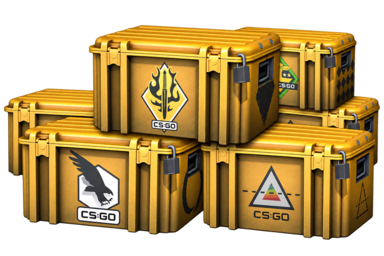
When the Arms Deal update shipped in August 2013, CS:GO items became marketable, and the Market found the asset class that would dominate it. TF2 hats had personality; CS:GO skins had wear tiers, finite supply mechanics, and a competitive scene pouring in new demand. Cases in particular made the Market a genuine commodities exchange — thousands of identical units, deep order books, continuous price discovery. Within a couple of years, CS:GO was the Market's flagship economy, and the daily case charts became the closest thing the scene has to a market index.
The fee and the caps
The Market's economics are blunt. Valve takes a 5% transaction fee on every sale, and CS2 items carry an additional 10% game-specific fee — roughly 15% of every trade, paid by the market in aggregate, on top of the wallet lock. The full implications for traders are covered in our fee breakdown, but historically the fee did something subtle: it created the third-party industry. A structural ~15% toll plus no cash-out guarantees that external venues — from OPSkins in the 2010s to DMarket, SkinBaron and CSFloat today — always have a margin to exist in.
Then there's the price cap. For years, no listing could exceed a few hundred dollars (long remembered by traders as the "$400 wall" era; unlisted-tier items simply traded off-platform). Valve later raised the ceiling to $1,800, and it has been widely reported around $2,000 in the years since. The exact figure matters less than the effect:
- Everything above the cap trades elsewhere. Dragon Lores, blue gems, Kato 14 crafts — the game's entire grail tier — settles on third-party venues or in private deals, invisible to Steam's price history. The most valuable segment of the economy simply does not exist in the venue's data.
- Steam price data is truncated data. Any analysis built on Market charts systematically excludes the high end — one of the recurring methodology traps behind every "market is worth $X billion" headline, and a reason serious valuation work always triangulates across venues.
Security hardening, 2015–2018
As values rose, the Market inherited the fraud problems of a real exchange, and Valve responded with the friction era: Steam Guard Mobile Authenticator requirements, market holds on items bought or sold from unauthenticated accounts, and eventually the seven-day trade holds of 2018 across CS:GO trading generally. Each measure traded convenience for fraud control. The Market of 2012 assumed goodwill; the Market of 2018 assumed adversaries. It has run essentially unchanged since — through the CS2 inventory transfer, which it survived without so much as downtime, because items and listings live on Valve's servers, not in any game client.
The same period settled the Market's strangest identity question: it became one of the world's largest exchanges that publishes no aggregate statistics. No daily volume reports, no listing counts, no revenue disclosure — just per-item price histories that third parties scrape into the trackers and index charts the community actually relies on. An entire cottage industry of market data exists specifically because the venue at the center of the economy declines to describe itself.
What the Market is now
| Role | Steam Community Market | Third-party venues |
|---|---|---|
| Settlement | Instant, trustless, wallet-only | Cash out, but trust the venue |
| Fees | ~15% on CS2 items | Typically lower, varies by venue |
| Price discovery | Reference charts, capped ceiling | Real cash prices, full price range |
| Liquidity | Deepest books for commodity items | Deeper for high-value and locked items |
As of mid-2026, the honest summary is that the Market is the reference layer rather than the whole economy: it hosts the deepest order books for commodity items like cases, generates the charts everyone quotes, and anchors price discovery — while real-money settlement and the entire high end live outside it. The two layers are symbiotic rather than competitive: third-party venues quote against Steam's charts, and Steam's buyers arbitrage against third-party cash prices. Where volume actually flows between the two worlds is its own story, told in Steam vs third-party volume. Thirteen years in, Valve's minimal order book — never redesigned, never marketed, never explained — remains the one piece of infrastructure the entire economy quietly assumes will always be there. So far, it always has been.