
Steam's 15% Cut: How Market Fees Shape Every Trade
Every Steam Market price you've ever looked at is inflated by a tax you can't avoid and paid in a currency you can't withdraw. Once you see it, you can't unsee it.
The fee, decomposed
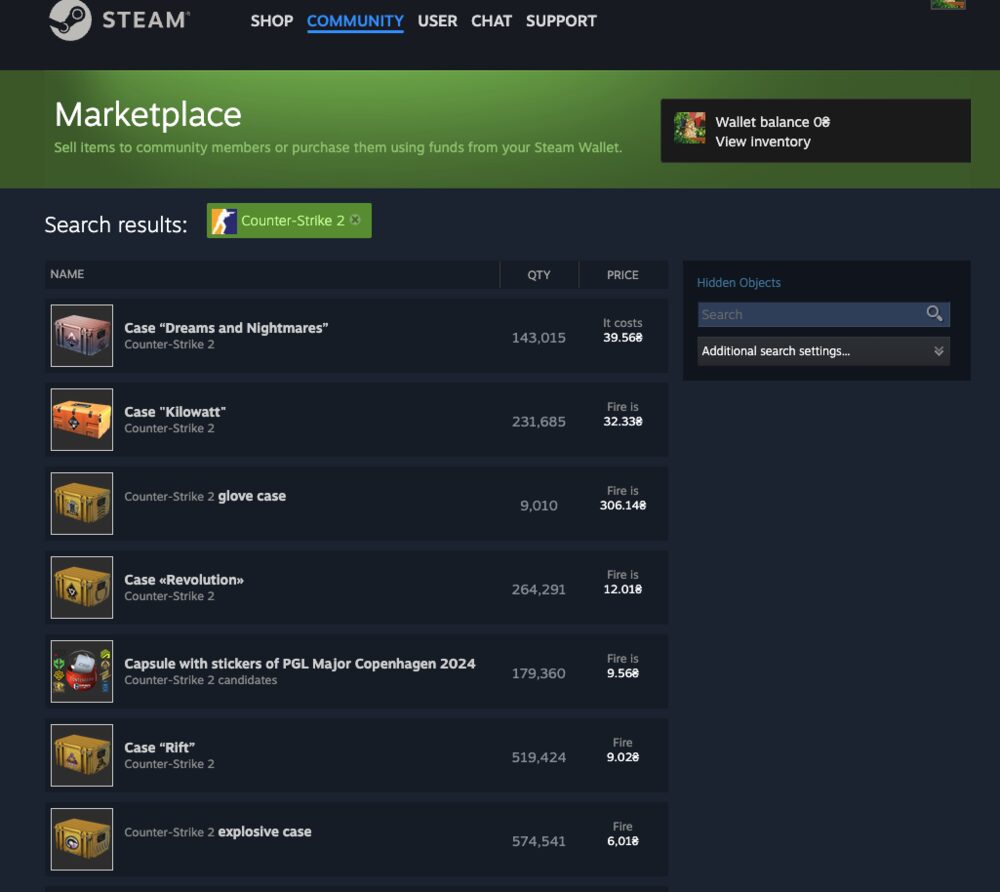
When a CS2 item sells on the Steam Community Market, the buyer's payment splits three ways: the seller's proceeds, a 5% Steam transaction fee, and a 10% game-specific fee that CS2 charges on top. Combined, Valve takes roughly 15% of every sale. The fee is technically added to the buyer's price rather than deducted from the seller's ask, but the economics are identical — the wedge between what buyers pay and sellers receive is about 15 points, and it's charged on every single transaction, with no volume discounts and no way around it inside Steam.
Fifteen percent per round-trip is enormous by the standards of any financial market. Equity brokers charge basis points; even the higher-fee third-party skin venues typically sit in the mid-single digits. A trader flipping items on Steam needs roughly a 15% price move just to break even — which is why trading on Steam, as opposed to buying or occasionally liquidating, mostly doesn't make sense.
The lock-in is the real fee
The percentage is only half the design. The other half: your proceeds land in your Steam wallet, and Steam wallet funds can never be withdrawn. They buy games, DLC, and more items — nothing else. This makes the Steam Market a closed loop, and it has a profound consequence that most inventory screenshots quietly ignore: Steam prices are denominated in a softer currency than dollars.
Because sellers on Steam are structurally trapped — they can't take the money out — Steam prices run persistently higher than the prices on cash marketplaces where sellers receive withdrawable money. That spread, often in the 20–30% range for liquid items, is the market's honest quote for what wallet-lock is worth. We've written about this framing in detail in Steam Wallet Dollars Are Not Dollars; the one-line version is that the gap between Steam and cash venues isn't an arbitrage — it's the cash-out discount, priced in continuously.
What the fee does to market structure
A 15% wedge on the dominant venue shapes everything downstream:
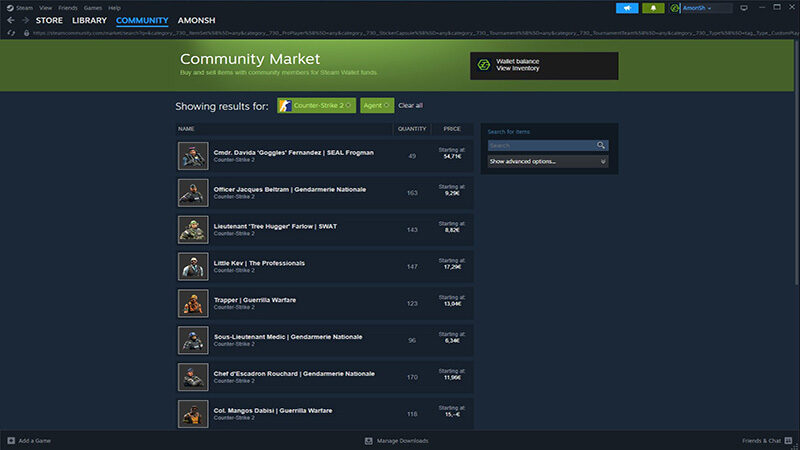
- It created the third-party ecosystem. Cash marketplaces exist because their all-in costs — typically mid-single-digit commissions plus withdrawal rails — undercut Steam's 15% and pay out in real money. The whole DMarket / SkinBaron / CSFloat landscape is downstream of this one fee decision.
- It dampens arbitrage. Cross-venue price gaps under ~15% can't be closed through Steam, so they persist. Persistent spreads are why comparing venues before every purchase is worth real money rather than pennies.
- It makes Steam a buy-side venue. Buying on Steam with existing wallet balance is fine — sometimes great, since trapped sellers occasionally dump below cash-equivalent prices. Selling on Steam only makes sense if you wanted wallet funds anyway.
- It punishes churn. Every needless round-trip donates 15% to Valve. Fee drag is a core argument for low-turnover strategies — buy on a schedule, hold, and make exit decisions rarely and deliberately.
There's a subtler structural effect as well: the fee compresses low-priced items harder in relative terms. Steam enforces minimum fee amounts on cheap listings, so on a few-cent case the effective take can run well above the headline 15%. For the exact items a case accumulator buys most often, the cheapest tier of the market is precisely where Steam's pricing is least competitive — one more reason case buying migrated to cash venues years ago.
A worked example
Say a case shows $1.00 on Steam and the equivalent cash price on a third-party venue is $0.80.
| Action | You pay / receive | Real-money outcome |
|---|---|---|
| Buy on Steam (card-funded wallet) | $1.00 of real money | Paid ~25% over the cash price |
| Buy on cash marketplace | $0.80 | Market rate |
| Sell on Steam at $1.00 | ~$0.87 to wallet | Locked funds, not cash |
| Sell on cash marketplace at $0.80 | ~$0.75 after typical fees | Withdrawable |
The numbers are illustrative, but the shape is general: for anyone accumulating with fresh money and intending to eventually hold value in cash terms, the Steam Market is usually the worst venue on both legs of the trade. The exception is spending down an existing wallet balance — that money is already trapped, so its effective cost is sunk.
Fee-aware accumulation
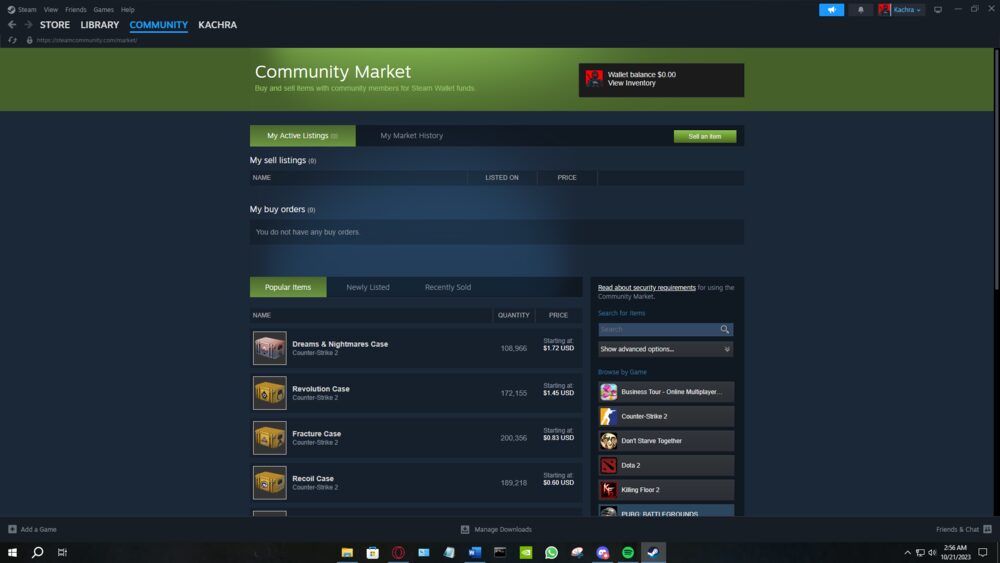
None of this means Steam is useless. It remains the deepest single order book for many items, its price history is the cleanest public dataset the market has, and buy orders there fill at all hours. The point is narrower: know which currency each venue's prices are denominated in, and never plan a strategy that requires selling on Steam to realize gains — that plan ends with your profit locked inside a game store.
For a systematic buyer, the fee logic compounds. A daily DCA plan makes hundreds of small purchases a year; routing each one to the cheaper cash venue instead of Steam is equivalent to adding several points of annual return, with zero additional risk. It also keeps your eventual exit clean — items accumulated on cash marketplaces can be sold back into cash markets without ever touching the wallet trap. The fee history is worth knowing too: the structure dates back to the market's 2012 origins, and it has survived every era of the skin economy since. As of mid-2026 there is no sign Valve intends to loosen either the percentage or the lock — 15% of a multi-billion-dollar item economy is one of the best businesses in gaming, and it's not yours.