
How to Make Money on the CS2 Skin Market (Realistically)
People genuinely do make money on the CS2 skin market — and most people who try don't, because they copy the wrong part of someone else's playbook. Here's the full menu of methods that actually work, what each one demands from you, and the honest answer to what you can expect.
First, the framing that saves you money
Every way of making money on the CS2 skin market is one of two things: owning (buy assets, hold them while structural forces push prices up) or working (do something faster, smarter, or more tediously than other traders and get paid for the labor). Owning scales with capital and patience. Working scales with hours and skill. The classic beginner mistake is expecting owning-style passivity with working-style returns — that combination doesn't exist here any more than it does in any other market.
It also helps to know what you're standing on. Skins have outperformed most conventional benchmarks over the past decade because of a one-way ratchet: every case opened is destroyed forever while the player base has kept growing. That tailwind is the honest source of most "skin trading profits" people brag about. The methods below are mostly ways of riding it with more or less efficiency.
Method 1: Case stacking and DCA — the ownership play
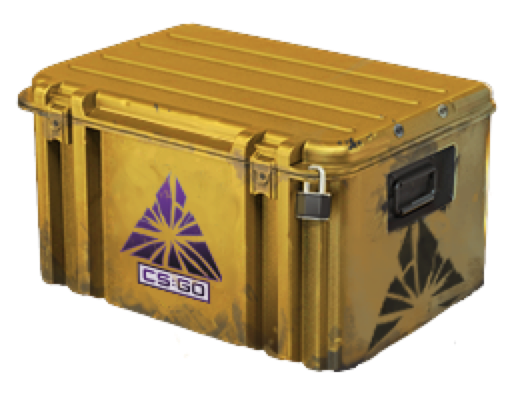
Case stacking is the base strategy of the whole market: accumulate sealed cases, hold for years, let attrition do the work. The disciplined version is CS2 DCA — a fixed budget at a fixed interval, regardless of price, so volatility lowers your average entry instead of rattling you out.
What it pays: market beta plus the supply-shrink premium. Historically that's been double-digit annual growth for discontinued cases, with brutal drawdowns along the way — the crash history is required reading before you believe any straight-line projection.
What it costs: almost no time (minutes a month if automated), real patience, and full exposure to Valve risk. This is the only method on this list that works for someone with a job and a life, which is why it's the right core for almost everyone.
Method 2: Sniping — getting paid for speed
Sellers fat-finger listings, need rent money tonight, or price on the wrong venue. Snipers catch those listings first and pocket the gap. The edge is real and the ceiling is decent — but it's a race that bots keep winning more of every year, and a lot of "underpriced" listings are correctly priced for a reason you haven't spotted yet: a bad float, an ugly pattern, an announcement you missed.
What it pays: highly variable. Skilled snipers with capital and tooling clear meaningful money; humans refreshing pages mostly compete for scraps.
What it costs: screen time, every day, indefinitely. Price it at what your hours are worth — most people never do, which is how a "profitable" hobby quietly becomes sub-minimum-wage work.
Method 3: Trade-up contracts — manufacturing, not investing
Ten same-rarity skins in, one higher-rarity skin out. When input prices are right, the expected value of the output exceeds the cost of the inputs, and grinders run that loop dozens of times a week. It's the closest thing skins have to a wage: fairly reliable, fully earned, and demanding enough that it stops being passive income and starts being shift work with float math.
Method 4: Buy-side arbitrage — small, free, compounding
The same case trades at different prices on Steam, DMarket, and SkinBaron at the same moment. True two-leg arbitrage mostly dies to fees and trade locks, but the retail-sized version survives: if you were going to buy anyway, always buy on whichever venue is cheapest right now. A consistent 3–5% saved on every purchase compounds exactly like extra market growth, and it stacks on top of whatever else you're doing. The arbitrage field guide maps the rest.
Method 5: Event plays — the fast lane, both directions
Majors, operation rumors, and mechanics updates move prices in semi-repeatable patterns, and update-driven repricing can hand event traders the fastest money in skins. It can also gap their positions down with no exit when the catalyst disappoints. Treat it as a small, capped sleeve on top of a boring core — never the core itself.
The things that don't make money (that everyone tries first)
- Opening cases. The house edge on unboxing is roughly a third of every dollar. The sealed case is the asset; opening it is entertainment you pay for.
- Chasing new releases. Fresh cases follow a predictable lifecycle — hype spike, supply flood, multi-year flatline. Buying the spike is averaging into falling prices.
- Strategy-hopping. A mediocre method run with discipline for three years beats a brilliant one abandoned in month two. Most losses in this market are behavior, not selection.
- Ignoring fees. Steam's ~15% cut and wallet lock mean Steam prices aren't cash prices. An edge smaller than your round-trip costs is a donation.
Cashing out is part of the P&L
Paper gains on skins are worth exactly nothing until they survive the exit. Getting real money out means third-party marketplaces, their fees, their trade locks, and their scam surface — the safe cash-out guide walks the whole path. And if you're trading at meaningful size, taxes are a real question you want answered before the money moves, not after.
An honest number to anchor on
For an ownership strategy at hobby scale — say $10–20 a day into a diversified case list — a good multi-year outcome has historically looked like market growth on a few thousand dollars deployed: meaningful, not life-changing, occasionally spectacular in bull runs. For working strategies, the realistic range runs from beer money to a decent side income, priced in evenings. Anyone promising more than that from a standing start is selling something. The founder of this site runs the ownership version live at $20 a day, results public — that's the scale of honest.
How to actually start
- Pick one core method — for most people with jobs, that's case stacking via DCA, sized with money you won't miss.
- Add at most one sleeve of active trading (passive vs active is a lane choice, not a moral one).
- Log every buy — date, venue, price, fees. Without a ledger your average cost is a guess and your exits are emotional.
- Buy where it's cheapest, every time. The free 3–5% is the only edge nobody can compete away from you.