Opening Cases vs Buying Skins: The Math Nobody Wants
Every unboxing video you've ever watched is a survivorship-bias highlight reel. Here's what the odds actually say — and why the sealed case, not its contents, is the asset.
The odds, on the table
Valve doesn't publish drop rates for CS2, but the odds disclosed for the Chinese release (Perfect World was legally required to publish them) have been consistent with community-scale unboxing data for years. Rounded, the distribution looks like this:
| Tier | Approximate odds | Typical outcome |
|---|---|---|
| Mil-Spec (blue) | ~80% | Usually worth cents |
| Restricted (purple) | ~16% | A few dollars at best |
| Classified (pink) | ~3.2% | Sometimes covers the key |
| Covert (red) | ~0.64% | The screenshot tier |
| Rare special (gold) | ~0.26% | Knife or gloves |
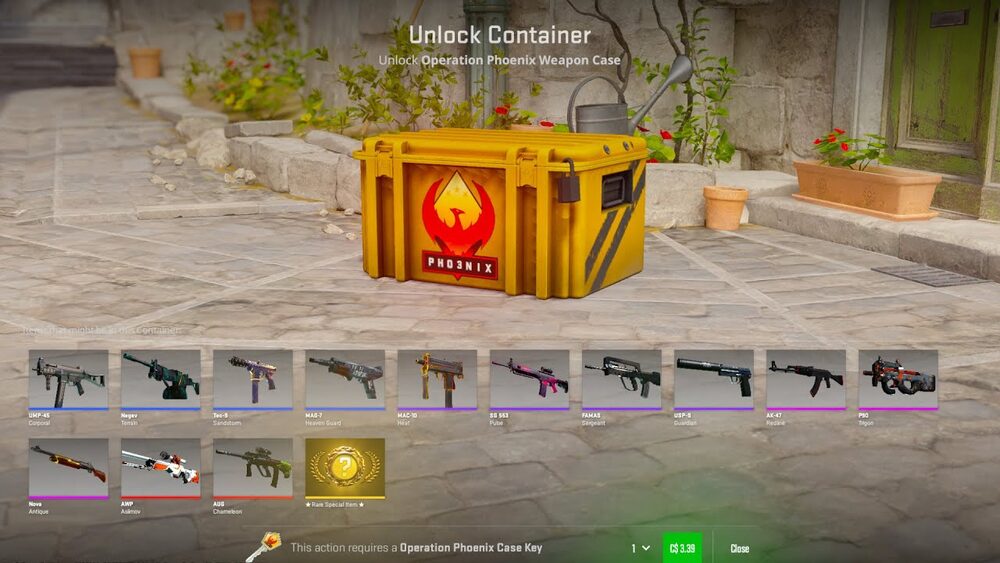
Read the first row again. Four openings out of five land in the tier that is, in most cases, worth less than the sales fee on the item. The knife you're picturing when you click "unlock container" arrives roughly once in 385 attempts — and even then, wear tier and finish decide whether it's a $150 Safari Mesh-grade consolation or the one from the video.
The expected-value calculation
An opening costs the key (about $2.50 as of mid-2026) plus the case itself. So opening a $1 case is a ~$3.50 bet. What do you get back on average? Sum every possible drop, weighted by its odds, its wear distribution, and the roughly 10% chance of StatTrak — a calculation community trackers have run on essentially every case — and the answer is consistently far below the cost of the opening. For most cases the expected return is typically somewhere around a third to two-thirds of what you paid, before you even account for the ~15% Steam fee you'd eat selling the drop.
That's a worse house edge than almost anything in a licensed casino, with no free drinks. And it's structural, not fixable by case selection: the key price is fixed, the odds are fixed, and the market prices of the contents adjust until openings are unprofitable. If a case's contents ever became worth more than the opening cost, people would open it at scale until supply pushed prices back down. Arbitrage closes the gap for you, permanently, in the wrong direction.
Volume doesn't rescue it either. Opening a hundred cases doesn't diversify the bet — it just converges your result toward the negative expected value with smaller error bars. The law of large numbers is the house's friend here, not yours.
The twist: buying cases is not opening them
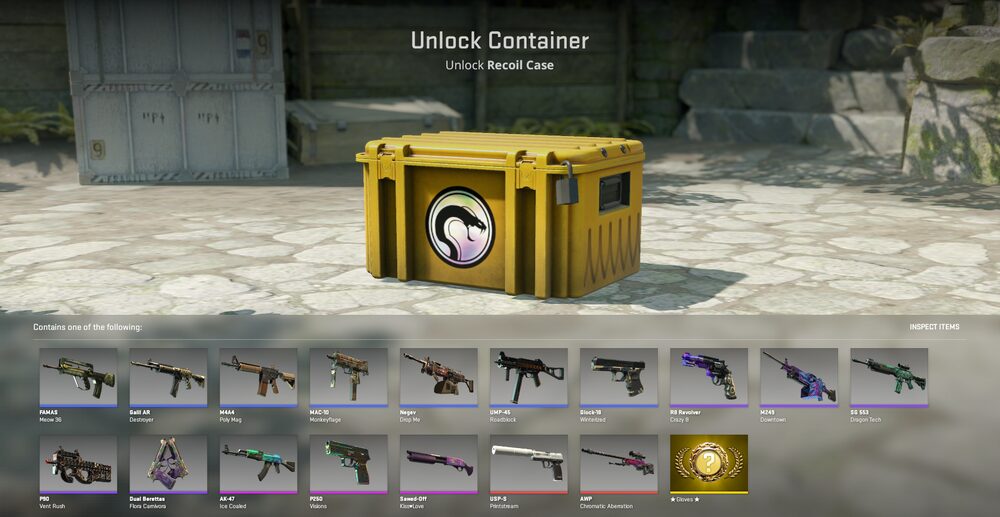
Here's where the market gets genuinely interesting. The same object that is a terrible bet to open has been a strong asset to hold sealed. Every opening permanently destroys a case, while drops of discontinued cases slowed to a trickle years ago — a structural burn mechanic that has made old cases some of the best performers in the entire market. Operation Bravo cases that dropped for free in 2013 trade for hundreds of dollars; the openers funded that appreciation for the holders.
The gambler and the investor buy the same item. The difference is one click. Sealed, a case is a claim on future scarcity; opened, it's an ~80% chance of a blue worth less than the key you just burned. This is why discontinued cases behave like blue chips while opening them behaves like a slot machine.
If you want the skin, buy the skin
Suppose you genuinely want the Covert from a specific case. Compare the two routes:
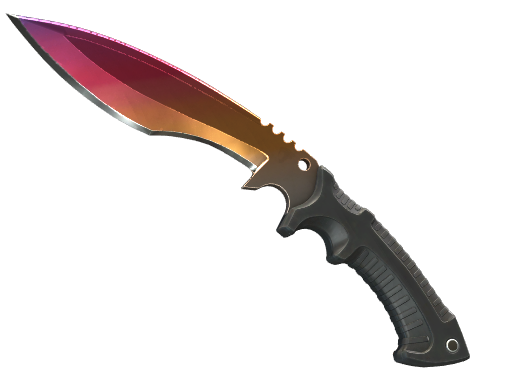
- Opening: at ~0.64% odds you'd expect to spend roughly 155 openings — several hundred dollars — for one random-wear copy of one of several possible Coverts, with no control over float or StatTrak.
- Buying: the exact skin, in the exact wear you want, at the market price, today. For most Coverts that's a fraction of the expected opening cost, and you can check whether the price is fair before you commit.
- Buying on a cash market: the same skin, often 20–30% cheaper than the Steam listing once you leave the closed wallet economy.
The market prices this asymmetry with brutal clarity: unboxers subsidize buyers. Every knife pulled on stream was paid for many times over by the blues that preceded it — and the person who bought the same knife on a marketplace paid the sticker price once.
What disciplined accumulation looks like instead
If the goal is exposure to the case market rather than a dopamine hit, the playbook is the boring one: buy sealed cases on a schedule, hold them, and let the burn mechanic work for you instead of against you. Dollar-cost averaging handles the timing problem, a tiered case ladder handles selection, and storage units handle the logistics once you're past a thousand items. None of it makes a highlight reel. All of it has a positive historical base rate, which the opening button does not.
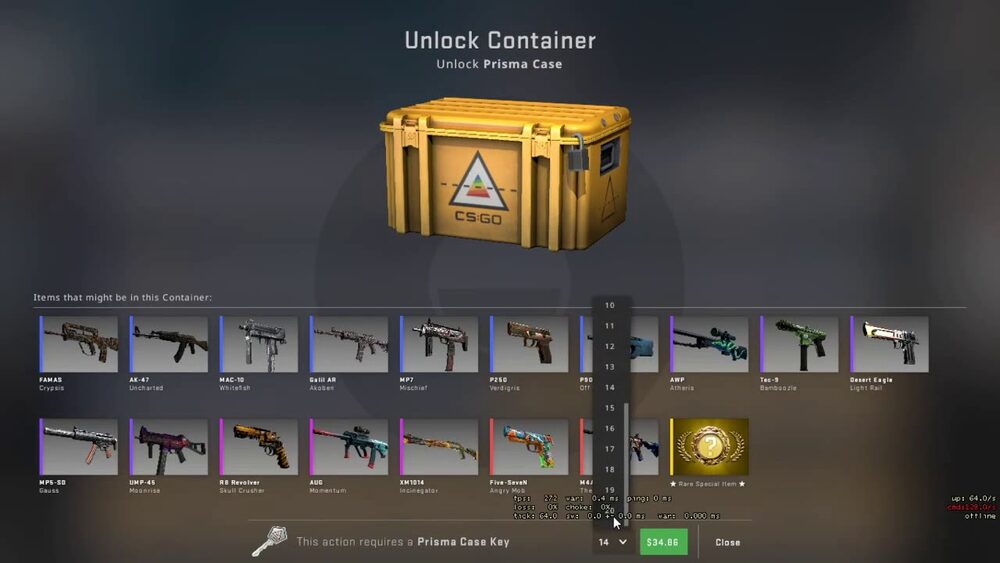
The math nobody wants is really just this: the case economy needs openers, and it pays holders. Pick which side of that transfer you're on deliberately, not because an animation is well-designed.