
The Price Lifecycle of a New CS2 Case
Every new case follows the same arc: a hype spike, a crash to pocket change, years of flatline, and — eventually — the climb. Once you've seen the chart three times, you stop being surprised.
The four phases, on one chart
Pull up the price history of almost any case released since 2014 and you'll see the same silhouette. Kilowatt drew it. Fracture drew it. Recoil, Dreams & Nightmares, Revolution — same shape, different timestamps. The pattern has four phases:

| Phase | Duration | Price behavior | What's driving it |
|---|---|---|---|
| 1. Release spike | Hours to days | Multiples of the eventual floor | Curiosity, openers, near-zero supply |
| 2. Supply flood | Weeks | Crash toward cents | Weekly drops outpacing demand |
| 3. Active-drop plateau | Years | Flat, drifting near the floor | Ongoing drops cap any rally |
| 4. Post-removal climb | Open-ended | Slow, compounding appreciation | Openings burn supply; no new drops |
The lifecycle isn't a mystery — it's the mechanical consequence of how Valve distributes cases. Understanding each phase tells you exactly when a case is a trade, when it's dead money, and when it becomes a position.
Phase 1: the spike nobody should pay
On release day, a new case exists in tiny quantities: the first drops are landing, unboxing channels need inventory immediately, and everyone wants to see the new knife or the new rare special. Demand is at its lifetime high while supply is at its lifetime low. Prices reflect that — new cases have historically listed at several dollars in their first hours, sometimes more when the contents generate real hype, before sliding fast as drops accumulate.
This is the single most reliable overpay window in the entire market, and it's where new investors donate the most tuition. The buyers who do well here are sellers: if you catch an early drop, release week is historically the best exit that case will see for years.

Phase 2: the flood
Then supply arrives. Every active player rolling their weekly drop has a chance at the new case, and with an audience that has repeatedly set concurrent-player records, that flood is measured in millions of units within weeks. Price action is one-directional: down, hard, until the case finds the level where opener demand absorbs the drop rate. For most modern cases that equilibrium has landed in the tens-of-cents range, per third-party price trackers.
The speed of the collapse depends on how the case is distributed. Classic drop-pool cases flood fastest. Cases gated behind Armory credits enter circulation at a throttled, pay-gated rate, which changes the slope — the crash is shallower, and the floor sits higher, because every unit requires someone to have spent money on passes.
Phase 3: the plateau, or why patience is mandatory
Once the price finds its floor, it stays there — for years. As long as a case remains in active drops, fresh supply lands every week, and any uptick in price simply motivates more holders to sell their drops. The plateau is the phase investors underestimate most. Fracture is the canonical case study: its COVID-era supply was so enormous that it traded near its floor long after cases released around the same time had started moving.
The plateau isn't dead money for everyone, though. It's the accumulation window:
- The floor is subsidized. Weekly drops from casual players who insta-sell keep the ask side stocked at prices that don't reflect long-term scarcity math.
- Downside is structurally limited. A case sitting a few cents above its all-time floor has little room to fall and a known catalyst ahead of it.
- The catalyst is scheduled, just not dated. Valve has historically rotated cases out of active drops as new ones arrive. You know it's coming; you just can't know when.
- Unit prices suit small, repeated buys. A daily budget spread across plateau-phase cases accumulates serious volume — the logic behind DCA-ing into cases rather than lump-summing.
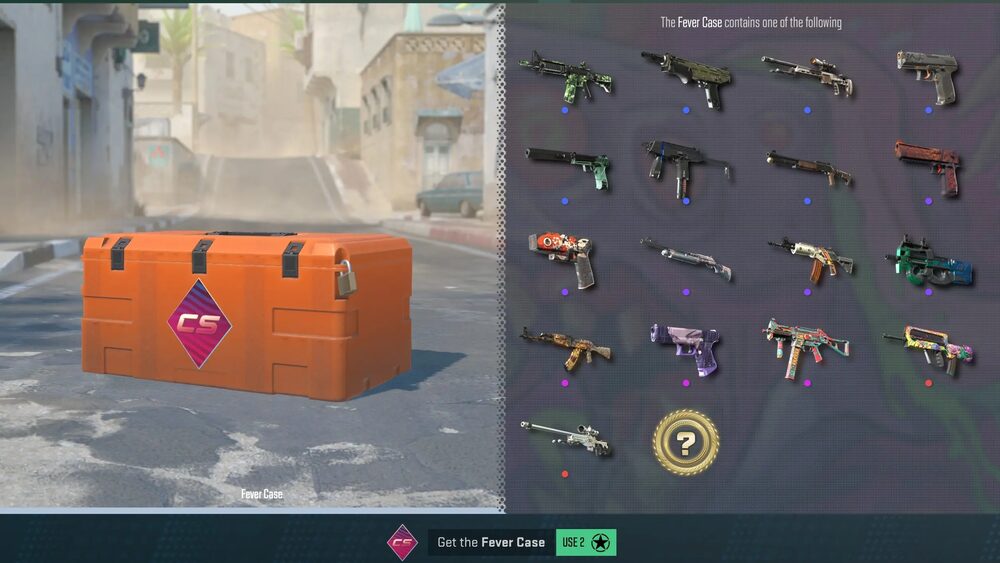
Phase 4: removal, and the flip to deflation
When a case leaves the active drop pool — historically moving to a "rare" drop tier with sharply reduced frequency — its economics invert. Supply growth effectively stops while every opening permanently destroys a unit. From that point the case behaves like a slow burn schedule: existing supply shrinks, the player base rolls forward, and price grinds upward. This is the phase that built the track record of discontinued "blue chip" cases, and the underlying reason old cases trend up structurally.
The climb is not smooth — it gets interrupted by Valve updates, market-wide crashes, and hype cycles — but across the 2021–2026 window, discontinued cases have been among the most consistent performers in the entire skin economy, per third-party index trackers.

What this means for buyers
The practical read: never buy the spike, ignore the flood, accumulate the plateau, and let removal do the work. Phase 3 is where time-in-market beats timing — you can't predict the removal date, so the rational play is steady accumulation at the subsidized floor across several plateau cases rather than a concentrated bet on one. And because plateau-phase cases are cheap and liquid, they're also the easiest corner of the market to buy on a fixed schedule without moving the price you pay.
The lifecycle also explains why case investing rewards boredom. The exciting phases — release week, the crash — are exactly the ones where buying loses money. The profitable phase looks like nothing happening for two years. That's not a bug in the strategy; it is the strategy.