
Multi-Marketplace Arbitrage in CS2: A Field Guide
Pull up the same case on Steam, DMarket, and SkinBaron at the same minute and you'll usually see three different prices. In any textbook market that's free money. In the skin market it's a puzzle with fees, week-long locks, and currency conversion standing between you and the "free" part. Here's the honest map.
Why one item has three prices
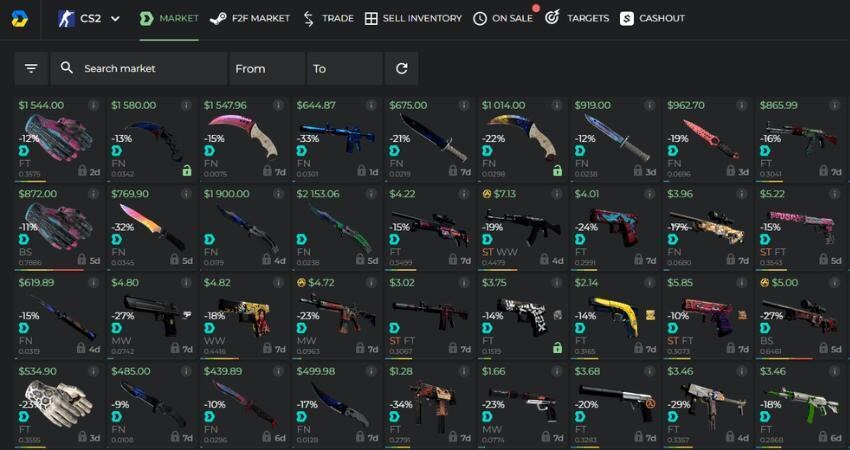
Arbitrage — buying an item where it's cheap and selling it where it's dear — only exists when a market is fragmented. CS2's is spectacularly fragmented. Steam's own market runs on wallet funds that can never leave the ecosystem, so its prices float in a currency that isn't quite money. Cash marketplaces like DMarket and SkinBaron settle in withdrawable currency but have separate user bases, separate fee schedules, and in SkinBaron's case a largely European, euro-denominated seller pool. Different buyers, different currencies, different frictions — so the "same" case has a genuinely different clearing price in each pool, and gaps between venues can persist for hours or days. Where those gaps come from moment to moment is covered in cross-market price lag; the venue-by-venue landscape is in the marketplace comparison.
The three frictions that eat the gap
Seeing a 10% gap is easy. Keeping it is a fight against three costs:
| Friction | What it costs | Why it hurts arbitrage |
|---|---|---|
| Seller fees | Roughly 13–15% on Steam; typically ~2–12% on cash venues | The sell leg surrenders a slice of the gap immediately |
| Transfer time | DMarket buys have shown ~2–7 day trade locks; Steam-bought items carry their own holds | You hold price risk for days before the sell leg can even start |
| Currency | EUR-denominated venues vs USD mental accounting | A "gap" can be an FX artifact; conversion costs and rate moves cut both ways |
Run the arithmetic and most visible gaps die. A case listed 8% cheaper on venue A than venue B looks juicy until you subtract the sell-side fee, then hold the item through a multi-day lock during which the gap may close on its own, then discover the gap was partly a euro-dollar quirk (FX in skin pricing is its own rabbit hole). What's left over, after all three frictions, is the true arbitrage — and on liquid items it's usually thin, fleeting, and contested by professional bot operations running with volume fee discounts you don't get.
Who actually closes these gaps
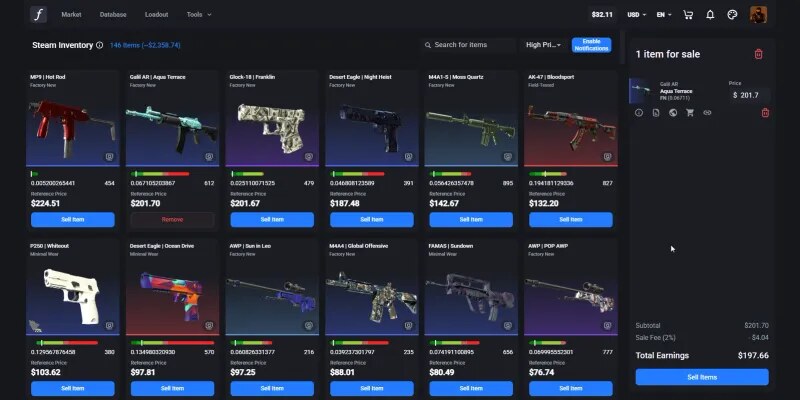
The people making a living here run industrial setups: inventory pre-positioned on multiple venues (so they can sell on the dear venue instantly instead of waiting out a transfer lock), fee tiers negotiated or earned through volume, automated repricing, and real FX handling. For them, cross-venue gaps are a volume business with thin unit margins. For a retail trader doing two-leg arbitrage by hand — buy on A, wait out the lock, list on B, pay full fees — the math rarely survives. That's not a moral judgment; it's just what the friction table does to small, slow operators. If you enjoy it as a craft, treat it like trade-up grinding: earned income for real hours, not passive return.
The retail-sized version: never sell, just route
There is one arbitrage flavor where retail keeps the entire edge, because it deletes the expensive leg. If you're accumulating anyway — buying cases on a schedule to hold for years — you have a buy leg but no sell leg. Routing each scheduled purchase to whichever venue is cheapest at that moment captures the cross-venue gap with zero fees paid, zero transfer risk, and zero time pressure. You were spending the money regardless; the gap just becomes a discount. This is buy-side arbitrage, and it's the rare free lunch in this market: no one competes the edge away from you, because you're not racing anyone — you're just refusing to overpay.
The catch is diligence. Doing this manually means checking two or three venues, converting euro prices at today's rate, and resisting the urge to just buy on the familiar site — every single day, per item. In practice humans stop doing this within weeks, which is exactly why it's a natural job for software: cs2stack, for example, compares DMarket and SkinBaron on every scheduled buy, converts EUR at a daily rate so the comparison is honest, and logs which venue won and by how much. The mechanics of that per-buy comparison are detailed in how an automated buyer picks the cheapest listing.
Practical rules if you go anywhere near this
- Compute the gap net, not gross. Gap minus sell fee minus expected price drift over the lock period minus FX cost. If you didn't subtract all three, you don't know the gap.
- Stick to liquid items. A thin order book means your sell leg moves the price against you — slippage in small markets can exceed the entire arbitrage margin.
- Respect venue risk. Two-leg arbitrage doubles your exposure to platform failures — funds and inventory parked across venues are exposed to each venue's solvency and security. The venue itself is sometimes the weak link.
- Beware gaps that are answers, not questions. A case persistently 15% cheaper on one venue may reflect that venue's withdrawal frictions or buyer scarcity — the market is telling you something, not offering you something.
- If you hold long-term anyway, take only the buy side. Full margin, no race, no sell leg. It's the only version of this strategy that's compatible with having a day job.
The summary a practitioner would give you: cross-market gaps are real, the two-leg trade belongs to industrialized professionals, and the buy-side crumbs — a few percent here and there, compounding across every purchase you were making anyway — are the part retail can genuinely keep. Take the crumbs. They add up.