
Slippage in Small Markets: Why Your Size Is a Strategy
On a stock exchange, your $500 order is a rounding error. On a skin marketplace, $500 of one case can be a meaningful chunk of everything listed that day. That changes the game: in a small market, how much you buy at once isn't a detail — it's a decision that costs or saves real money.
What slippage actually is
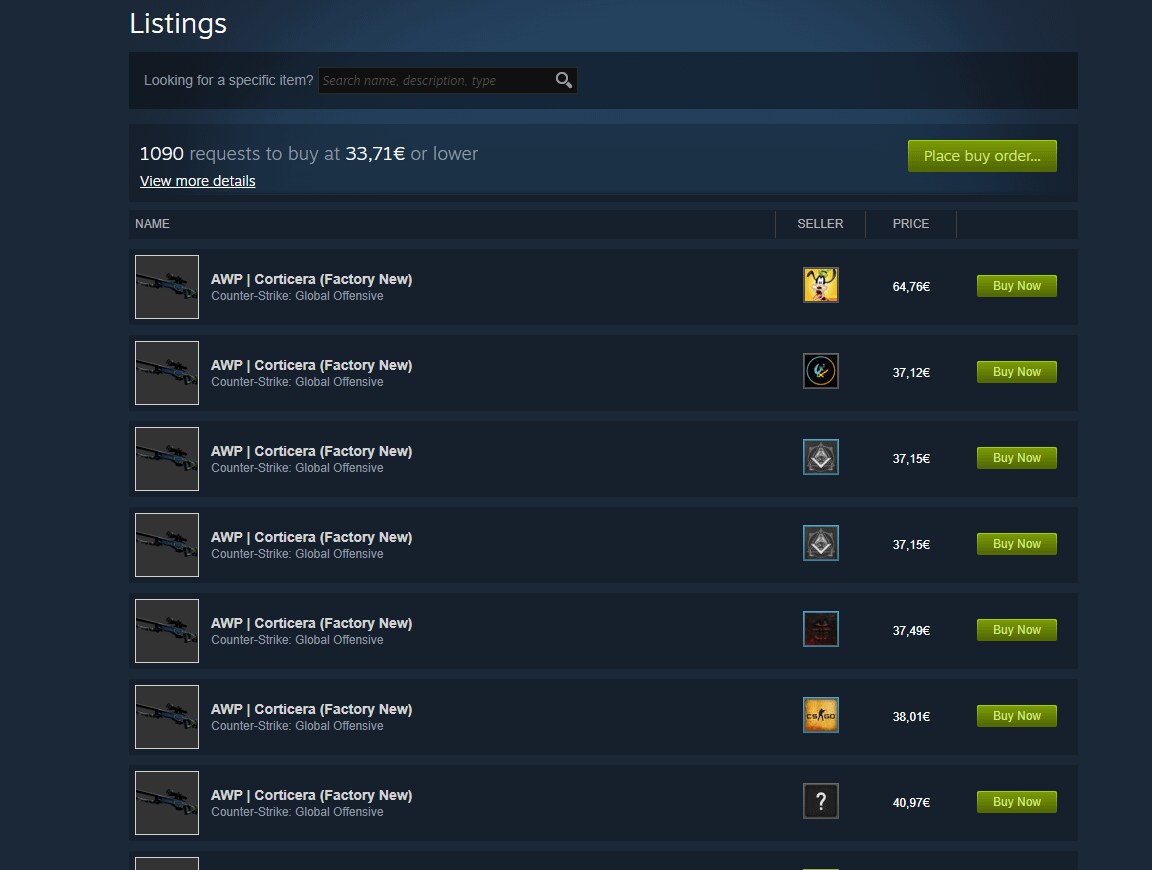
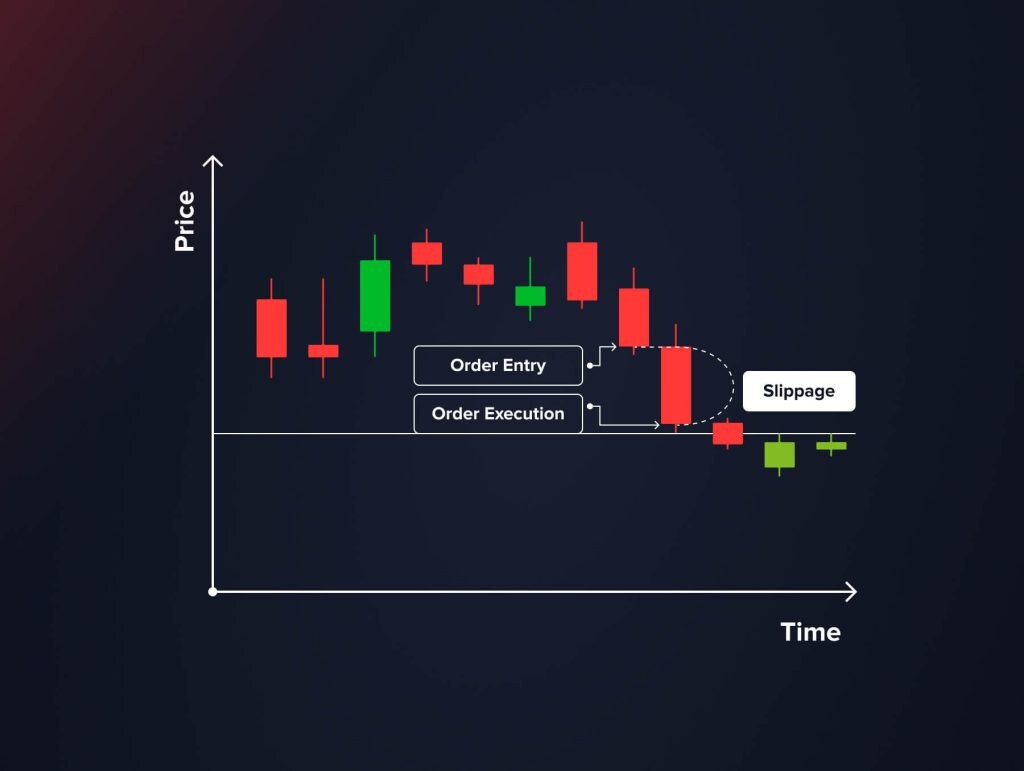
A marketplace listing page is an order book: a stack of sell offers at ascending prices. The advertised "price" of a case is just the cheapest listing — one unit of it. Buy in size and you consume that listing, then the next, then the next, each slightly more expensive. Slippage is the gap between the price you saw and the average price you actually paid.
Say a case's cheapest listing is $0.50, with a handful more at $0.51, then $0.53, then a jump to $0.58 and up. Buy one and you pay $0.50. Try to buy 500 in one click and you'll chew through the whole visible book, paying an average meaningfully above $0.50 — and the last units might cost 20% more than the first. Nothing malicious happened. You were the demand shock.
The effect is invisible to small buyers and brutal to impatient large ones, and it's worst exactly where case investors like to shop: older, thinner, discontinued cases whose books are shallow because supply has been burning for years.

Thin books are the rule, not the exception
Liquidity in this market is barbell-shaped: a few high-volume actives trade constantly with deep books, while vintage cases might have a page of listings total, spread across venues, in two currencies. The general shape of the problem is covered in the liquidity explainer; the practical takeaway is that "the price" of a thin case is a fiction beyond the first few units. Depth also differs by venue — the same case may have a deep book on one marketplace and three listings on another — which is why comparing venues isn't just about the headline price but about how much of it exists at that price.
And remember slippage cuts both ways. It hits sellers harder, because sell-side books (buy orders) are usually thinner still. If you ever want to exit a large stack, the same mechanics apply in reverse — one more reason exit plans favor selling in tranches.
The institutional trick you get for free
Big funds face this exact problem at scale, and their standard answer has a name: TWAP — time-weighted average price execution. Instead of one large order that moves the market, the position is sliced into many small orders spread evenly across time, so each slice trades near the top of the book and the average fill hugs the market's true price. Institutions pay execution desks and algorithms real money to do this well.
Here's the joke of it: a retail case stacker buying a few units a day gets TWAP for free, by accident, as a side effect of budgeting. A $20/day plan spread across five cases never buys deep enough into any book to move it. The founder's own ledger shows exactly this texture — roughly $19–20 of fills across about five cases daily, plus a weekly standing order — every fill at or near the cheapest listing, because the size per order is too small to be its own demand shock.
This reframes daily buying entirely. DCA is usually sold as a psychological device — smoothing your entry across time so no single bad day defines your cost basis, which it is. But in a thin market it's simultaneously an execution algorithm: entry smoothing across days is also book-depth smoothing within days. One habit, two edges.
Sizing rules that respect the book
- Look at depth, not just price. Before committing to a target position in a thin case, scan how many listings sit within a few percent of the cheapest. That's your realistic daily capacity without paying up.
- Slice by time, not by impatience. A position you want could take weeks to build cleanly. That's fine — the cadence choice should reflect the book, thinner case, slower build.
- Cap the price, not just the budget. A per-item maximum price turns "buy 3 today" into "buy up to 3 today, but never above X" — so on days the book is thin and expensive, you simply don't fill. That's a feature: max-price lines are how automation refuses to become the demand shock.
- Split across venues. Two shallow books are one medium book if you buy from whichever is cheaper each day.
When lump-sum thinking sneaks back in
The most common way stackers pay slippage is the catch-up buy: a windfall lands, conviction spikes, and someone tries to build three months of position in an afternoon. The math of lump sum vs DCA is genuinely debatable in deep markets — in thin ones it isn't, because the lump sum pays an extra tax the DCA buyer never sees. If you must deploy a lump, deploy it as an accelerated schedule (more days, bigger slices, hard price caps), not as one order.
Small budgets, in the end, get the last laugh here. The retail stacker's supposed weakness — only being able to buy a little at a time — is precisely the execution style large money pays to imitate. Your size is a strategy. Use it on purpose.