
Max-Price Lines: Never Overpay by Design
Ask what an automated buyer's worst possible purchase looks like, and you learn everything about how it's built. Without a price ceiling, the honest answer is "whatever the market was showing at 9:00 a.m." — including glitches, spikes, and mispriced books. A max-price line per item changes that answer to a number you wrote down in advance.
A limit order, borrowed from boring finance
Stock brokers solved this problem decades ago. A market order says "buy now at whatever the price is." A limit order says "buy only at or below this price." Every horror story about automated trading — in equities or in skins — starts with something behaving like a market order when its owner assumed it wouldn't.
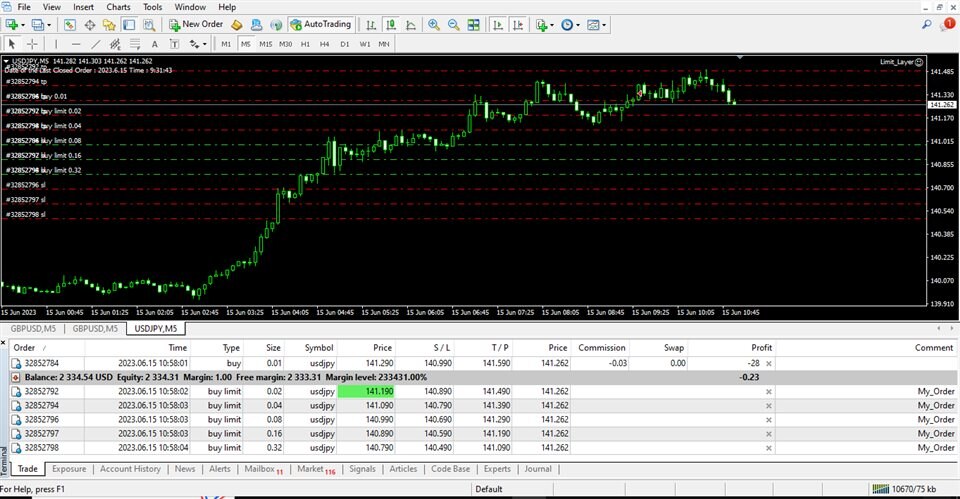
A max-price line is the skin-market version of a standing limit order. You attach a ceiling to each item on your buy list: this case at $1.50 or less, that one at $6 or less. On every scheduled run, the bot fetches live listings, compares them against your line, and does one of two things. At or under the line, it buys. Over the line, it skips — no partial fill at a worse price, no "close enough," no discretion. The skipped budget doesn't vanish; a well-built allocator carries it forward so the item catches up naturally on the next cheap day.
That's the whole mechanism. What it buys you is disproportionate to its simplicity.
What a ceiling actually does, day to day
Most days a sensibly-set ceiling is invisible: the market price sits under your line and the buy fills as usual. The setting earns its keep on the other days.
- It skips expensive days. When a case spikes on hype — a patch rumor, a streamer moment, an update like the October 2025 trade-up change that repriced whole categories in hours — your bot simply sits out. You never pay the euphoria premium by accident.
- It fills the dips. The mirror image is more valuable: corrections and panic-sell days are exactly when your standing order is guaranteed to be live. Buying weakness by rule instead of by nerve is most of what buying through a correction means in practice.
- It blocks garbage data. Marketplace APIs hiccup. A price feed that briefly returns a listing at ten times the real price should produce a skipped item and a log line — not a purchase. A hard ceiling is the cheapest possible defense against a whole family of failures you'll otherwise discover the expensive way.
There's a fourth, quieter effect. In thin books — and many discontinued cases trade thin — the second-cheapest listing can sit far above the cheapest. A bot that buys "the best available" without a ceiling will happily walk up that ladder. A ceiling converts slippage risk into a skip.
The $0.99 case that only fills on red days
Here's the pattern that converts skeptics. Take a liquid, high-supply modern case that oscillates around the dollar mark and set its line at $0.99 — deliberately below where it trades on an average day.

On green days, nothing happens. The daily report says "skipped: over max price," the item's unspent allocation rolls forward, and you feel briefly foolish. Then the market has a red week, the price dips under the line, and the accumulated budget fills in a cluster — all of it at your price or better. You've built a dip-buyer with no dashboard, no alerts, and no willpower requirement. It's the same logic snipers use for price caps as standing orders, just tuned for accumulation instead of flips.
Set the line too low, of course, and you never fill at all. That's not a disaster — it's information. A ceiling that hasn't filled in a month is the market telling you your price target and reality disagree, and you can revise the number deliberately instead of drifting into paying up.
Picking the number
There's no formula, but there is a sane procedure. Look at where the item has actually traded over recent weeks (third-party trackers cover this well enough), decide whether you want to fill most days or only cheap days, and place the line accordingly — roughly at the recent typical price for the former, meaningfully below it for the latter. Then leave it alone. The one habit that ruins ceilings is nudging them upward every time a skip stings; do that for a month and you've rebuilt a market order with extra steps.
Two mechanical details matter more than they look. First, the ceiling must be enforced after currency conversion — a €-denominated listing on a European venue has to be converted at a real daily rate before it's compared to your USD line, or the cap silently leaks. That's a genuine correctness issue, covered in converting EUR listings fairly. Second, the ceiling should apply to whichever venue the bot is about to buy from. cs2stack checks the line against the cheaper of DMarket and SkinBaron on every single purchase — the comparison logic is documented in how an automated buyer picks the cheapest listing — so the cap governs the actual transaction, not a reference price.
Ceilings and budgets are different guardrails
People conflate the two, and they protect against different failures. A budget cap limits how much the bot spends in total per day — it bounds your worst day. A max-price line limits what it pays per unit — it bounds your worst purchase. You want both: a budget cap alone will cheerfully spend its whole allowance on one overpriced fill, and a price line alone will cheerfully buy fifty cheap items if the allocator misbehaves. Together with an append-only ledger and dry-run previews, they form the minimum safety kit any buying bot should ship with — and the list of things a bot should never be allowed to do is short precisely because these two settings do so much of the work.
The deeper point: a max-price line moves the overpaying decision from runtime to design time. You decide the worst acceptable price once, calmly, with data — and then no morning of API weirdness, hype, or thin order books can renegotiate it.