
Converting EUR Listings Fairly: Small Detail, Real Money
A case is listed at 2.39 EUR on one venue and $2.70 on another. Which is cheaper? The answer changes with the euro — and if your tool answers it with last year's exchange rate, it will pick the wrong venue over and over, quietly, forever. Currency conversion is the least glamorous line of code in a buying bot and one of the few that directly moves money.
Why a case bot needs an FX desk at all
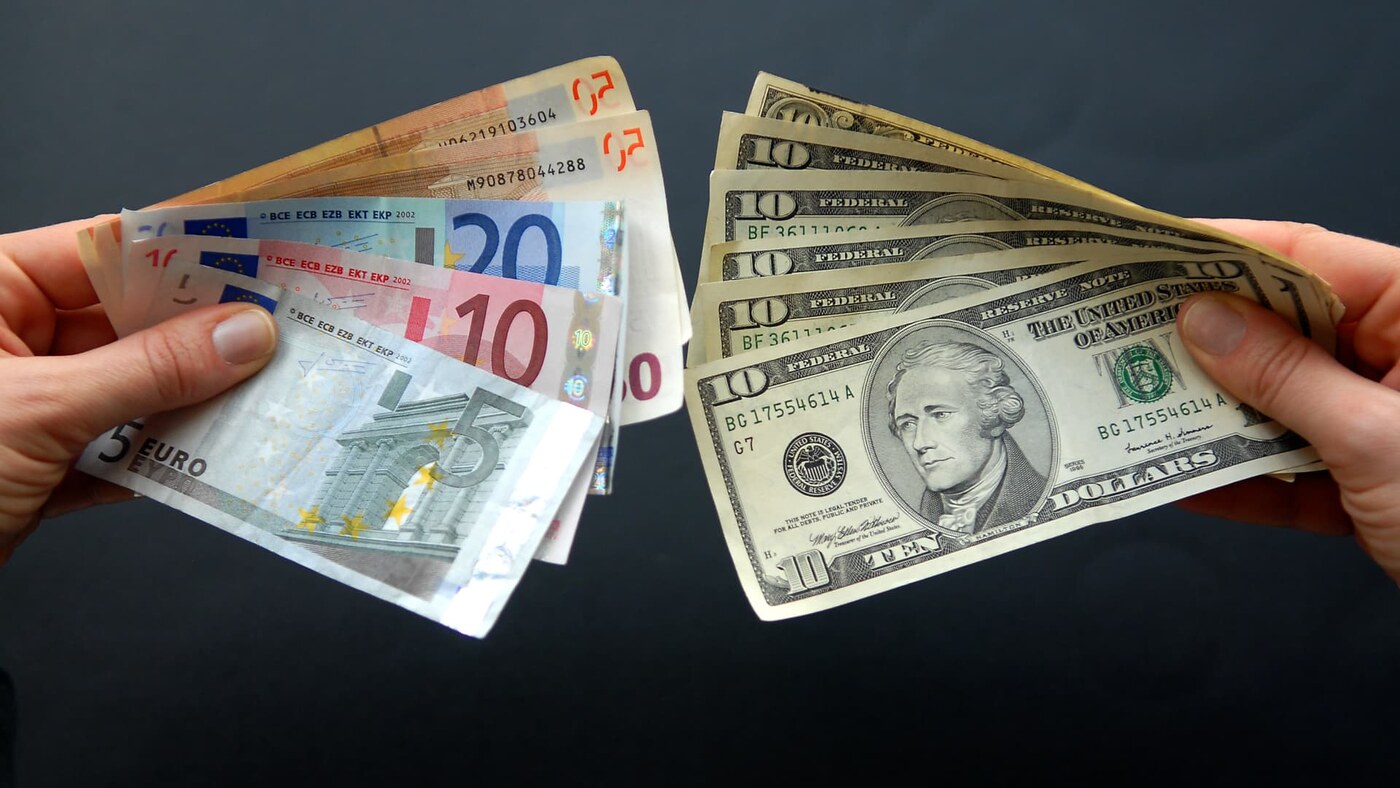
Because the CS2 market doesn't speak one currency. The venues worth comparing split along geographic lines: DMarket prices in USD, SkinBaron — a German marketplace — in EUR. The moment you shop across both (and buy-side price differences are the main reason to bother), every purchase decision contains a hidden currency conversion. "Which listing is cheaper?" is really two questions fused together: what are the prices, and what is a euro worth today?
Get the second question wrong and everything downstream inherits the error. Venue comparison picks wrong. Your max-price caps bind at the wrong level, blocking fair listings or waving through expensive ones. Your cost basis — the number that ultimately decides whether you're up — is fiction in the cents.
The failure mode: the frozen rate
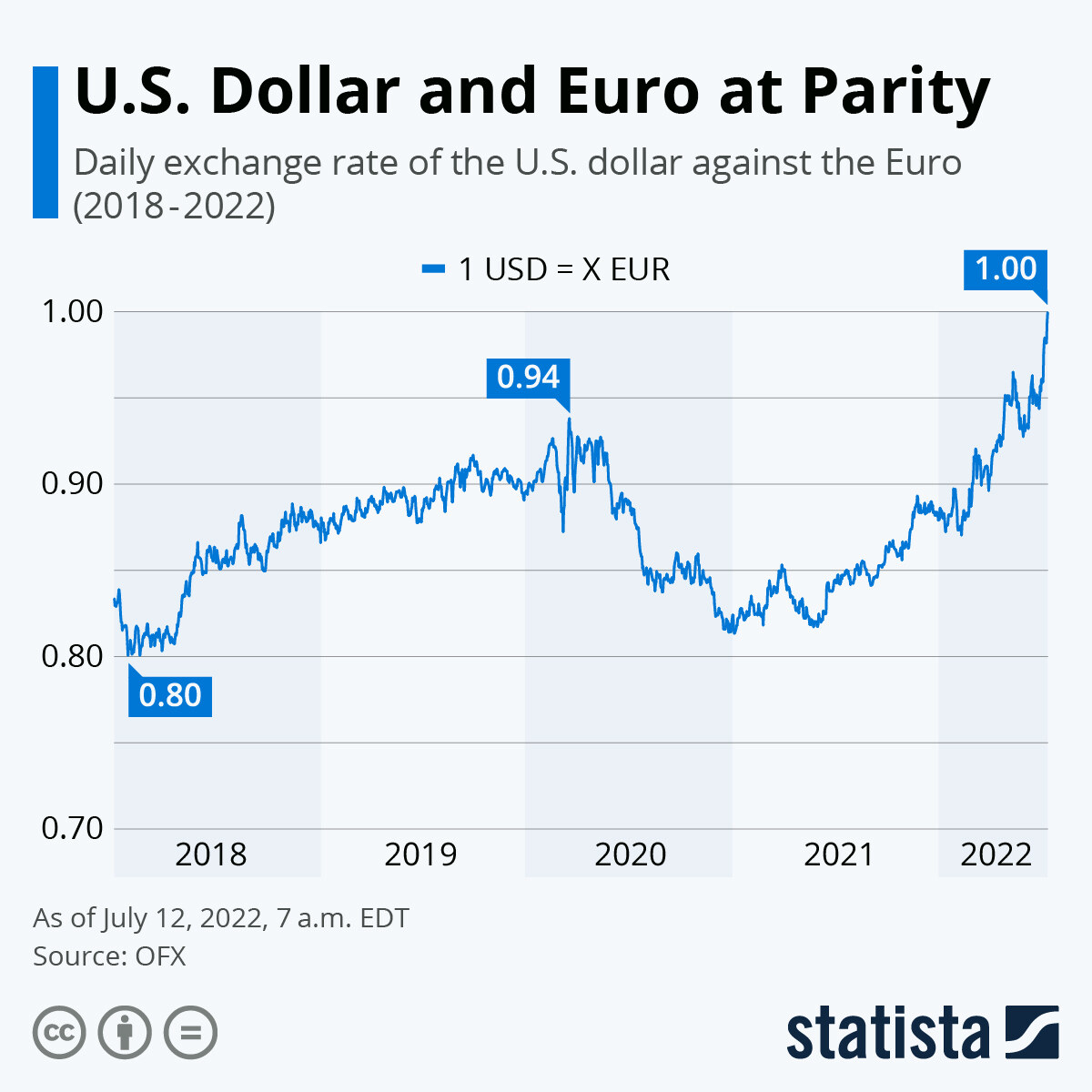
The tempting shortcut is to hardcode a conversion — say, "1 EUR = $1.10" — and move on. It even works, for a while. But exchange rates move constantly, and major pairs like EUR/USD have historically swung several percent within a year and far more across a few years. A frozen rate doesn't fail loudly; it drifts. Suppose the real rate moves from your hardcoded 1.10 to around 1.05. Every EUR listing now looks about 5% more expensive to your bot than it really is, so it systematically over-routes to the USD venue — even on days the EUR listing was the genuine bargain. Flip the drift the other way and the bot overpays on EUR listings while believing it's getting deals.
The insidious part is that nothing ever looks broken. The bot runs, buys, reports. Each individual decision is only off by a few cents. But a DCA bot makes the same decision every day for years — that's the whole design — so a small systematic bias compounds into real money in a way a one-off mistake never would. Automation amplifies whatever it repeats, including errors. It's the same species of quiet leak as fee churn: invisible per trade, meaningful per year.
The daily-rate pattern
The fix costs one API call. Each morning, before comparing any prices, fetch a fresh EUR/USD rate from a reputable source and use it for every conversion in that run. That's the entire pattern — cs2stack converts EUR listings at a daily rate as a first-class step of each run — and it has three properties worth spelling out:
- Freshness that matches cadence. A daily buyer doesn't need tick-level FX; intraday moves are usually noise at this scale. It needs a rate from today, not from whenever the config was written. Rate staleness should be bounded by run frequency.
- One rate per run. Every comparison inside a single run uses the same rate, so venue choice is consistent — you never want item A judged at breakfast's rate and item B at lunch's.
- No secret spread. The conversion uses the market rate, not a padded one. Banks and card networks routinely add 1–3% on top of mid-market rates as a hidden margin; a tool you run for yourself has no excuse to imitate them.
Write down both numbers
Conversion fairness has a second half: the paper trail. When a purchase settles in euros, the ledger should record the native amount (what actually left the SkinBaron balance), the USD equivalent, and the rate used — all three, per line. Recording only the converted figure destroys information you will want later: you can no longer verify a conversion, reconcile against marketplace statements in their own currency, or answer a tax authority that wants purchase records with a defensible valuation method. "Converted at that day's rate, recorded at purchase time" is an answer; "our app showed $2.63" is not.
There's an honesty argument, too. An open ledger that shows native price, rate, and converted price lets anyone re-run the arithmetic. When cs2stack's buy report claims SkinBaron was the cheaper venue this morning, the claim is checkable to the cent — which is the only kind of "we find you the best price" worth believing.
The details that bite
Even with daily rates, two small things deserve care. Rounding: convert with full precision and round once, at display time — repeated rounding across thousands of small buys introduces its own drift, always in whoever-rounded's favor. Fees in the right currency: venue fees apply to the native amount before conversion; converting first and adding fees after gets a subtly different number. Tiny stuff — but a bot making 150 buys a month has no right to be sloppy about arithmetic it repeats 1,800 times a year.
None of this is exotic engineering. It's a currency-aware price comparison, a daily rate fetch, and a ledger with three columns instead of one. But multi-venue buying is only an edge if the comparison underneath is honest — see how an automated buyer picks the cheapest listing for the rest of that machinery, and EUR marketplaces, USD brains for the broader currency story. The rate is small print. Read it anyway — better, make your tools read it every morning.