
Open-Ledger Investing: Receipts or It Didn't Happen
The skin scene runs on screenshots. A cropped inventory here, a green portfolio chart there, a "turned $50 into $5k" thread with no dates, no fees, no losing trades. There's a simple antidote, and it's older than any of this: keep the receipts, all of them, where they can't be edited.
The trust problem nobody prices in
Skin investing content has a survivorship engine built into it. People post wins because wins get engagement; losses get quietly deleted. A screenshot of an inventory worth "$12,000" tells you nothing — not what it cost, not when it was bought, not what was sold at a loss along the way, not whether the number is a marketplace's optimistic estimate or an actual executed price. And screenshots are trivially croppable, cherry-pickable, and — in an era of image editing — fabricable.
This matters more than in most hobbies because the same people posting the screenshots are often selling something: a paid group, a referral code, a tool. When the person telling you a strategy works profits from your belief, the standard of evidence should go up, not down. Usually it goes to zero.
What an open ledger actually means
An open ledger is the boring, adult alternative: an append-only record of every transaction — item, venue, price, fees, currency conversion, timestamp — published somewhere the author can't quietly rewrite. Append-only means new entries can be added but old ones can't be edited or deleted without the tampering being visible.
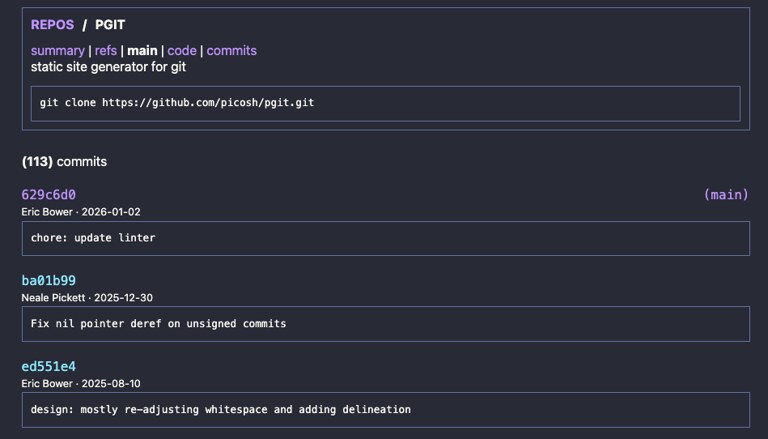
Git, the version-control system programmers use, happens to be a nearly perfect medium for this. Every change is a commit with a timestamp and a history; rewriting an old entry leaves fingerprints that anyone can inspect. cs2stack commits its purchase ledger to a repository after every run: each fill is recorded money-exact — the actual executed price, not a rounded estimate — alongside which venue won the price comparison that day. The founder's own $20/day account runs on exactly this system, and the public experiment exists precisely so the claims and the receipts live in the same place.
What that looks like in practice is deeply unglamorous: lines showing roughly $19–20 of fills spread across a handful of cases each day, plus a weekly standing order. No moonshots, no round numbers, occasional days where a venue was skipped because the price cap said no. That texture — the misses, the boring days — is what real records look like and fabricated ones don't.
Why this beats every screenshot
Three properties do the work:
- Completeness. A ledger includes the losers. Performance can be computed from it rather than asserted, because the cost basis — the true all-in price paid — is in the record, fees and currency conversion included.
- Verifiability. Anyone can recompute the totals. You don't have to trust the author's arithmetic, or their honesty, or their memory. One automated purchase, dissected shows how much detail a single honest record carries.
- Precommitment. Because entries are written at execution time, the author can't retroactively decide which trades "counted." This kills the oldest trick in performance marketing: narrating history after you know how it ended.
There's a private payoff too. An honest ledger is the difference between believing you're up and knowing you're up — and when tax season arrives, a complete machine-written record turns a weekend of archaeology into twenty minutes of export.
What to demand from any tool (or influencer)
You don't need to use cs2stack for this standard to be useful. Before trusting anyone's numbers — a tool, a group, a YouTuber — ask four questions:
- Is there a complete transaction record, or only highlights?
- Is it append-only, or could history have been edited after the fact?
- Are prices execution prices with fees, or marketplace estimates of what an inventory "is worth"?
- Was the record written before the outcome was known, or assembled afterward?
Notice that none of these questions require technical skill to ask. You don't need to read code or understand git internals; you just need to ask where the complete record lives and whether history could have been rewritten. The answer — or the deflection — tells you most of what you need to know.
Most performance claims in this market fail all four. That's not proof of fraud — plenty of honest people just never kept records — but it does mean their numbers are stories, not data. A tool that executes on your behalf should be held to the strictest version of the standard: every action logged, every failure logged too, nothing hidden. The broader case for that is in why ledgers beat memory, and the fastest way to sanity-check any automated system remains reading its buy reports line by line.
The limits, stated plainly
An open ledger proves what happened. It does not prove the strategy was smart, that the returns will repeat, or that the operator will keep behaving. A perfectly audited record of a bad idea is still a bad idea — the ledger just lets you see that faster. Radical auditability is a floor for trust, not a ceiling for skepticism; keep both.
But as floors go, it's a high one. In a market with no auditors, no regulators worth the name, and a content economy that rewards fiction, "here is every transaction, timestamped, come check" is about the strongest honesty signal available. Anyone unwilling to offer it is telling you something. Believe them.