
The 2025 Trade-Up Update: The Day Knife Prices Crashed
For a decade, the only ways to get a knife were opening a case or paying another human. In May 2025, Valve added a third path — and the entire top of the market repriced before most holders had finished reading the patch notes.

What actually changed
The trade-up contract had always stopped one tier short of the top: ten Classified skins got you a Covert, and that was the ceiling. The May 2025 update extended the ladder. Five Covert skins from a given case could now be traded up into a rare special item — a knife or gloves — from that same case's pool. The mechanic that had spent ten years as a mid-tier utility suddenly became a knife-minting machine.
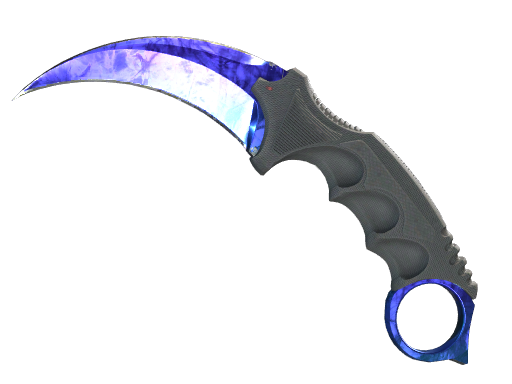
The market implication was immediate and mechanical. Before the update, knife supply was gated by case-opening odds — roughly 1 in 400 openings yields a gold, which made every knife a lottery artifact. After the update, a knife's price had a hard arbitrage ceiling: five times the price of the cheapest qualifying Coverts, plus friction. Any knife trading above that ceiling was, by definition, cheaper to manufacture than to buy. Arbitrageurs did what arbitrageurs do.
The first 48 hours
The repricing played out in two directions at once, and both legs were violent:
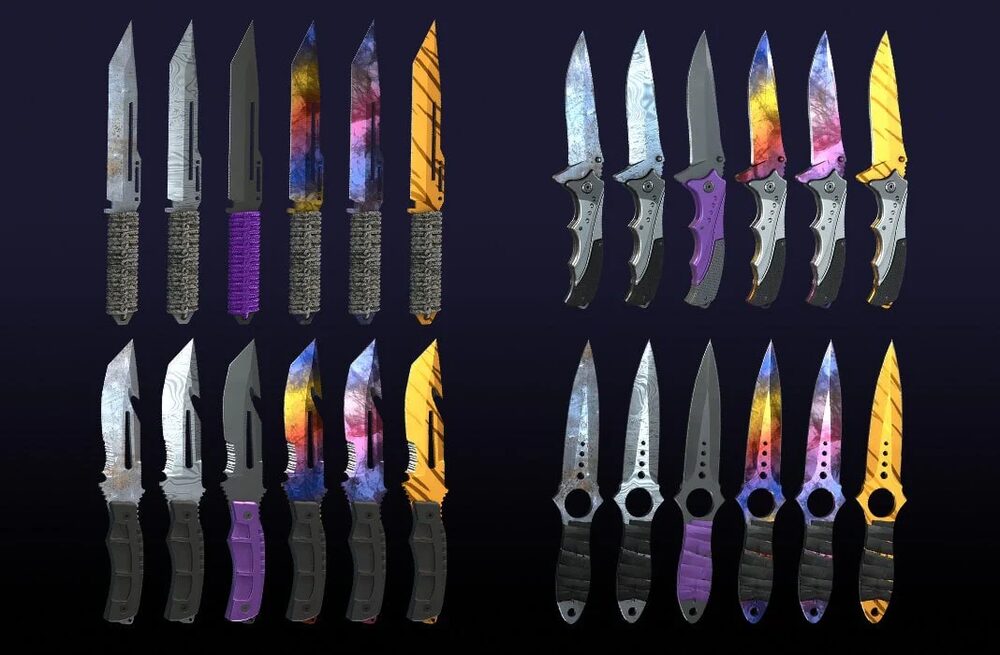
- Knives and gloves fell toward the new ceiling. Floor-tier knives — the cheap Safari Mesh and Scorched units that anchored the "any knife" market — were hit hardest, since they sat furthest above their new manufacturing cost. Per third-party trackers, floor knives reportedly shed a double-digit percentage within hours, with some of the cheapest golds down considerably more over the following days.
- Covert "red" skins spiked. They were the input commodity now, and every trade-up burned five of them. Cheap Coverts from cases with desirable knife pools reportedly multiplied in price as speculators front-ran the demand.
Aggregate estimates of the paper-value swing vary widely — figures in the billions circulated, but no tracker has a clean methodology for a market this fragmented, a problem covered in our methodology piece. What's not in dispute is the direction: the gold tier fell, the red tier rose, and the spread between them collapsed toward the arbitrage bound.
Winners and losers
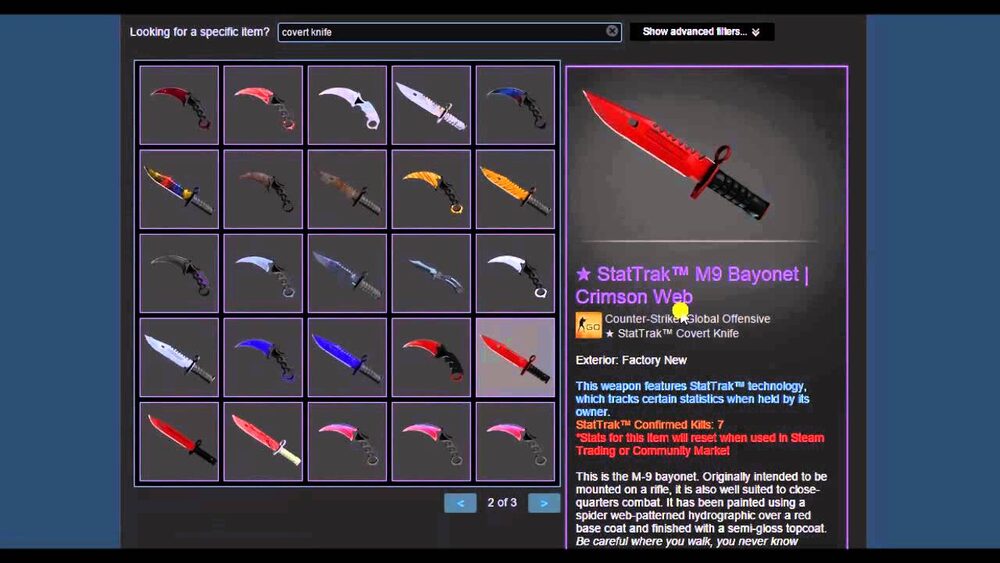
The losers were concentrated: holders of low-tier knives and gloves, and anyone who had treated "a knife" as a stable store of value rather than a specific item with specific supply mechanics. High-tier knives — Dopplers in good phases, low-float Fades, blue gems — held up far better, because their premium was never about the gold rarity tier; it was about pattern and float scarcity that no trade-up can replicate.
The winners were faster and stranger:
- Red-skin holders, including people who had accumulated cheap Coverts for years with no plan at all.
- Case holders. Trade-up demand for Coverts flows upstream into demand for the cases that produce them. Several discontinued cases reportedly rallied as the market priced in a new consumption channel — one more entry in the long story of discontinued-case economics.
- Traders with dry powder. Panic always overshoots. Those who bought quality knives into the initial flush were reportedly sitting on solid recoveries within months, though exact retracement figures vary by tracker.
The recovery, and what repriced permanently
As of mid-2026, the market has largely digested the change. The floor-knife tier never returned to its old levels — nor should it, since its old levels reflected a supply regime that no longer exists. Mid- and high-tier knives recovered much of the drawdown as the initial panic-selling washed out and the actual trade-up volume proved finite: burning five Coverts per attempt gets expensive quickly, and the output is random within the case's pool.
Covert prices settled below their spike but well above their pre-update baseline. The lasting change is a tighter coupling across tiers: red skins, gold items, and the underlying cases now move together more than they used to, because trade-ups link them mechanically. For portfolio construction that means less diversification within the CS2 market than the old tier system suggested — a theme we expand in the diversification guide.
Lessons for holders
The 2025 crash slots neatly into the pattern of every major Valve update: a single patch note, an instant mechanical repricing, an overshoot, a partial recovery. If you held through the 2019 key removal, the script was familiar. Three takeaways travel well:
- Valve risk is not tail risk — it's the main risk. The largest single-day moves in this market's history all came from Update.exe, not from demand shifts. It ranks accordingly among the biggest crashes on record.
- Premiums built on mechanics can vanish; premiums built on scarcity survive. Rarity-tier premiums got deleted. Pattern and float premiums didn't.
- The people who did best had a system. Panic-sellers locked the bottom; disciplined accumulators who kept averaging through the chaos bought the best prices of the year without needing to call the bottom.
The update was a one-day catastrophe for some positions and a stress test the market ultimately passed. The next patch note will arrive with the same zero minutes of warning.