How to Survive a CS2 Market Crash (a Holder's Playbook)
This market has crashed hard at least five times and recovered every time — so far. The holders who got hurt weren't the ones who held through crashes. They were the ones who improvised during them.
Accept the base rate: crashes are scheduled, just not dated
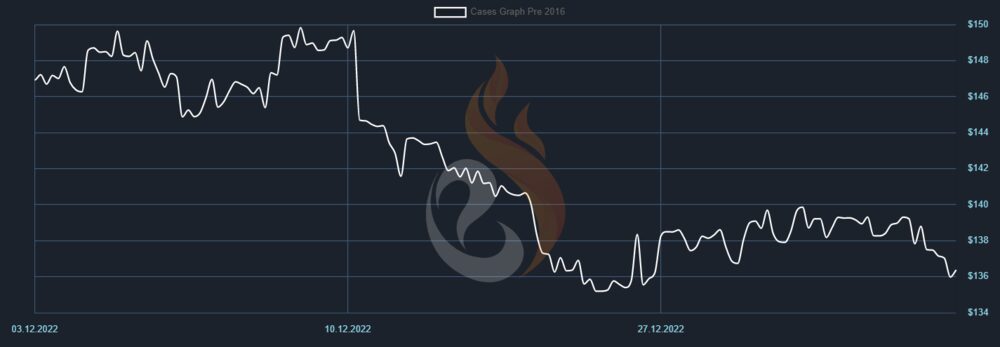
The historical record is unambiguous. The 2016 gambling crackdown, the 2018 trade holds, the 2019 key purge, post-launch corrections after the 2023 CS2 hype, the 2025 trade-up shock — roughly every 18 to 30 months, something repriced a large slice of the market by double digits in days. If your plan doesn't survive a 30–40% drawdown arriving on a random Tuesday, you don't have a plan; you have a mood.
The good news is equally empirical: per third-party trackers, broad case indexes recovered their pre-crash levels after every one of these events, on timelines ranging from a few months to about two years. Past recovery guarantees nothing — the market carries genuine one-company platform risk — but the base rate says the expensive mistake has consistently been selling the panic, not buying it.
Before the crash: position so panic is impossible
Crash survival is 90% decided before the crash starts.
- Size positions to your sleep, not your greed. Only deploy money whose multi-year absence changes nothing about your life. Skin gains are taxable-ish, illiquid-ish, and Valve-dependent; treat the whole allocation as high-risk capital.
- Hold a liquidity ladder. Liquid cases and popular skins exit in minutes even in bad markets; rare patterns and high-tier knives can take months. If everything you own is illiquid, a personal cash need during a crash forces you to sell the worst asset at the worst time.
- Diversify within the game. In a Valve-update shock, correlations go to one — but not symmetrically. The 2025 trade-up update crushed knives while pumping Covert skins. Spreading across cases, capsules, and liquid skins means every shock hits part of your book, never all of it.
- Keep your average entry honest. If you've been averaging in for a year, a 30% drawdown often just takes you back to your cost basis. Lump-sum buyers at the top experience the same crash as a catastrophe.
During the crash: the first 72 hours
When the patch note or headline lands, the sequence is always the same: spreads blow out, low-ball bids get filled by panickers, and social feeds declare the permanent death of the market. Your job is to do almost nothing, deliberately:
- Diagnose before acting. Is this a structural repricing (a mechanic permanently changed an item class's supply-demand math, like trade-ups did to knives) or a liquidity event (forced selling into thin books, like holiday dips)? Structural moves partially stick; liquidity air pockets historically refill.
- Don't market-sell into a no-bid book. The first prints of a crash are the worst prices of the entire event. If you genuinely need to reduce exposure, laddered limit orders recover meaningful percentage points versus panic-hitting whatever bid exists.
- Keep the scheduled buys running. This is the entire payoff of a DCA system. The purchases made during crash weeks are the ones that dominate long-term returns — and they're precisely the buys almost nobody makes manually, because every human instinct screams against them.
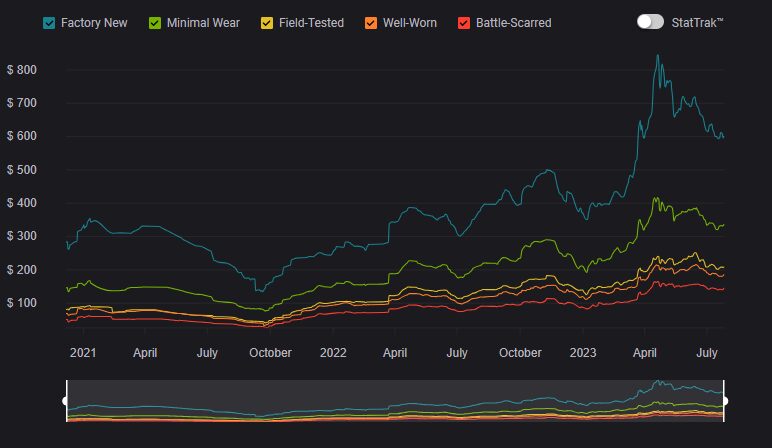
- Ignore inventory-value screenshots. Your tracker showing −35% is quoting you the panic bid. Unless you're selling today, it's not your price.
Every crash in CS history minted two groups: people who tweeted screenshots of their losses, and people who quietly ran their buy schedule through the bottom. The second group doesn't tweet much. They're busy holding the other group's former inventory.
Know your crash type before you touch anything
Each historical crash punished a different behavior, and the differences matter. The 2016 gambling crackdown was a demand shock — speculative money left and took years to return, so the fast bounce never came and patience was the only edge. The 2018 and 2019 events were policy shocks — prices recovered faster than liquidity did, punishing anyone who needed to exit early but rewarding anyone with no need to sell. The 2025 trade-up event was a mechanic shock — permanent relative repricing between item classes, meaning the knife-heavy holder who "waited for recovery" waited for a price that was never coming back in full, while the diversified holder was made whole by the Covert leg of the same event. Same headline word — "crash" — three different correct responses. The playbook's first 72 hours exist precisely to buy you time for this diagnosis.
After the crash: the audit
Recoveries are where you fix the mistakes the crash exposed. Was one item class too big a share of the book? Did you discover an item was far less liquid than assumed? Did you stop buying — and if so, was the budget too big for your risk tolerance? A crash is expensive tuition; wasting the lesson is the only way to make it more expensive. Rebalance toward the structure you wish you'd had, and write down your exit rules while you're still humble.
The one scenario the playbook can't fix
Honesty requires the caveat: every historical recovery assumed Counter-Strike kept existing and Valve kept the economy alive. A true terminal event — regulation that kills trading, or Valve abandoning the item economy — has no playbook beyond position sizing. That's not a reason to avoid the market; it's the reason the market pays the returns it does. Size accordingly, and the next crash becomes what the last five were for disciplined holders: a discount window with terrible marketing.