
Liquidity in the CS2 Skin Market, Explained
A Kilowatt Case sells before you finish clicking. A $50,000 blue gem can sit listed for a year. Both are "worth" their price — only one of them is money.
Liquidity is the price of leaving
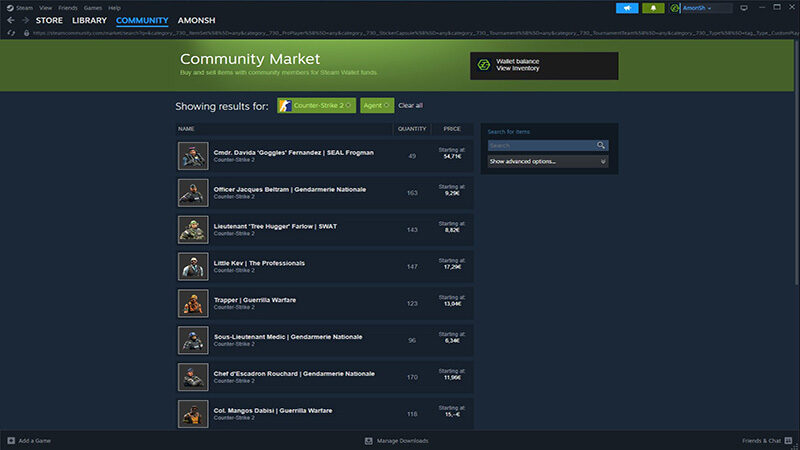
Every inventory screenshot quotes mid-market prices, and mid-market prices are a polite fiction. What you actually own is the bid — the highest price someone will pay you right now — minus fees, minus the days or weeks it takes to find that someone. The gap between the number on your tracker and the cash that lands in your account is the liquidity cost, and in CS2 it varies more between item classes than in almost any traditional market.

At one end sit cases: near-fungible, traded in the tens of thousands of units per day, with order books deep enough that a four-figure order barely moves the price. At the other end sit rare patterns and high-tier knives, where the "market" is a handful of collectors who all know each other, and where valuation is closer to art appraisal than to reading a ticker. Understanding where your items sit on that spectrum matters more than any price prediction.
Depth by tier: what the order book actually looks like
Liquidity in this market is stratified by price and by fungibility. A rough map, from most liquid to least:
- Active-drop and recent cases. Thousands of identical units, buy orders stacked deep on Steam and mirrored across third-party venues. Spreads are often low single-digit percent. You can exit five figures' worth in a day without visibly denting the price.
- Discontinued cases and popular liquid skins. Think AK Redlines, mid-tier Doppler knives, rare-drop-pool cases. Still fungible, still daily volume, but thinner books — a large market-sell walks down the bids noticeably.
- High-tier knives, gloves, and grail skins. Each unit is differentiated by float, pattern, and stickers, so there is no order book in any meaningful sense — only listings and offers. Spreads of 10–20% between realistic bid and ask are normal, per marketplace data.
- Pattern grails and unicorns. A 387 blue gem Karambit has no market price; it has a negotiation history. Sales happen privately, sometimes years apart. This is the auction-house tier, and liquidity is measured in months.
The pattern generalizes: fungibility creates liquidity. The more interchangeable the units, the tighter the spread and the faster the exit. Every attribute that makes an item special — a 0.0004 float, a full blue playside, a Katowice craft — also makes it harder to sell, because it shrinks the buyer pool to people who value that exact attribute.
Spreads, fees, and the real cost of a round trip
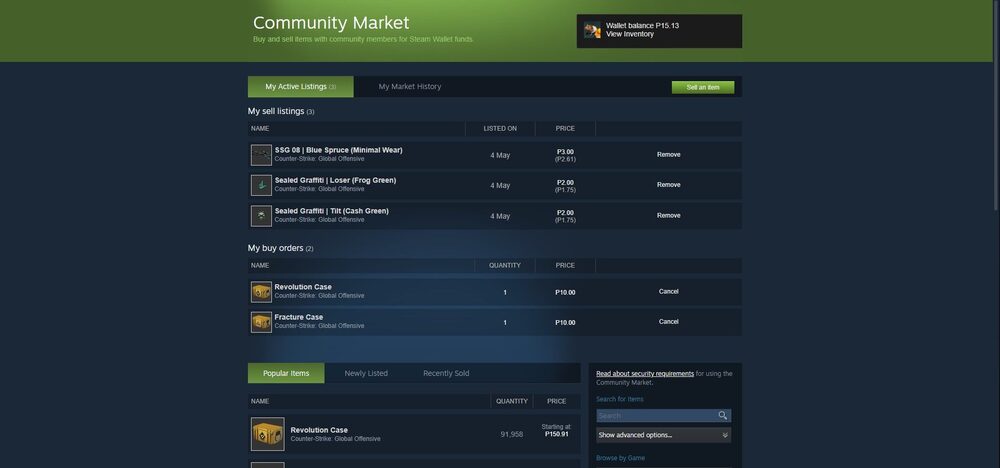
The visible spread is only the first layer. Stack the full exit cost and liquid items win by even more:
| Item class | Typical bid-ask spread | Time to sell at bid | Round-trip drag (spread + fees) |
|---|---|---|---|
| Popular case | ~2–5% | Seconds to minutes | Low, dominated by venue fee |
| Liquid skin (e.g. Covert rifle) | ~5–10% | Hours to days | Moderate |
| High-tier knife/glove | ~10–20% | Days to weeks | High — patience or haircut |
| Pattern grail | Undefined | Weeks to years | Negotiated per sale |
These ranges are directional, not gospel — spreads compress when the market runs hot and blow out in a crash. And remember that Steam prices overstate everything: the ~15% fee plus the wallet lock means a Steam "sale" isn't a cash exit at all. Real liquidity analysis happens in cash terms, on venues that pay out.
When liquidity disappears
The most dangerous property of liquidity is that it's pro-cyclical: abundant when you don't need it, gone when you do. During the sharp Valve-update selloffs — the 2025 trade-up repricing being the canonical recent example — bids on illiquid items simply vanished. Holders of liquid cases could exit within percent of the pre-news price; holders of six-figure knives faced a choice between hitting a lowball offer or riding the drawdown. Per third-party trackers, high-tier items' realized sale prices during that window fell substantially more than their listed prices suggested, because the listings weren't clearing.
An asset is only worth what the market will pay on the day you're forced to sell. Everything else is a screenshot.
This is why liquidity belongs in position sizing, not just in exit planning. A portfolio that is 80% rare patterns may show spectacular tracker gains and still be functionally frozen. The traders who navigate crashes well tend to hold their risk budget in liquid instruments and treat the illiquid tier as a collector's allocation they never need to touch — a discipline covered in more depth in the crash playbook.
Practical takeaways
Three habits fall out of all this. First, mark your inventory to bid, not to ask — if you can't stomach the bid-marked number, you're carrying more illiquidity than you think. Second, match holding period to liquidity tier: cases can be a flexible position you trim any week, while a grail is a five-year commitment whether you planned it or not. Third, spread exits across venues — the same case often clears at different net prices on Steam versus cash marketplaces, and on illiquid items a second venue can be the difference between selling this month and next quarter.

Liquidity isn't a footnote to returns; over a full cycle it is a return. The 3–5% you don't lose crossing spreads and force-selling into thin books compounds exactly like alpha — and unlike alpha, it's available to anyone willing to be honest about what their items would actually fetch today.