
How Do You Measure a Multi-Billion Dollar Market Nobody Audits?
Every few months a headline declares the CS2 skin market is worth some number of billions. Nobody who writes those headlines can see the whole market — and neither can anyone else.
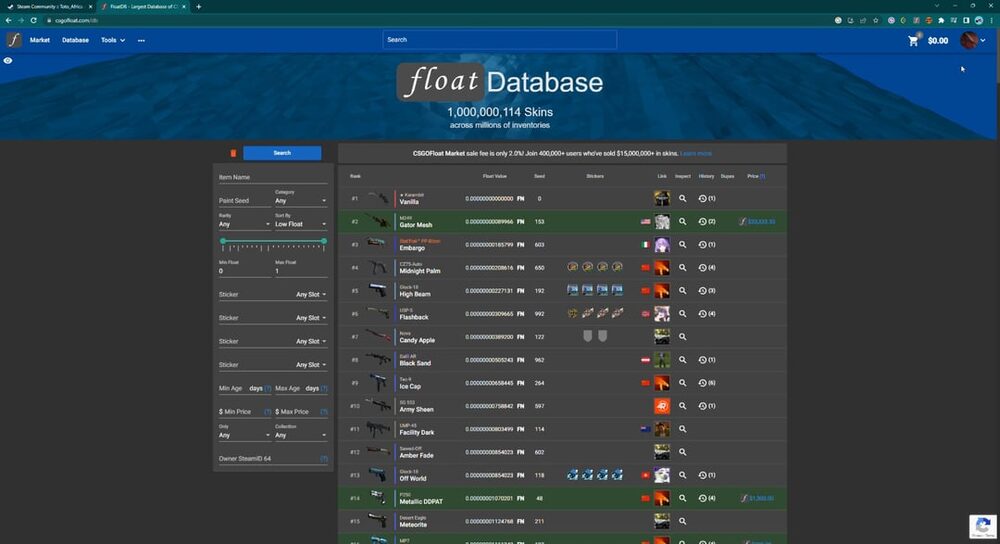
The number everyone quotes and nobody can verify
Market-cap claims for CS2 skins are built the only way they can be: count the items visible in public inventories, multiply each by a reference price, and sum. Estimates from third-party trackers have ranged well into the billions of dollars, and the honest framing — the one used in our own sizing piece — is a wide range, not a number. The reason isn't laziness. It's that every step of that calculation rests on data nobody audits, prices nobody clears at scale, and inventories nobody can fully see.
Valve, the only party with complete data, publishes none of it. There is no exchange, no regulator, no quarterly filing. What exists instead is a patchwork of scraped Steam Market listings, third-party marketplace feeds, and inventory-crawling services — each with its own blind spots. Understanding those blind spots is the difference between reading a market-cap headline and believing it.
Problem one: inventory value is not realizable value
Multiplying every item by its listed price produces a number that could never be realized. If any meaningful fraction of holders tried to sell, prices would collapse long before the "market cap" was extracted — the order books are nowhere near deep enough, a point the liquidity breakdown makes concrete. Traditional equity market cap has the same flaw, but skins add layers of their own:
- Which price? Steam prices run structurally above cash prices because wallet funds can't leave the platform. Valuing the market at Steam prices versus cash-market prices changes the total by a large double-digit percentage before you've counted a single item differently.
- Unique items have no price. Pattern grails and rare floats trade by negotiation. Any reference price a tracker assigns to a blue gem is closer to a guess than a quote.
- Fees and locks. A realizable-value estimate should net out marketplace fees and the discount on trade-locked items. Almost none do.
- Dead inventories. A large share of items sit in accounts that haven't logged in for years. They exist, but whether they're "supply" in any economic sense is a genuinely open question.
Problem two: the data sources can't see the whole board
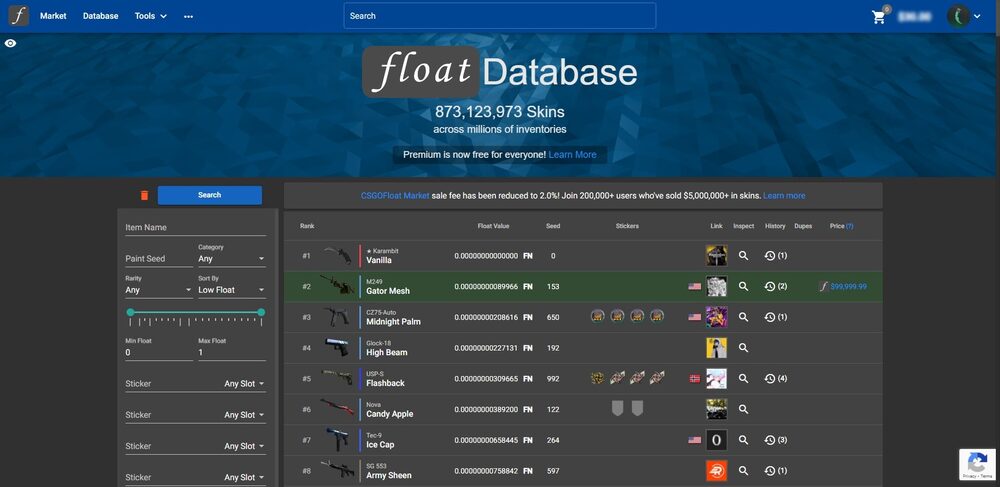
The measurement stack, such as it is, has three tiers. Price aggregators (Pricempire and similar services surveyed in the data-stack piece) collect listing and sale prices across venues. Inventory crawlers estimate item populations by scanning public Steam inventories. And case-supply trackers count specific items over time. Each tier has a known bias:
| Source | What it sees | What it misses |
|---|---|---|
| Steam Market data | Listings and sale medians | Third-party volume; wallet prices ≠ cash |
| Third-party feeds | Cash-market prices | Fragmented across venues; wash-trade noise |
| Inventory crawlers | Public inventories | Private inventories and storage-unit contents are invisible |
| Chinese platforms | The largest demand pool | Data rarely flows west; per reports, a huge share of volume |
The private-inventory problem alone is disqualifying for precision: when a user sets their inventory private or moves items into storage units, those items drop out of every crawler's census. Survivorship cuts the other way too — trackers over-sample active traders, whose inventories skew toward liquid, high-turnover items. And the Chinese platforms, which per public reporting handle an enormous share of global volume, publish little that Western aggregators can systematically ingest.
Problem three: volume lies
Even trading-volume figures — which sound more measurable than market cap — are polluted. On venues with low or rebated fees, wash trading (self-dealing to inflate apparent activity or manipulate reference prices) is cheap, and skin markets have repeatedly been accused of it; the incentive exists wherever a marketplace's headline volume attracts users. Steam's own volume is more trustworthy per-transaction but measures wallet-dollar churn, not cash. Summing "volume" across venues therefore mixes real cash trades, wallet-locked trades, and some unknowable fraction of fake ones. Any figure of the form "the market trades $X million a day" deserves the prefix reportedly, permanently.
In an unaudited market, every statistic is somebody's estimate wearing a suit.
A related confusion muddies the headlines: the size of the market and the size of Valve's revenue from it are different quantities that get quoted interchangeably. Case-opening spend (keys bought from Valve), Steam Market fee income, and the aggregate value of items in circulation are three separate numbers with three separate methodologies — and journalists routinely swap one for another. When a figure crosses your feed, the first question is always: is this stock or flow, and who counted it?

How to consume market-cap claims anyway
None of this means the numbers are useless — it means they're indexes, not measurements. The same tracker applying the same flawed methodology month after month still captures direction and rough magnitude, which is most of what a holder actually needs. As of mid-2026, the defensible statements are: the market is worth billions of dollars on any reasonable methodology; it has grown dramatically since the CS2 transition; and the error bars on any point estimate are enormous. A few habits keep you honest:
- Prefer ranges to point estimates, and ask which price source a figure uses before comparing it to another.
- Track changes within one methodology rather than levels across methodologies.
- Value your own inventory at cash bids net of fees — the one corner of the market you can measure precisely.
- Treat any suspiciously precise figure ("the market is worth $4.27B") as marketing.
The market's opacity is a direct consequence of its structure — one private company, no reporting obligations, fragmented venues. That opacity is part of the asset-class question itself: an asset you can't measure is an asset you should size accordingly.