Trade Locks Explained: Why Your Skin Is Stuck for a Week
The seven-day hold is the most consequential rule in the CS2 economy that nobody reads the patch notes for anymore. It decides who can arbitrage, what liquidity costs, and why locked items trade at a discount.
Where the hold came from
In March 2018, Valve introduced a seven-day trade hold on CS:GO items: any item received via trade could not be traded again for a week. The stated reason was fraud control — stolen items were being flipped through chains of accounts faster than support could claw them back, and Valve decided that slowing every trade was cheaper than adjudicating thousands of hijack cases. The community response was furious; the change kneecapped the trading-site model of the era and contributed directly to OPSkins' collapse a few months later when Valve banned its bot network. Eight years on, the hold is simply part of the terrain. The full story is worth reading in our history of the 2018 trade holds.
What actually gets locked, and when
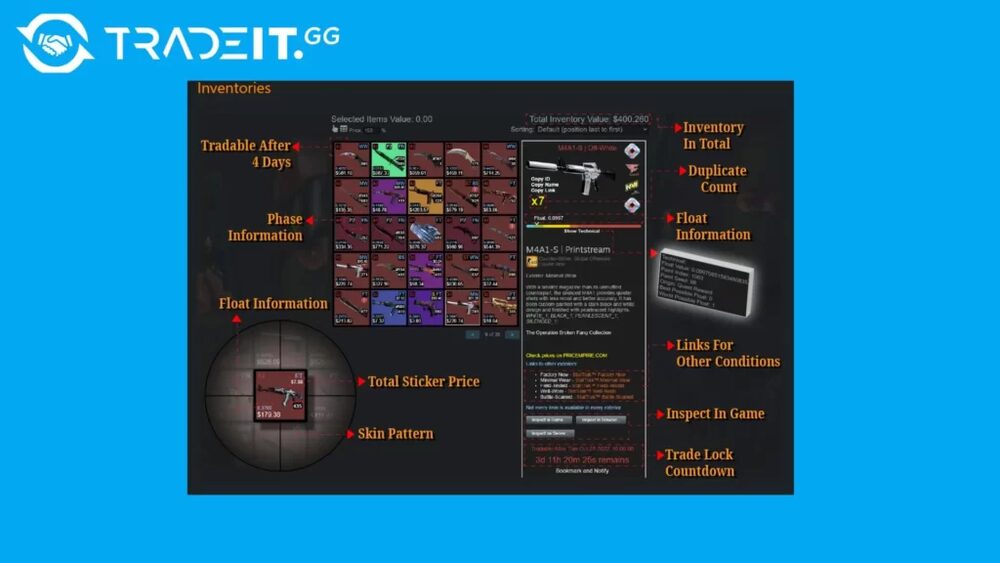
The mechanics as they stand in mid-2026, after the Trade Protection update layered reversibility on top:
- Items received in a trade carry a hold before they can be traded onward. The clock runs from receipt, not from listing.
- Items bought on the Steam Community Market also become trade-restricted for a period after purchase — you can use them in-game immediately, but you can't move them to another account.
- Items you already own and haven't moved are unaffected. Holding is free; it's transfer that pays the time tax.
- Freshly unboxed items are generally tradable without the received-in-trade hold — one of the few flows that skips the queue.
The practical upshot: every time an item changes hands, roughly a week of illiquidity is stapled to it. An item that routes through three parties — seller, marketplace bot, buyer — accumulates that friction at each hop. Marketplaces have engineered around this in two ways: holding pre-purchased inventory on their own bots so the buyer-facing hold has already elapsed, and building "locked listing" order books where the delivery date is simply part of the price. Both are workarounds for the same underlying constraint, and both cost someone money — which is the whole story of trade holds in one sentence.
The market microstructure it creates
Trade holds are why the CS2 market behaves less like an exchange and more like a settlement system with a T+7 lag. Three effects matter for anyone deploying money:
Arbitrage is slow, so spreads persist. In a market with instant settlement, a price gap between two venues gets closed in minutes by bots. With a seven-day hold, closing a cross-venue gap means committing capital for a week and eating price risk the whole time. That risk premium is why the same case can trade at visibly different prices on DMarket, SkinBaron, and Steam for days on end — the gap you see is partly the market pricing the hold.
Locked inventory trades at a discount. Most third-party marketplaces let sellers list items that are still inside their hold window, with delivery scheduled for unlock. Buyers demand compensation for waiting, so locked listings sit below unlocked ones — often low single digits for liquid items, more for volatile ones. If you're patient, buying trade-locked listings is one of the most reliable small edges available: you're being paid to wait out a countdown that costs you nothing if you were going to hold anyway.
Volatility and holds interact badly. When a Valve update lands — the 2025 trade-up crash being the canonical example — everyone who received items in the prior week is locked out of reacting. Repricing happens against a fraction of the float. That amplifies moves in both directions and is part of why update days produce such violent candles.
Playing the hold instead of fighting it
For a long-horizon accumulator, trade holds are close to irrelevant — and that's the point worth internalizing. If your strategy is daily DCA into cases you intend to hold for years, the week of illiquidity on each purchase never binds; you weren't selling next Tuesday anyway. The hold punishes flippers and subsidizes holders, because the flipper's costs (time, locked capital, reversal risk) show up as the discount the holder gets to buy at.
A few practical rules follow:
- Prefer trade-locked listings when the discount is real and your horizon is long. Sort by discount, not by unlock date.
- Never plan an exit that requires moving items you received within the last week. Check locks before a Major or a rumored update window, not after — exit discipline starts with knowing what's actually sellable today.
- Account for the hold when comparing venues. A marketplace with instant delivery from unlocked bot inventory is worth a small premium over a cheaper peer-to-peer listing that settles in seven days.
- Remember that Steam Market purchases restrict trading too. If the plan is to buy on Steam and move items to a storage account or a cash venue, the calendar math matters.
Will it ever go away?
Unlikely. Valve has had eight years to soften the policy and has instead layered more protection on top of it. The hold demonstrably reduced item theft's profitability, and Valve's revealed preference is to trade liquidity for fraud reduction every time — the 2019 key ban was the same instinct applied more brutally. Build your process assuming T+7 settlement is permanent. The traders who struggle with holds are the ones improvising around them; the ones who benefit are the ones whose strategy never needed speed in the first place.