
The Scams That Empty CS2 Inventories (and How They Work)
Nobody loses a five-figure inventory to a clever exploit. They lose it to one of maybe six well-worn plays that have barely changed in a decade. Learn the catalog once and most of them stop working on you.
Why scams scale better than hacks
Steam's item security is actually decent: mobile confirmations, trade holds since the 2018 change, and more recently the trade protection window all exist because Valve got tired of support tickets. So attackers stopped attacking Steam and started attacking you. Every scheme below is social engineering wearing a different costume, and every one of them needs you to take an action that feels routine at the time. That's the good news: the defense is recognition, not technology.

The API key hijack — the one that empties whales
This is the most damaging scheme in circulation, and the least understood. Your Steam Web API key is a credential that lets software read your trades and, critically, cancel and act on trade offers. The play: a phishing site — usually a fake trading, gambling, or "vote for my team" page — walks you through a real-looking Steam login (or gets you to authorize via a compromised OpenID flow), then silently registers an API key on your account.
Nothing happens immediately. That's the design. The scammer's software sits and watches. Weeks later, when you make a legitimate trade — say, selling a knife to a marketplace bot — their script instantly cancels the real trade offer and substitutes an identical-looking one from a bot account cloned to match the marketplace's name and avatar. You confirmed a trade seconds ago in your head, so you confirm this one on mobile. The items go to them.
Fake sites and fake logins
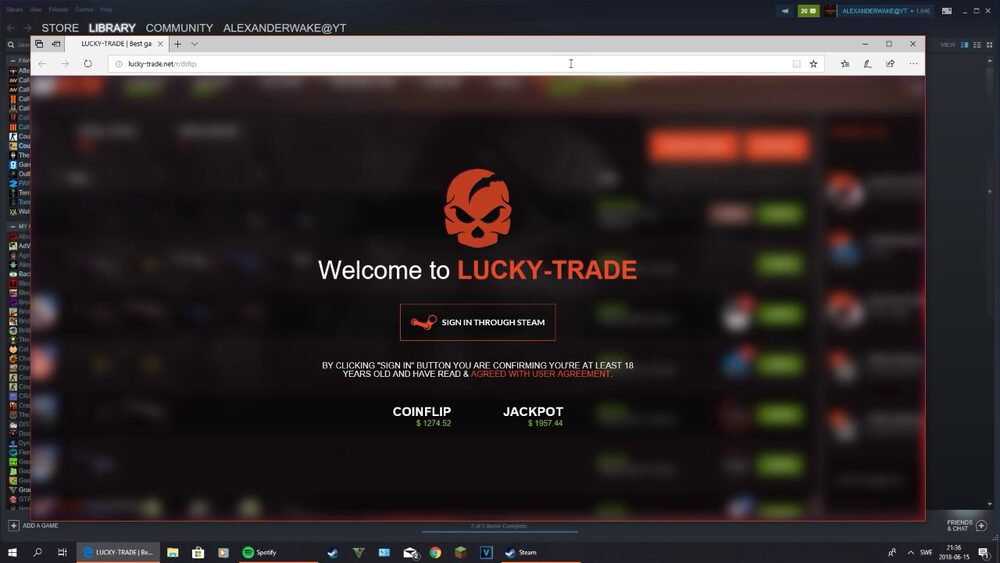
The delivery mechanism for almost everything above is a counterfeit page: a marketplace clone one typo away from the real domain, a "free case" site, a skin-betting page a friend's hijacked account just sent you. The login form looks exactly like Steam's — because it's a pixel-perfect copy, or a real Steam page rendered inside a window the attacker controls, where the address bar itself is fake.
The defenses are mechanical, not clever:
- Type marketplace URLs or use your own bookmarks. Never enter through a link in a Discord DM, a Steam comment, or a stream chat.
- A genuine Steam OpenID login happens on
steamcommunity.com— verify the domain character by character, and be suspicious of login popups that don't let you inspect the URL at all. - Steam never asks you to "verify your items," "confirm your inventory value," or log in to receive something someone else sent.
- The classic "vote for my team in the tournament" message from a friend is the compromised-account chain letter. Their account was phished; the link is how yours joins it.
Impersonators: fake admins, fake buyers, fake middlemen
The oldest play in the book still works because it targets greed and fear in equal measure. Variants you'll actually encounter:
- The fake marketplace admin who contacts you about a "problem with your listing" and needs you to send items for "verification." Real platforms never take custody through a chat request.
- The fake trusted trader with a profile decorated in real-looking reputation comments (all posted by their own alt accounts) proposing an off-platform deal at a too-good price.
- The accidental-report scam: someone claims they "accidentally reported you for scamming" and a "Steam admin" (their accomplice) will contact you to resolve it — which somehow ends with you handing over items or credentials. Valve staff will never contact you through friend requests or Discord. Ever.
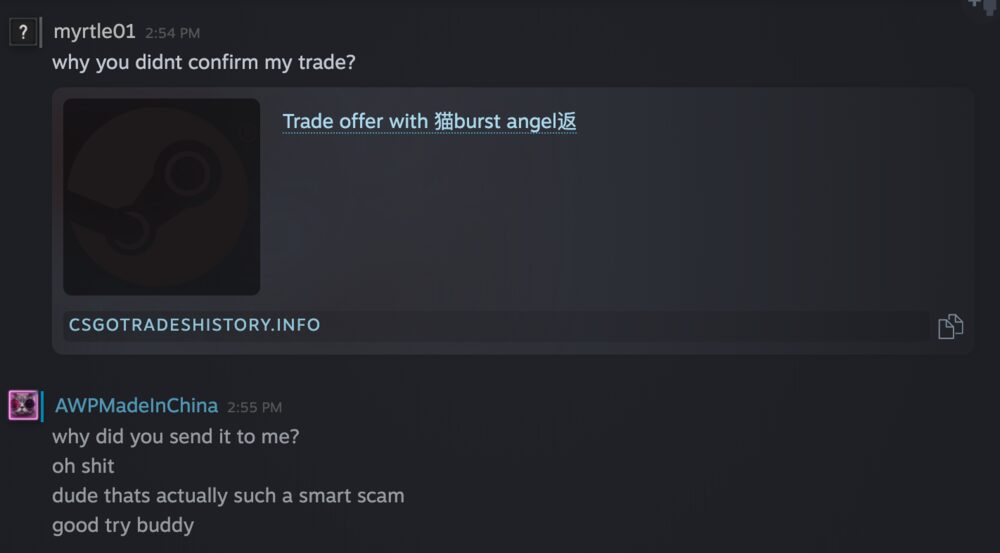
- The quick-switch: in a direct trade, a high-value item is swapped at the last second for a lookalike — a StatTrak for a non-StatTrak, a Factory New for a Field-Tested, a Doppler for a cheaper phase. The re-sent offer "because the first one bugged" is the moment the switch happens.
Every impersonation scam shares one skeleton: manufactured urgency plus a reason to move the transaction somewhere with no escrow. Real counterparties survive you sleeping on the deal. Scammers can't afford to.
The prevention checklist
Ten minutes of setup neutralizes most of the catalog:
- Steam Guard Mobile Authenticator on, and read every trade confirmation on the phone screen — item by item — instead of rubber-stamping it.
- Check your registered Steam API key right now and revoke anything you didn't knowingly create. Repeat after any suspected phishing contact.
- Bookmark your marketplaces; never log in through links. Prefer established venues with escrow — the major platforms compared here — over any peer-to-peer deal with a stranger.
- Treat your inventory like the liquid asset it is: unique password, email with its own 2FA, no shared logins with betting or "free skins" sites.
- Verify trade partners by their permanent SteamID or profile URL, not display name and avatar — those are copyable in seconds.
- When selling, follow the safe cash-out playbook: platform escrow, no off-platform "trust" deals, patience over pressure.
One more structural defense: boring strategies have small attack surfaces. A DCA accumulation approach that buys sealed cases into storage units involves no direct trades with strangers, no gambling sites, and no middlemen — which is most of the catalog gone by construction. The people who get hit hardest are the ones doing high-touch peer-to-peer deals, which is precisely where every scheme above lives. As of mid-2026, with inventories worth more than ever, assume anyone who contacts you first about your items has read this same catalog — from the other side.