What the CS2 Launch Did to Skin Prices
A sequel usually resets an in-game economy. Valve did the opposite: it promised every item would survive — and lit the fuse on the biggest bull run the skin market had ever seen.
March 22, 2023: the announcement candle
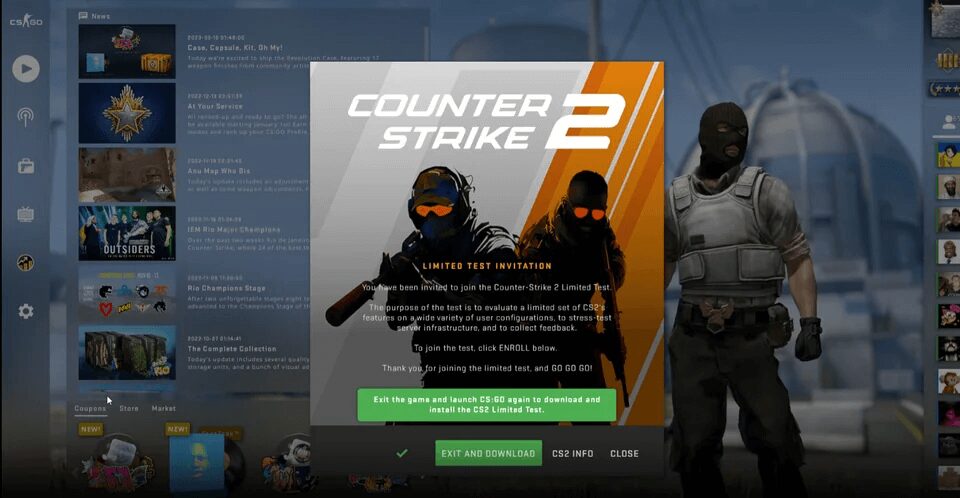
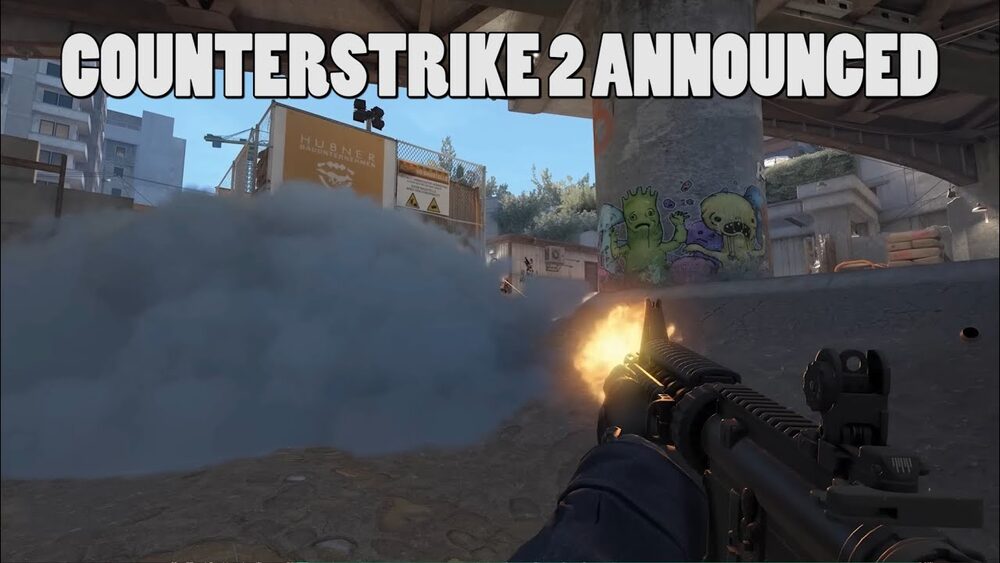
When Valve confirmed Counter-Strike 2 in March 2023 after weeks of leaks and NVIDIA driver breadcrumbs, the market's first question wasn't about sub-tick servers. It was: what happens to my inventory? Valve answered immediately — the entire CS:GO item collection would carry over into CS2, upgraded to the new engine's lighting and materials. The moment "everything carries over" was confirmed, holding skins stopped being a bet on an eleven-year-old game and became a bet on the franchise's next decade.
The repricing started within hours. Cases led the move — the cheapest, most liquid, most supply-constrained expression of "the game has a future." Per third-party trackers, many discontinued cases multiplied several times over between the announcement and launch, and case-index charts from that spring show one of the steepest sustained climbs on record. The carry-over promise did the heavy lifting: it converted platform risk — the standing fear that Valve could one day orphan the inventory — into platform endorsement.
The summer melt-up
The rally didn't stop at the announcement. Through the limited-test summer of 2023 the market kept climbing on a self-reinforcing loop:
- Returning players. The CS2 hype cycle pulled lapsed players back, and CS:GO broke its own concurrent-player records in the announcement window — player counts being the demand engine under every skin price.
- The "last drops" narrative. Nobody knew which CS:GO-era items would keep dropping in CS2. Uncertainty about future supply is rocket fuel for anything discontinued — the same logic that drives the blue-chip case thesis.
- New-engine speculation. CS2's lighting rendered some finishes visibly differently. Traders speculated on which skins would "glow up," and certain finishes reportedly repriced on screenshots alone.
- Momentum itself. A market of holders watching green candles produces more holders. Sell-side liquidity thinned out precisely as demand peaked.
September 27, 2023: launch, and the hangover
CS2 launched on September 27, 2023, replacing CS:GO outright. And then the market did what markets do after a rumor becomes news: it corrected. The weeks after launch brought a broad cool-down — sell-the-news profit taking, frustration with the launch state of the game (missing modes, missing maps, community servers in limbo), and the simple exhaustion of a narrative that had been paying out for six months.
The dip had a second, less-discussed driver: the engine change itself repriced individual items. CS2's new lighting made some finishes look better and others noticeably worse — certain painted skins lost their pop, some doppler phases and pearlescent finishes gained one — and float-adjacent visual quirks that traders had priced for a decade suddenly rendered differently. For a few weeks the market was effectively re-grading thousands of SKUs at once, which added churn on top of the macro profit-taking.
The correction was real but shallow relative to the run. Most of the announcement-era gains held, and the market found a higher floor rather than a round trip. The post-launch dip has since become the textbook example holders cite for not panic-selling into event-driven weakness: buyers of that dip were repriced upward within months as CS2's player base kept growing and new-content droughts kept supply tight — the drought dynamic that dominated the early CS2 era before Kilowatt arrived in February 2024.
Who actually made money
It's worth separating the cohorts, because the launch created very different outcomes for very similar-looking portfolios. Holders of discontinued cases and old capsules captured the cleanest gains — their assets had no new supply to absorb the demand shock. Holders of active-drop cases saw smaller multiples, because every price uptick was met by millions of weekly drops hitting the ask. And buyers who entered during the summer melt-up did fine only if they held through the post-launch dip; anyone who bought August and sold October locked in the round trip. The dispersion is the lesson: the same headline event paid the supply-constrained assets first and most, which is exactly what you'd expect and exactly what most participants ignored in the moment.
The structural legacy
Three years on, the launch matters less for the candle it printed than for what it proved.
| What launch proved | Market consequence |
|---|---|
| Valve migrates inventories across engine generations | Long-horizon holding became defensible; "Valve could delete it all" lost most of its force |
| A sequel announcement is a market event | Update risk cuts both ways — the same patch-note channel that causes crashes can cause melt-ups |
| Cases are the market's beta | Cases outran most skins on the way up, confirming their role as the index-like instrument of the economy |
| Hype eras end in corrections, not collapses | The post-launch dip recovered; the 2023 floor held through every shock since, as of mid-2026 |
The launch also set the precedent that every future franchise event now trades on. When leaks or teasers surface, the market front-runs them — the 2023 playbook is common knowledge, which arguably makes it harder to repeat. The traders who did best in 2023 weren't the ones who predicted CS2; they were the ones already holding when the announcement hit, because they'd been accumulating through the boring years before it. That's the uncomfortable lesson of the whole episode: the bull run paid the patient, not the fast — an argument for being systematically long before the news rather than chasing it after.