
How Big Is the CS2 Skin Market in 2026?
Everyone quotes a number. Nobody can defend one. Here's what the estimates actually say, where they come from, and why the honest answer is a range with a billion-dollar error bar.
The headline numbers, and their sources
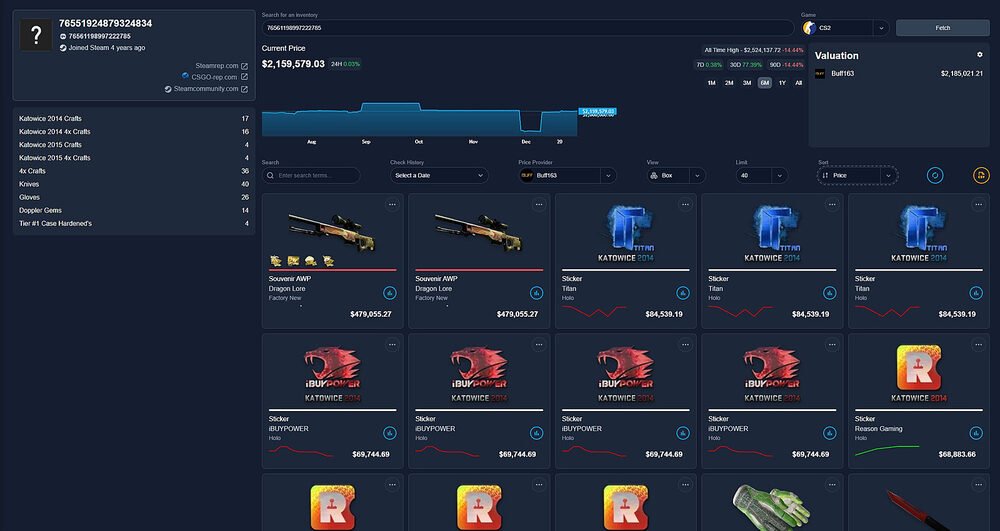
As of mid-2026, the figures that circulate for the total value of all CS2 items in existence cluster in the low tens of billions of dollars. Third-party trackers and data platforms have published estimates ranging from roughly $4–5 billion in the early CS2 era to well past $15 billion after the 2024–2025 run-up; some inventory-scanning projects have floated higher numbers still. None of these are audited. All of them are built by multiplying observed inventories by observed prices, and both halves of that multiplication are shakier than they look.
The one thing every estimate agrees on: the market has grown enormously. The compounding of case prices from 2021 through 2026, record player counts, and the migration of trading volume onto cash marketplaces have pushed every reasonable methodology to a number that would have sounded absurd in 2020.
Stock vs flow: two different questions
"How big is the market" hides two separate questions, and conflating them is how most bad headlines get written.
- Market cap (the stock): the mark-to-market value of every skin, case, sticker, and knife sitting in every inventory. This is the multi-billion figure — and it's a paper number, because most of it could never be sold at quoted prices. Dumping even a fraction of the supply of any item craters its price.
- Trading volume (the flow): what actually changes hands. Steam Market volume for CS2 items has reportedly run in the hundreds of millions of dollars per year, and third-party venues — DMarket, SkinBaron, CSFloat, and above all the Chinese platforms Buff and YouPin — are widely believed to move more than Steam does, though they publish little.
The gap between the two matters practically. A $15 billion market cap with maybe $1–2 billion of annual realizable flow (estimates vary wildly) means the average item turns over rarely. Liquidity is concentrated in a thin band of popular items and cheap cases; the rest of the "market cap" is furniture.
| Measure | Rough range (mid-2026) | Confidence |
|---|---|---|
| Total inventory value ("market cap") | Low tens of billions USD | Low — scan-based extrapolation |
| Realizable value after fees/discounts | Meaningfully less; single-digit billions plausible | Very low — nobody has sold it to check |
| Steam Market annual CS2 volume | Hundreds of millions USD, reportedly | Medium — partial public data |
| Third-party annual volume | Believed to exceed Steam's; unpublished | Low — self-reported or inferred |
Why nobody can measure it precisely
The measurement problems aren't laziness — they're structural. We've written a full breakdown of the methodology problems, but the short version:
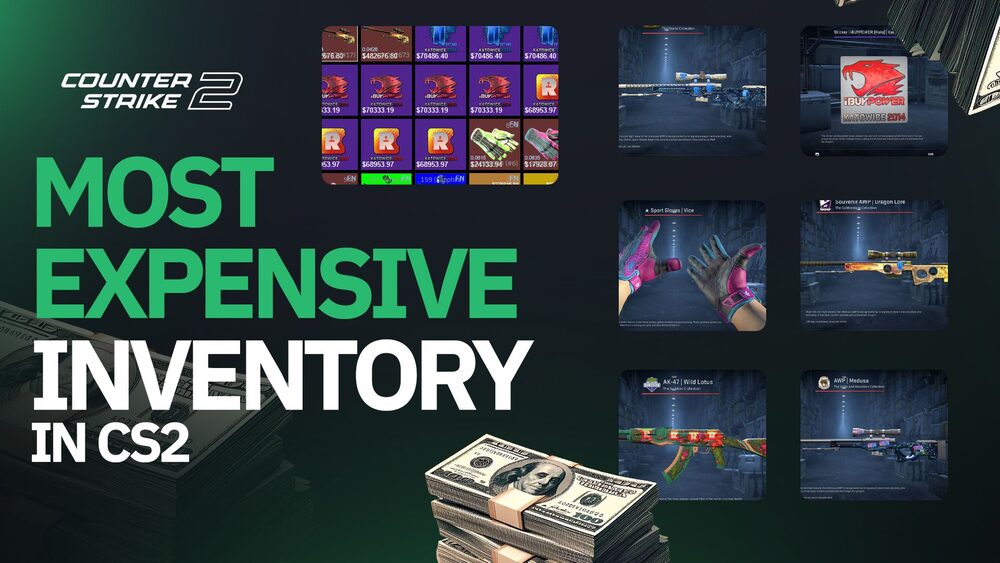
- Private inventories. Steam lets users hide their inventories, and a meaningful share of high-value holders do. Every scan-based estimate is extrapolating from the visible slice.
- Which price? Steam prices run structurally higher than cash prices because Steam's ~15% fee and wallet lock mean Steam dollars aren't dollars. Value the same inventory at Steam listings vs Buff cash prices and you get answers 20–30% apart before you've made a single judgment call.
- Thin books at the top. A $400,000 blue gem's "price" is one private sale or a standing offer. Multiply pattern premiums across thousands of rare items and the error compounds.
- Wash trading and bot flows. Third-party volume figures include market-making bots and, per persistent community suspicion, some outright wash volume. Flow numbers are ceilings, not floors.
How the estimates get built anyway
Given all that, it's worth knowing what the trackers actually do, because their methods explain their disagreements. The common approach samples public inventories at scale, prices each item against a reference venue (usually Buff or a cash-price aggregate, sometimes Steam), and extrapolates to the estimated player base. Case-supply trackers work differently: for cases, drop rates and opening counts can be inferred from unboxing telemetry and market listing flows, which is why case supply figures are generally considered the most trustworthy numbers in the whole ecosystem. Volume estimates are the weakest link — Steam publishes listing histories that can be scraped, but third-party venues report what they choose, and the largest Chinese platforms report essentially nothing to western audiences.
The result is that two reputable trackers can disagree by a factor of two while both being defensible. When you see a market-size headline, the questions that matter are always the same: whose inventories, priced where, extrapolated how. Most articles quoting a number can't answer any of the three.
What the size actually implies for a holder
Ranges are still useful. Even the conservative end of the estimates makes CS2 skins one of the largest virtual-item economies ever built — large enough that data platforms, market makers, and semi-institutional buyers now operate in it, a shift toward treating skins as an alternative asset class in earnest.
Size cuts both ways, though. The market is big enough to have real infrastructure and real price discovery across multiple competing venues, but it all sits on one company's servers. Valve doesn't report skin-economy numbers, doesn't owe anyone continuity, and has repriced the entire market with a patch note more than once — 2025's trade-up update being the freshest reminder. A multi-billion dollar market with single-publisher risk is still a multi-billion dollar market with single-publisher risk.
For the individual, the practical takeaway isn't the headline number. It's the structure underneath: value concentrated in liquid, cheap, high-float-count items; volume migrating to cash venues where prices are real; and growth driven by player-count demand against structurally shrinking case supply. Those mechanics are measurable at the item level even when the aggregate isn't — and they're the ones a buying strategy can actually act on.