
Where CS2 Skins Actually Trade: Steam vs Third-Party
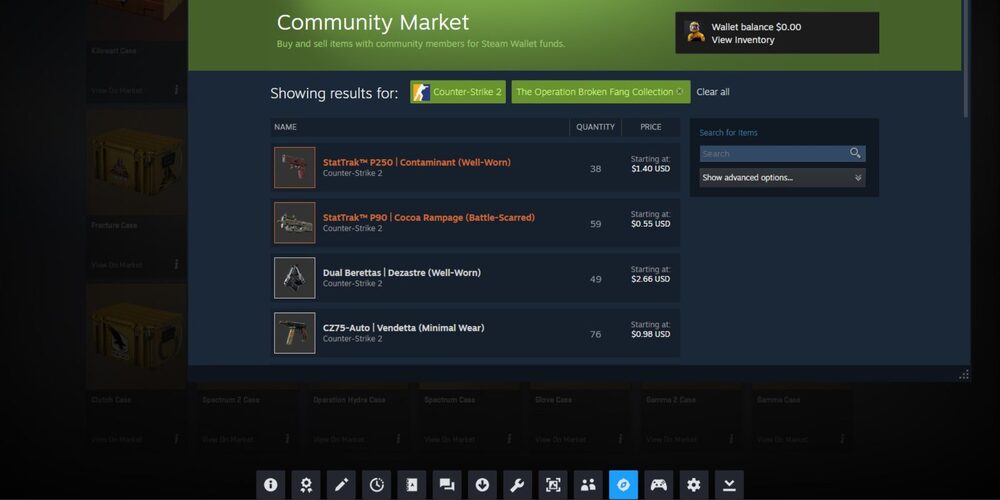
The Steam Community Market is the venue everyone can see. It is not the venue where most of the serious money moves. Understanding where volume actually lives is the difference between reading the market and reading a mirror.
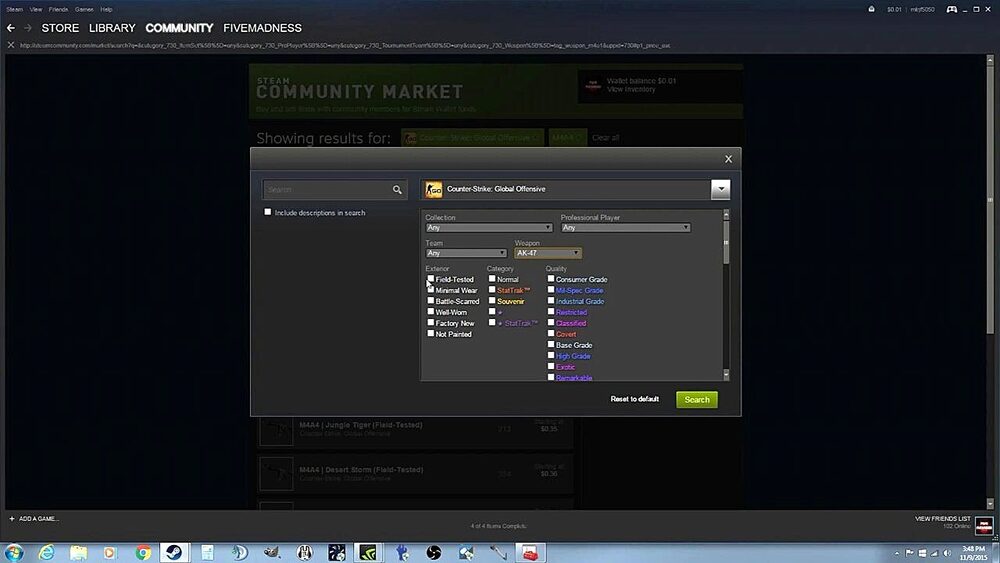
Two markets wearing one skin
Every CS2 item effectively trades in two parallel systems. The first is Valve's own Steam Community Market: maximal trust, maximal convenience, and a closed loop — proceeds land in a Steam wallet that can never be cashed out. The second is the constellation of third-party venues — DMarket, SkinBaron, CSFloat, Skinport, and the Chinese giants Buff and YouPin — where items settle against real currency, crypto, or site balance that can actually leave.
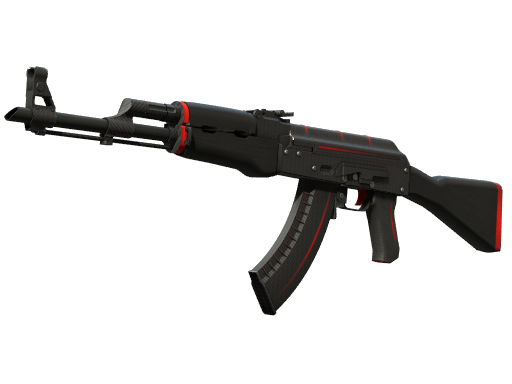
Because the two systems settle in different kinds of money, they produce different prices for the same item, permanently. A Steam "price" is denominated in wallet credit that trades at an implicit discount to cash. That's not an inefficiency waiting to be arbitraged away; it's the structure of the market.
What Steam is actually good at
The Community Market still dominates one segment: high-frequency, low-value flow. Cases, cheap capsules, consumer-grade skins — items under a few dollars trade on Steam in enormous unit volume, because for players topping up a wallet to buy a key or a game, the fee friction doesn't matter. Steam's advantages are real:
- Zero counterparty risk. Valve is the escrow. No trade bots, no API keys, no impersonation surface — the scam catalog that plagues external trading largely doesn't apply.
- Depth in small items. Popular cases show order books with tens of thousands of listings and buy orders. For an item like a recent-era case, Steam is often the single deepest venue on unit count.
- Price discovery visibility. Steam's public sales histogram is the closest thing the market has to a consolidated tape, which is why third-party pricing tools still anchor to it even when they adjust it downward.
What Steam is bad at is equally structural: a ~15% combined fee, a listing price cap (historically around $2,000) that excludes the entire high end, and the wallet lock. A Dragon Lore cannot meaningfully trade on Steam. Neither can anyone who wants their money back.
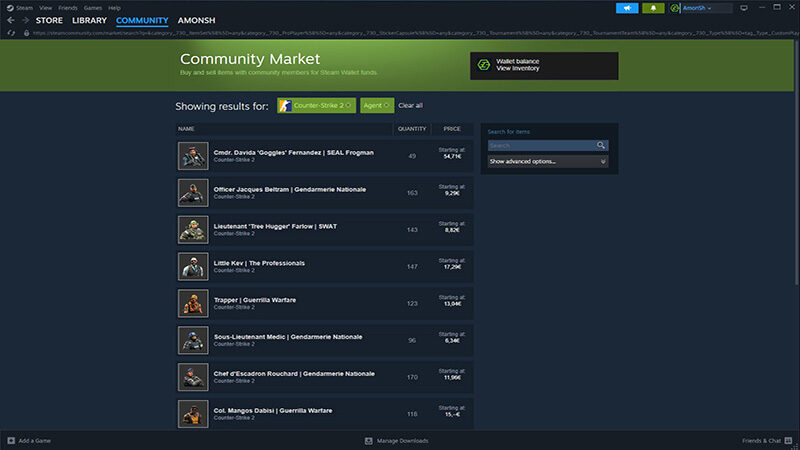
Where the cash volume lives
Precise volume splits are unknowable — third-party sites don't publish audited numbers, and wash trading and self-reported figures muddy every estimate — but the directional picture is consistent across trackers. Per third-party aggregators, cash marketplaces are believed to carry the majority of the market's dollar volume even while Steam carries a huge share of unit volume. High-value items migrate off-platform almost entirely: knives, gloves, blue gems, and souvenir grails trade through cash venues, brokers, and private deals.
| Venue type | Settles in | Typical fees | Strength |
|---|---|---|---|
| Steam Community Market | Wallet credit (locked) | ~15% | Cheap items, depth, zero scam risk |
| Cash marketplaces (SkinBaron, DMarket, CSFloat, Skinport) | Fiat / crypto / balance | Roughly 2–12%, varies by site and item | Cash-out, mid-to-high tier items |
| Chinese platforms (Buff, YouPin) | CNY via local rails | Low single digits, reportedly | Enormous liquidity, price leadership |
| OTC / brokers | Anything negotiable | Negotiated | Five-and-six-figure grails |
The China factor deserves its own emphasis. Buff and YouPin plausibly clear more skin value than every western third-party site combined, and Chinese demand frequently sets the marginal price for liquid mid-tier items. Western traders who only watch Steam are watching a lagging, fee-inflated shadow of prices largely being formed elsewhere.
Reading the spread between venues
The persistent gap between Steam prices and cash prices — typically in the 15–30% range for liquid items, per pricing aggregators — is the market's cash-out discount made visible. But the spread isn't static, and its movements carry information:
- Spread compresses when cash demand is hot — buyers on cash markets are bidding items up toward Steam parity. Historically a bullish tell.
- Spread widens when holders rush to exit into real money — cash venues flood with supply while Steam prices stay sticky. Common during crash conditions and around Chinese holiday cash-out seasons.
- Cross-venue gaps between cash sites (say, SkinBaron vs DMarket on the same case) reflect regional demand, deposit-rail friction, and inventory imbalances. For a systematic buyer these gaps are basically free basis points.
What this means for an accumulator
If you're a seller, venue choice is a cash-out optimization problem. If you're a buyer — especially a systematic one running a daily DCA schedule into cases — the calculus flips: cash marketplaces are frequently the cheapest place to buy, because their prices already embed the cash discount that Steam prices don't. Buying a case 5–8% below the Steam-equivalent price, every day, compounds exactly like extra market return.
The catch is operational. Prices move venue by venue, hour by hour; the cheapest marketplace for a given case on Tuesday is often not the cheapest on Thursday. Doing the comparison across venues manually for every purchase is exactly the kind of repetitive, small-edge work humans abandon after two weeks — and exactly the kind of work software doesn't.