
Skins and Taxes: The Questions Every Trader Eventually Asks
The moment skin money touches a bank account, it stops being a game and starts being a question for your tax office. Here's the general shape of that question — before you ask a professional the specifics.

The core concept: realization
Most tax systems don't care that your inventory tripled. They care when you realize a gain — typically, when you convert items into money or something money-like. A Bravo case sitting in a storage unit at 10x your cost is, in most frameworks, an unrealized paper gain. Selling it on SkinBaron and withdrawing euros to your bank is the moment that generally matters.

The gray zones start immediately, and they're exactly the questions to put to a professional:
- Steam Market sales. You received wallet funds you can never withdraw — Steam wallet dollars are not dollars. Some frameworks may still see a disposal of an asset; others effectively don't reach closed-loop credit. This one genuinely varies.
- Item-for-item trades. Barter is a taxable exchange in many systems, ignored in practice in others. High-volume traders should ask rather than assume.
- Crypto withdrawals. Some marketplaces pay out in crypto. That usually stacks a second asset — with its own well-developed tax rules — on top of the first disposal.
- Case drops and gifts. Items you received for free may have a cost basis of zero, which makes the entire sale price the gain.
Capital gains or income? The classification question
The second big fork is what kind of gain it is. Broadly, tax systems tend to reach for one of two framings:
Capital gains / private asset sales. You bought a thing, held it, sold it for more — like a collectible or a share. Several European systems have holding-period rules or annual allowances for private sales of movable assets, which can make patient holding dramatically more tax-efficient than flipping. If your strategy is slow accumulation and multi-year holds, this framing is often the relevant one to ask about.
Trading income. If the activity looks like a business — high frequency, short holds, systematic arbitrage between venues, meaningful volume — authorities in many countries can reclassify it as income, taxed at ordinary rates and sometimes with registration or VAT-adjacent obligations. The line between "hobbyist who sold some skins" and "unregistered trader" is drawn differently everywhere, and it's the single most consequential question to get answered properly.
The pattern across jurisdictions is loose but real: what you did (buy-and-hold vs. flip), how often, and at what scale tends to matter more than what the asset is made of. Pixels don't get a special exemption just for being pixels.

The EU wrinkles
European traders inherit a few extra edge cases worth flagging to an advisor: some member states tax private sales only under a holding-period threshold, some have de-minimis allowances under which small gains are simply exempt, and VAT questions can theoretically appear when someone trades at commercial scale across borders. Marketplace domicile adds another layer — the major venues are scattered across jurisdictions, and EU-based platforms increasingly fall under reporting regimes that pass seller data to tax authorities automatically. Assume your cash-out venue may be reporting whether or not you are.
Records: the part you control today
Whatever your jurisdiction eventually says, every version of the answer requires the same input: a record of what you bought, when, where, and for how much. Reconstructing cost basis across four years, three marketplaces, and a few hundred DCA-sized purchases after the fact ranges from painful to impossible — and in most systems, a gain you can't document a basis for risks being taxed as if the basis were zero.
The minimum viable ledger:
- Date, item, quantity, unit price, and fees for every buy and sell
- The venue, and the currency it actually settled in
- Withdrawal records matching marketplace payouts to bank deposits
- Screenshots or exports of marketplace transaction histories, taken periodically — sites disappear, as OPSkins holders learned
This is also just good investing hygiene: the same ledger that satisfies a tax office is the one that tells you your true average cost when you're deciding whether to sell, and whether the fee drag on a cash-out actually leaves a profit.
The questions to bring to a professional
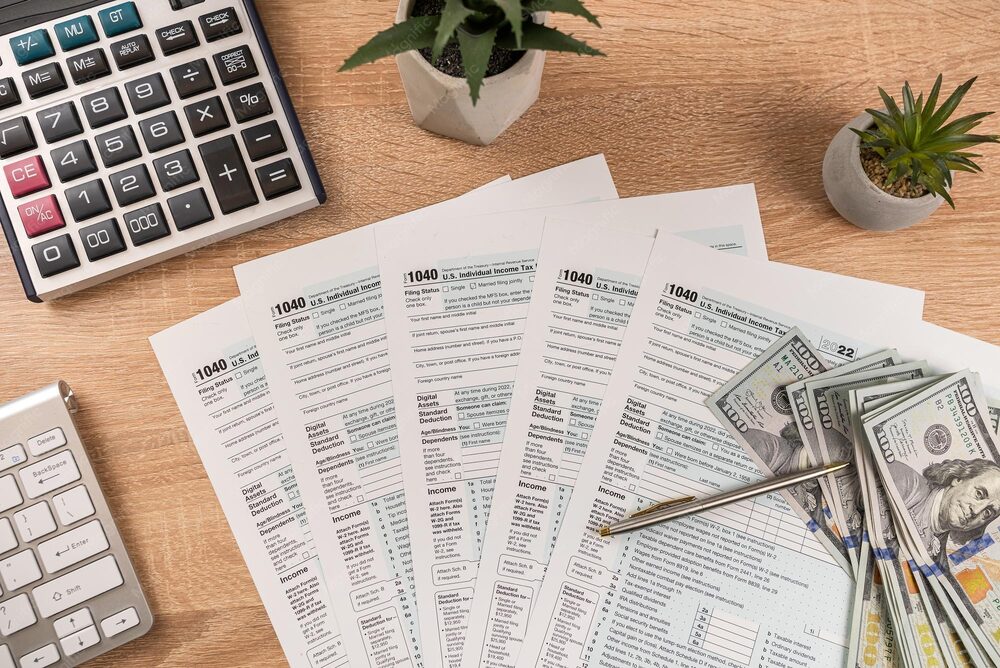
You'll get far more value from a one-hour consultation if you arrive with the specifics: Am I a private seller or a trader in this system's eyes? Which events count as disposals here — cash-outs only, or Steam sales and trades too? Is there a holding period or allowance that changes my strategy? How do I document basis for items I unboxed or was gifted? What does the marketplace I use report, and to whom? A professional who's seen crypto clients will recognize every one of these shapes — as of mid-2026, virtual-item questions are no longer exotic.
The worst plan is the common one: ignore the question until the cash-out is large enough to be scary. The paperwork is light if you keep it as you go, and heavy in exact proportion to how long you didn't.