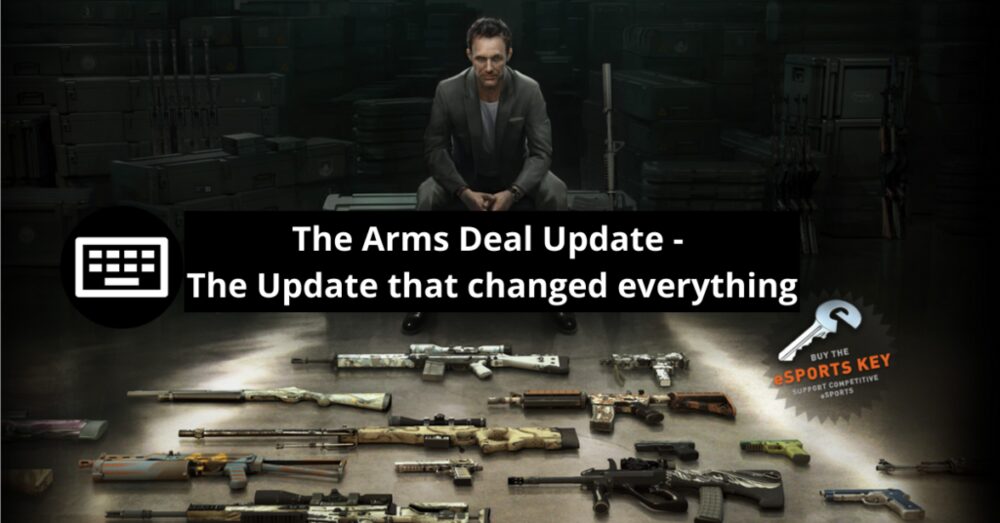
The Arms Deal Update: The Day Skins Were Born
On August 13, 2013, Valve added painted guns to a struggling shooter to keep it alive. Thirteen years later, that patch note underwrites a multi-billion dollar economy, a professional esport, and every price chart on this site.
The context nobody remembers: CS:GO was in trouble
It's easy to forget from 2026, but in mid-2013 CS:GO was not a success story. The game had launched in August 2012 to a lukewarm reception — 1.6 veterans hated it, Source players were split, and concurrent player counts hovered far below what casual Steam titles pulled. Valve had spent a year patching mechanics, but the game needed a reason for players to log in daily.
Team Fortress 2 had already shown Valve the blueprint: hats, crates, keys, and a community market had turned a 2007 shooter into a money printer. Dota 2's cosmetics were doing the same. The Arms Deal was CS:GO getting the same treatment — and almost nobody at the time saw it as more than that.
What actually shipped on August 13, 2013
The update introduced the entire skeleton of today's economy in one patch:
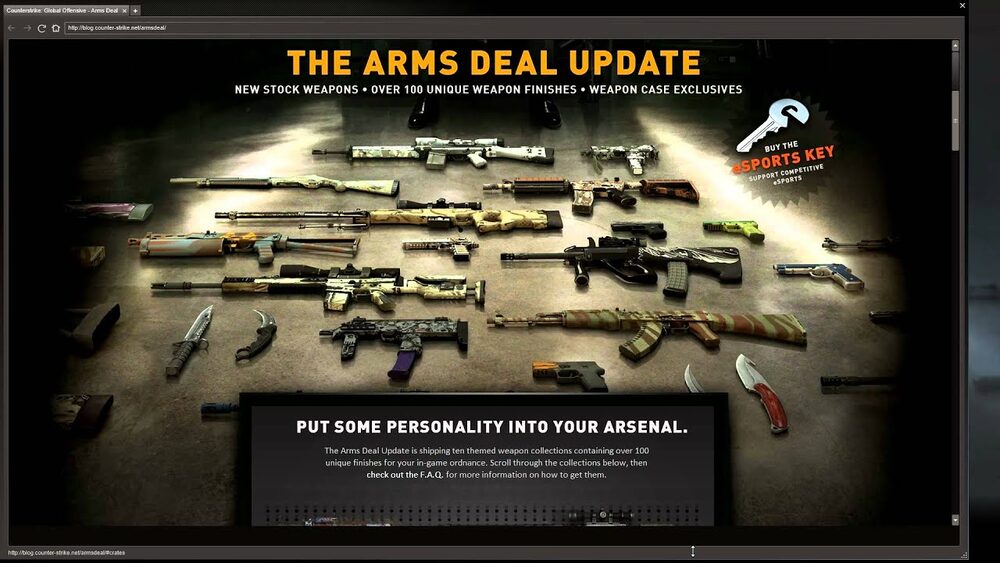
- Weapon finishes — over a hundred skins across quality grades, dropped via playtime or unboxed, tradable on Steam and sellable on the Community Market.
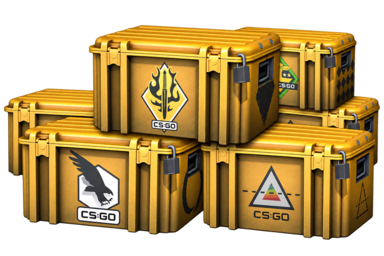
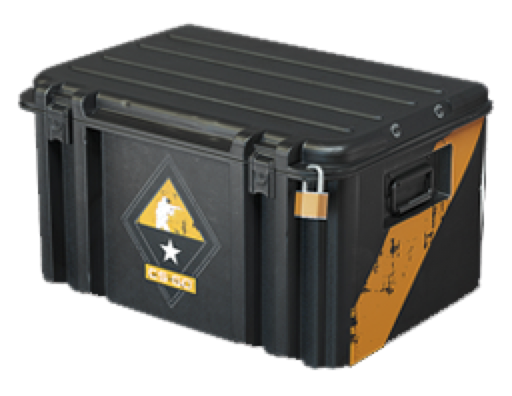
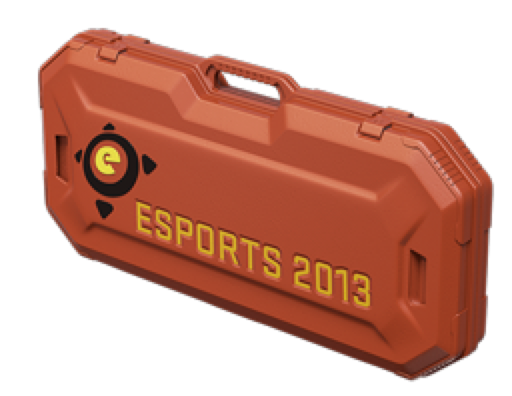
- The first two cases — the CS:GO Weapon Case and the eSports 2013 Case, each requiring a $2.49 key to open.
- Knives — the ★ rare special item, at absurd odds, in finishes like Fade, Case Hardened, and Crimson Web. The first knife unboxings broke the community's brain and founded knife culture on the spot.
- The esports funding loop — eSports 2013 Case key revenue contributed to tournament prize pools, the first structural link between cosmetics and competitive CS.
- Rarity, wear, and StatTrak — the grading vocabulary (Mil-Spec through Covert, Factory New through Battle-Scarred) that still defines how every item is priced today.
Read that list again as an economist rather than a player: scarcity tiers, a randomized issuance mechanism with a fixed mint fee, a condition-grading system, free transferability, and a sanctioned exchange. Valve shipped a commodity market with a paint job.
The reaction: mockery, then mania
The community's first response was widely derisive — "TF2 hats in Counter-Strike" was the standard sneer on forums and Reddit, and plenty of purists predicted pay-to-win decay or simply uninstalled on principle. The mockery lasted about as long as it took the first Dragon Lore-tier unboxing clips to circulate. Within weeks, case opening videos were a YouTube genre, playtime drops had players grinding, and CS:GO's player count began the climb that wouldn't meaningfully stop for a decade.
The Arms Deal's real product wasn't skins. It was a reason to care about your own inventory — and by extension, a reason to keep playing, watching, and trading Counter-Strike forever.
Operation Payback had launched months earlier as paid map content, but it was the Arms Deal that made the operation-and-case cadence matter: two months later, Operation Bravo arrived with the Bravo Case, and the template for a decade of supply events was set.
Nobody priced it correctly — nobody
The founding irony of skin investing is that in 2013, the correct move was available to everyone and taken by almost no one. Cases dropped so plentifully that players deleted them from inventories to reduce clutter. Weapon Case 1 traded for pennies. Knives sold for a few dollars because sellers wanted quick key money. Nobody hoarded, because there was no track record suggesting these objects would appreciate — the concept of a "discontinued case" didn't exist yet, since no case had ever been discontinued.
Per third-party price trackers, the first-generation cases now trade at thousands of times their 2013 prices, and the earliest knife finishes anchor five- and six-figure collections. The lesson isn't "you should have known" — nobody knew. The lesson is structural: when supply mechanics are deflationary by design and the player base compounds, time does the heavy lifting. That was as true in 2013 as it is across the entire thirteen-year timeline since.
The design choices that made it an economy
Two decisions separated the Arms Deal from every other game's cosmetic shop, and both were choices Valve didn't have to make. First, free transferability: items could be traded and sold peer-to-peer from day one, which made them property-like instead of license-like — the difference between owning a skin and renting a battle-pass unlock. Second, no direct sales: Valve never sold skins directly, only randomized cases, which meant secondary-market prices were set by players rather than anchored to a company price list. Everything emergent about this market — grails, pattern culture, case investing, the entire third-party marketplace ecosystem — lives in the space those two decisions opened. Competitors that copied the skins but kept items account-bound got cosmetic revenue; none of them got an economy.
The 2013 patch that still writes 2026's rules
Everything the market obsesses over today is a direct descendant of Arms Deal decisions. Wear tiers created float culture. The pattern system quietly shipped Case Hardened seeds that would later become million-dollar blue gems. The key mechanism ran unmodified until the 2019 laundering purge proved even founding-era infrastructure isn't safe from policy. And the Community Market plumbing — Valve's cut, wallet lock-in — still shapes every fee calculation traders make.
As of mid-2026, estimates of the total skin market's value run well into the tens of billions of dollars, depending on methodology. All of it compounds from one August patch shipped to save a struggling game — the strongest evidence this market has that its foundational asset was born underpriced, and that the people who simply accumulated and held were the trade of the decade.