Snakebite Case: The Sleeper That Broom Gloves Built
Nobody writes love letters to the Snakebite Case. That's exactly why it matters: it's the textbook cheap, liquid, high-float workhorse of the modern case market.
A 2021 case with borrowed gloves
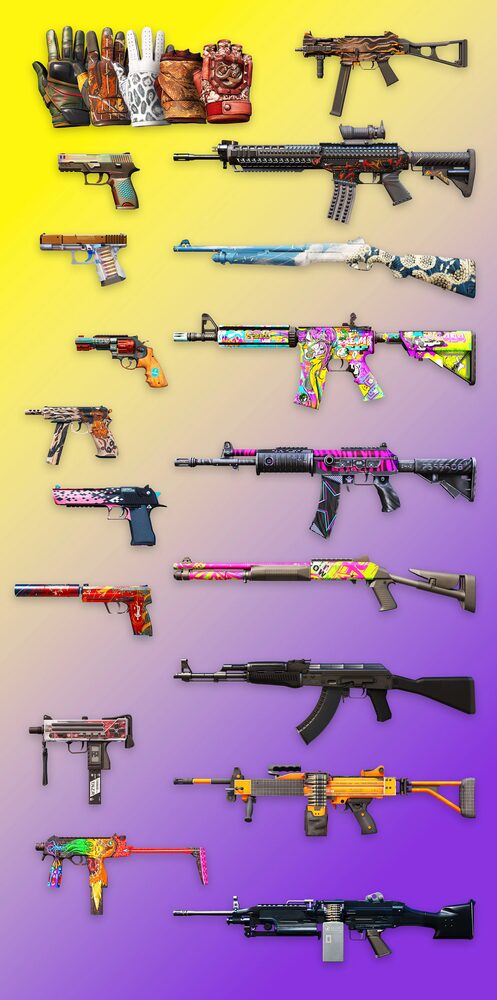
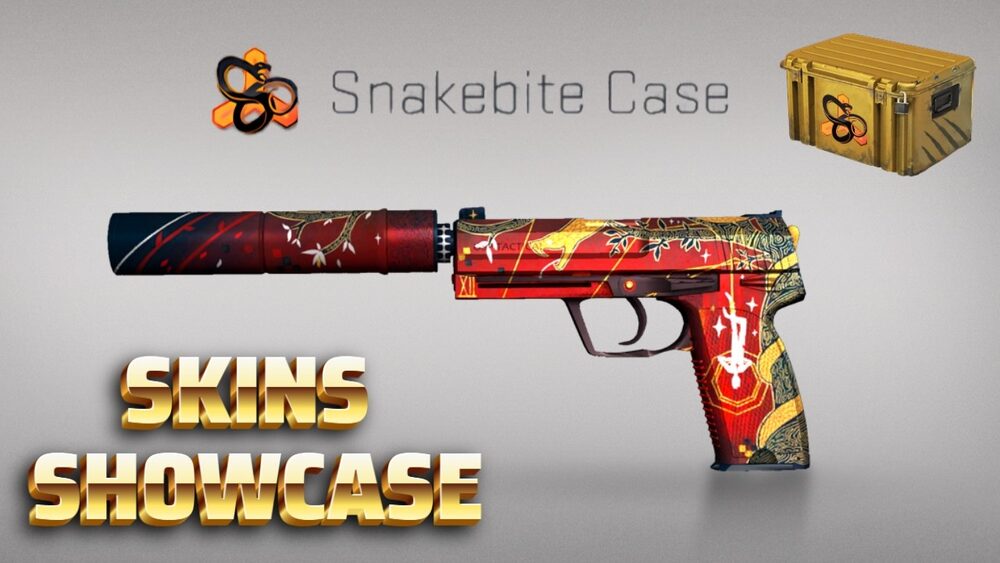
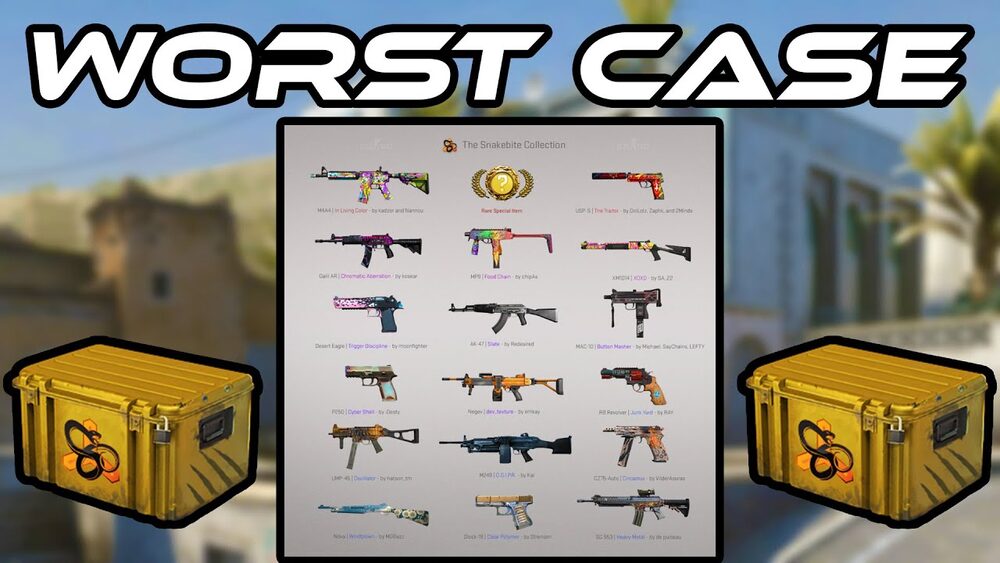
The Snakebite Case arrived in May 2021, near the end of the Operation Broken Fang era, and its rare special item slot did something notable: instead of knives, it carried the Broken Fang glove set — the same collection that had debuted in the operation's own case a few months earlier. Gloves as the rare drop change a case's psychology. Glove odds feel (and are) brutal, most glove pulls disappoint, and yet the handful of desirable pairs anchor a real demand floor under every opening.
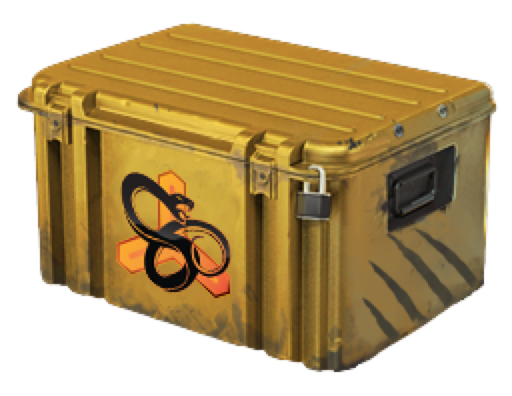
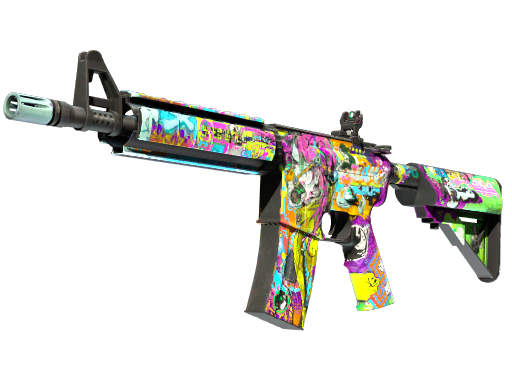
Below the gloves, Snakebite's roster is honest modern fare: the USP-S The Traitor and M4A4 In Living Color at Covert, with the AK-47 Slate as the case's quiet MVP — a clean, no-nonsense AK that became a permanent fixture of budget loadouts. The XM1014 XOXO and MP9 Food Chain round out a mid-tier with more staying power than most 2021 releases.
What "cheap active-drop case" actually means
Snakebite spent years in the active drop pool, which means its market behavior is the opposite of a discontinued blue chip. While a case drops actively, weekly supply from millions of players keeps its price pinned near the bottom of the market — often in the tens of cents. There is no scarcity story to price in, because scarcity doesn't exist yet. The standard lifecycle applies: release spike, supply flood, long flatline, and only then — after removal from active drops — the slow climb.
That flatline phase is where Snakebite lived for most of its life, and it's precisely what makes cases like it interesting to accumulators:
- Unit price near the floor. When a case trades for cents, your downside per unit is structurally limited — the price can't fall much below the flood level while demand from openers persists.
- Deep liquidity. High-supply cases have thick order books on every venue. You can buy or exit hundreds of units without moving the price, which is untrue of almost anything else in CS2. (See liquidity across tiers.)
- Optionality on removal. The entire bet is the eventual rotation out of active drops. History says cases that leave the pool begin appreciating as openings burn the float; the timing is Valve's alone, and it's unknowable.
The glove kicker
What separates Snakebite from an arbitrary cheap case is the special-item slot. Glove cases have historically aged well because glove supply is thin by construction — the drop odds for the rare slot are low, and desirable finishes are a fraction of that. The precedent is the original Glove Case, whose price history is one long argument that the market eventually pays up for containers that mint hands. Snakebite's Broken Fang set is no Sport Gloves Vice tier, but pairs people actually want keep expected value — and therefore opening demand — from bleeding to zero.
Snakebite's role in an accumulation strategy
In a tiered case ladder, Snakebite-class cases are the bottom rung: the volume tier. The role isn't to be a moonshot; it's to soak up small daily budgets at minimal per-unit risk while the mid and premium tiers do the heavy lifting. A few practical notes from how this tier actually behaves:
- Spreads matter more than trends. When a case trades at $0.30, a two-cent spread is nearly 7%. Comparing venues per purchase — Steam listings versus cash markets like DMarket and SkinBaron — is worth more here, proportionally, than anywhere else in the market.
- Storage is a real cost of volume. A thousand cases is a thousand inventory slots; storage units stop being optional once the stack gets serious.
- Don't confuse the tier with the thesis. If the case never leaves the drop pool, it stays cheap. Size the volume tier so that outcome is boring, not painful.
As of mid-2026
Snakebite's CS2-era life has followed the script. Its drop frequency declined as newer containers took the active slots, opening volume stayed healthy on glove demand and Slate volume, and the price ground slowly up off its floor — unspectacular in any given quarter, visible over years. Per third-party trackers, its unopened supply remains among the largest of any case, and its price still reflects that. The bull case hasn't changed: gloves in the rare slot, an AK the player base actually uses, and the same removal-from-drops catalyst that eventually found the Fracture Case and every high-supply case before it. The bear case hasn't changed either: the flatline can last years longer than anyone's patience, and the Armory era gave Valve a standing mechanism to route extra supply of any case back into the economy. Sleeper cases reward the investors who forgot they owned them — and punish the ones who checked the chart weekly expecting news.