The Rarest CS Cases, Ranked by Supply
Case rarity isn't about age or price — it's about how many sealed units survive. Ranked by what the trackers can see, here's the thin end of the market.
How you even measure this
Nobody — including Valve — publishes how many unopened cases exist. What the market has instead is third-party tracking: services that sample Steam inventories and market listings to estimate surviving supply, plus the observable proxies of listing depth and price behavior. These estimates carry real error bars (private inventories, storage units, and abandoned accounts are all partially invisible — the same methodology problems that plague every market-size headline). So treat any ranking, including this one, as tiers rather than a leaderboard. Within a tier, the ordering is genuinely uncertain; between tiers, the differences are large enough to survive the measurement noise.

The ranking, thin end first
| Tier | Cases | Why supply is thin |
|---|---|---|
| 1 · Relics | eSports 2013, CS:GO Weapon Case (1), eSports 2013 Winter | Minted in 2013 for a player base in the tens of thousands, then burned for 13 years |
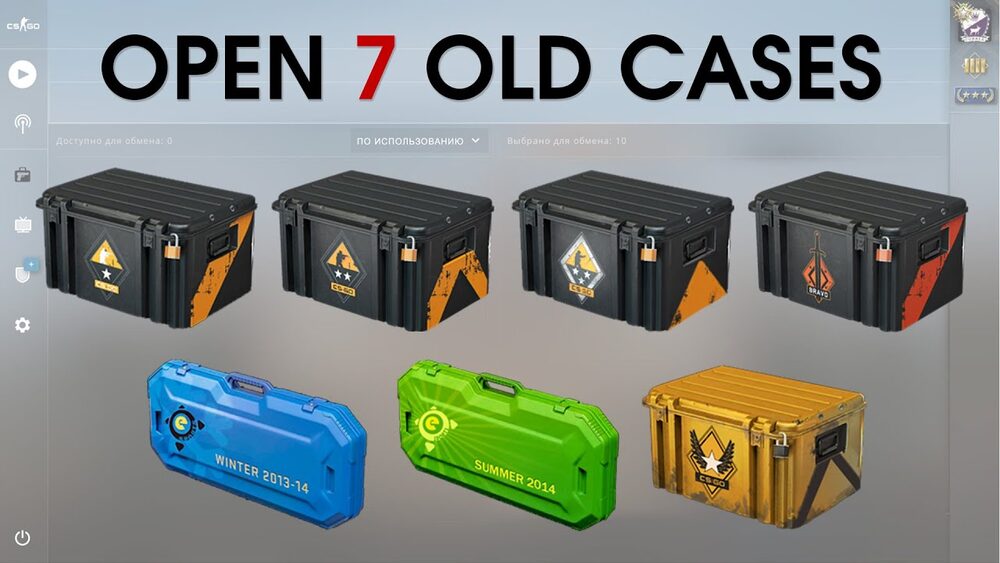
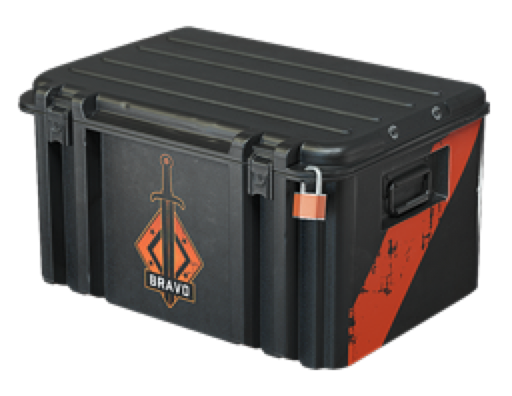
| 2 · Antiques | Operation Bravo, CS:GO Weapon Case 2 & 3, eSports 2014 Summer | 2013–14 windows, small audiences, operation-limited drops (Bravo) |
| 3 · Early operations | Winter Offensive, Operation Phoenix, Huntsman, Breakout | 2014's growing but still-small player base; heavy opening through the boom years |
| 4 · Squeezed moderns | Older discontinued cases from 2015–2018 | Bigger mints, but long out of rotation and steadily burned |
Tier 1 is dominated by the Arms Deal originals. The eSports 2013 Case and the first Weapon Case were minted when concurrent players numbered a few tens of thousands, and per third-party trackers their surviving sealed counts are the lowest of any standard container — small enough that individual whales holding a few hundred units are a meaningful share of visible float.
Tier 2 is where the investment lore lives. Operation Bravo combined a short operation-exclusive drop window with contents (Fire Serpent, Golden Koi) that people have never stopped opening for — the double burn that made it the benchmark blue chip. The later Weapon Cases and the final eSports case share the era's small-mint profile without quite the same demand engine.
Tier 3 is the transition zone: 2014 operations like Breakout minted into a player base several times larger, but exclusive items (the Butterfly, Huntsman knife) drove relentless opening. These cases aren't rare the way Tier 1 is rare — they're rare the way a popular product with a closed factory is rare. Tier 4 is where the definition of "rare" gets contested: mints in the tens or hundreds of millions, but out of rotation long enough that the burn is visibly compounding. In another decade, some of today's Tier 4 will have graduated — that migration is the whole long-term thesis of case holding.
What thin supply actually does to a price
Rarity doesn't just raise prices; it changes how the price behaves. Three effects show up consistently across the thin tiers:
- Volatility amplification. With only a sliver of supply listed at any moment, modest demand waves move prices double digits. The 2021–2023 bull legs saw Tier 1–2 cases gap upward in days — and retrace just as violently when a few large holders took profit. Thin books mean the liquidity you see is the liquidity there is.
- Spread as a tax. Bid-ask spreads on relic cases routinely run several percent, sometimes double digits across venues. Every round trip pays it. Position sizes that ignore exit costs overstate returns badly.
- Whale risk. Concentrated holdings mean single sellers can reprice the whole chart. The thinner the float, the more your "market price" is really one negotiation away from moving.
Rarity as a portfolio dimension
For an accumulator, the ranking above is less a shopping list than a map of trade-offs. Tier 1–2 cases offer proven scarcity with collectible-grade liquidity problems; Tier 3–4 offer the same mechanics earlier in the curve at tolerable spreads; and today's floor-priced moderns are Tier 4 applicants on a decade's delay — the discontinued-case flywheel doesn't care which decade it runs in. A structure like a tiered ladder exists precisely to hold all three exposures at once: volume where books are deep, scarcity where it's proven, and a middle that migrates from one to the other while you hold it.
One standing asterisk over the whole list: Valve controls every faucet. Rare drop rotations and Armory-era redemptions have both shown that "discontinued" is a policy, not a law of physics — the Armory era made supply resurrection a repeatable lever. The thin tiers have survived every such scare so far, and each scare knocked prices around on the way through. Rarity in this market is rented from a single landlord. Price accordingly, size accordingly, and let time do the rest.