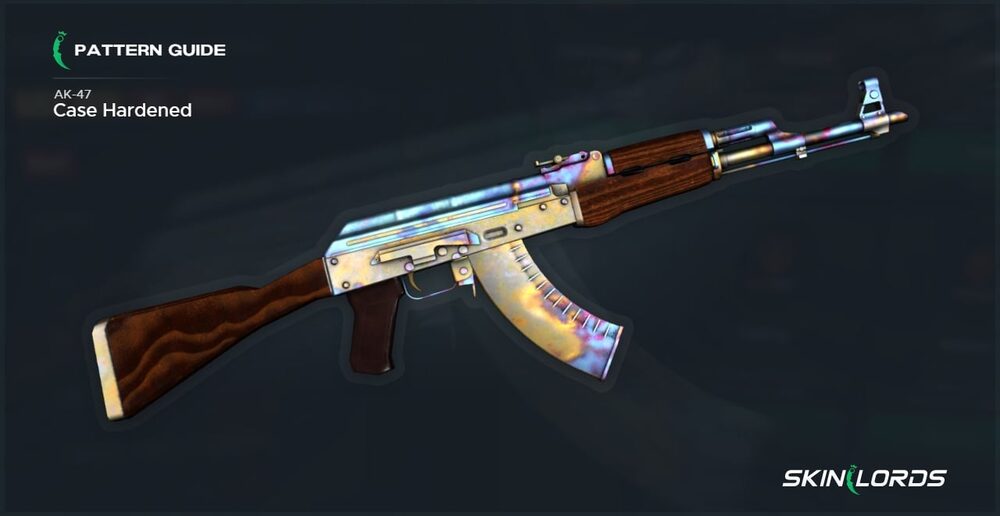
AK-47 Case Hardened #661: The Blue Gem Standard
A generic Case Hardened AK is a $50 skin. Roll seed 661 and the same skin becomes a six-figure asset with its own name. That gap is the purest expression of pattern rarity in the game.
The scar pattern
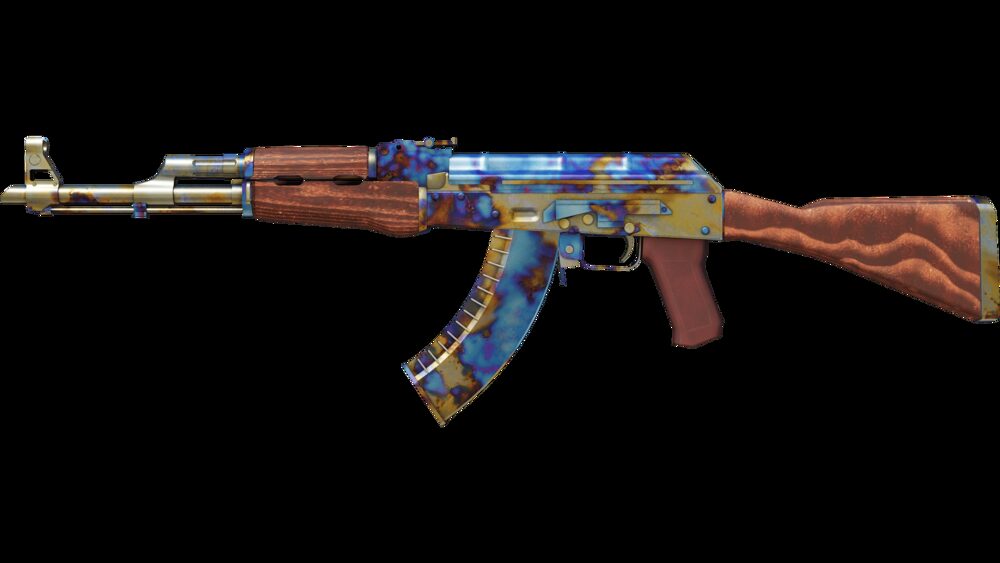
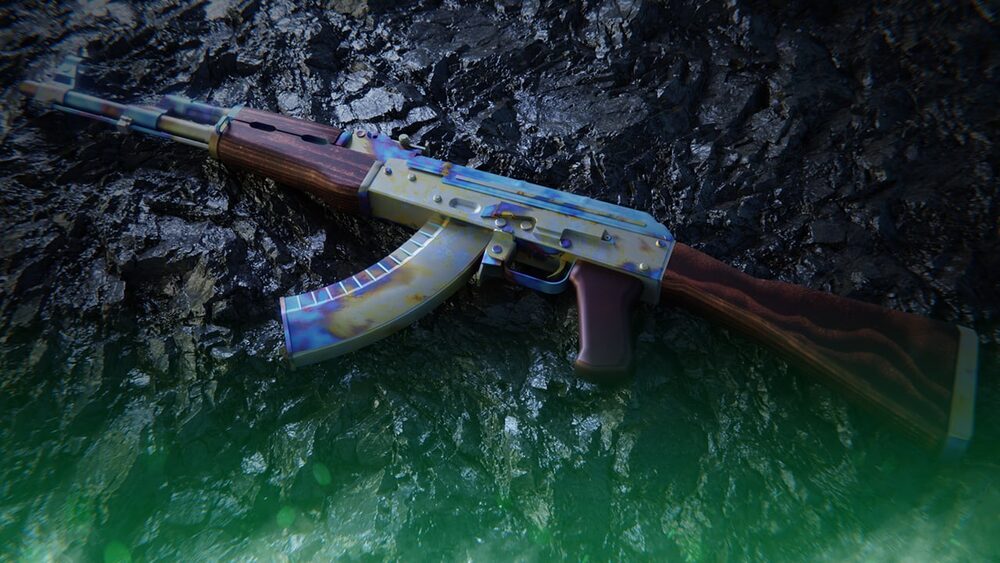
Every Case Hardened item draws its look from one shared texture — a swirl of blue, purple, and gold dating back to the Arms Deal update — and a pattern index between 0 and 999 that decides which part of the texture wraps the weapon. On the AK-47, seed 661 lands the receiver in a nearly unbroken sheet of blue, cut by a single thin golden line across the body. The community named it the scar pattern, and the scar did for 661 what a signature does for a painting: it made the top pattern instantly recognizable at a glance, even in a kill feed.
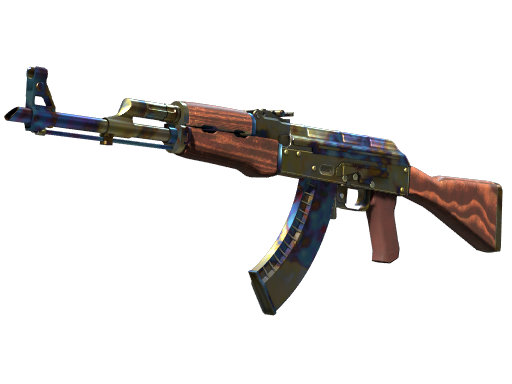
That recognizability matters more than it sounds. Plenty of AK seeds are statistically "very blue." Only 661 is famous, and in a market where value is social consensus, famous compounds. The scar became the reference every other blue AK is measured against — the standard in "blue gem standard."
The supply side does the rest. Case Hardened AKs drop from the original weapon case line and a few other sources, but the seed is rolled uniformly at unboxing: each new Case Hardened AK has a 1-in-1000 chance of being a 661, and unboxing volume on decade-old cases is thin. The existing population — a few dozen across all wears, per community censuses — grows by roughly nothing per year. It's the closest thing skins have to a fixed float of shares.
The hierarchy below the throne
Blue gem AK culture runs on tier lists. Community databases score each seed by playside blue percentage — the side facing the camera when the weapon is held — and sort them into tiers. The scoring rules are informal but consistently applied:
- Playside is king. Seeds like 661 earn Tier 1 by keeping the visible receiver blue; a golden backside costs little.
- The top tier is a club, not a point. A handful of seeds — 661 among them, with well-known rivals such as 670 and 955 — trade at enormous premiums to Tier 2, which itself trades far above the commodity price.
- Float multiplies pattern. Wear greys out the blue, so a low float on a top seed multiplies value instead of adding to it. The same seed at Well-Worn is a different asset.
- StatTrak multiplies again. Only a fraction of unboxed items roll StatTrak, so a StatTrak top-tier seed in low wear is a population-of-a-few item.
Stack all three multipliers and you get the famous number: a StatTrak Minimal Wear #661 reportedly changed hands for around $400,000 in the 2021 era, in a brokered private deal. As with every headline sale in this corner of the market, "reportedly" is doing real work — private deals leave no order book. But the figure is broadly accepted in the scene, and lesser 661s in higher wear have publicly traded well into five and six figures. Only the Karambit 387, with its reported seven-figure refusals, sits clearly above the scar in the all-time value rankings.
What a $400k AK actually is, financially
Strip the lore and the 661 is a bet on three things staying true: the tier-list consensus, the population count, and the existence of a next buyer. As of mid-2026 all three have held for a decade, but it's worth being precise about what kind of asset this is.
| Property | Commodity Case Hardened AK | Top-tier 661 |
|---|---|---|
| Pricing | Continuous, order-book | Negotiated, comps years apart |
| Liquidity | Sells same day | Months of brokering |
| Valuation basis | Float and market fees | Provenance, tier consensus, reported sales |
| Downside | Market beta | Meta shift, or simply no bidder |
The liquidity gap is the part buyers underrate — and it cuts hardest exactly when you'd want out, since collector bids evaporate in the same drawdowns that hit the broader market. A blue gem's quoted value is only real on the day a specific collector wants it; valuing it between those days is closer to appraising a classic car than pricing a stock. Screenshot services function as the grading houses, brokers as the auction floor, and the tier list as the price guide — a parallel financial system the community built from scratch because no official one exists, and one that runs entirely on reputation.
The lesson 661 teaches everyone else
The scar pattern is the market's favorite proof that hidden rarity exists — that a $50 skin can secretly be a house. But the honest read is the opposite of the fantasy: nobody reliably finds the next 661. The pattern was catalogued within the community years ago; every remaining copy is known, held, and priced accordingly. Pattern-hunting the open market means paying a premium for anything already inspected, and inspection tools are universal now — the informational edge that built early blue gem fortunes closed around the time the tier lists went public.
What's left for everyone else is the boring, durable part of the same economy — items whose supply is countable and whose prices clear daily. It's also the part where the asset-class framing actually survives scrutiny: measurable float of units, continuous pricing, real exit liquidity. The 661 is a monument to variance. Portfolios are built on the other thing.