AWP Dragon Lore: Anatomy of the Most Famous Skin
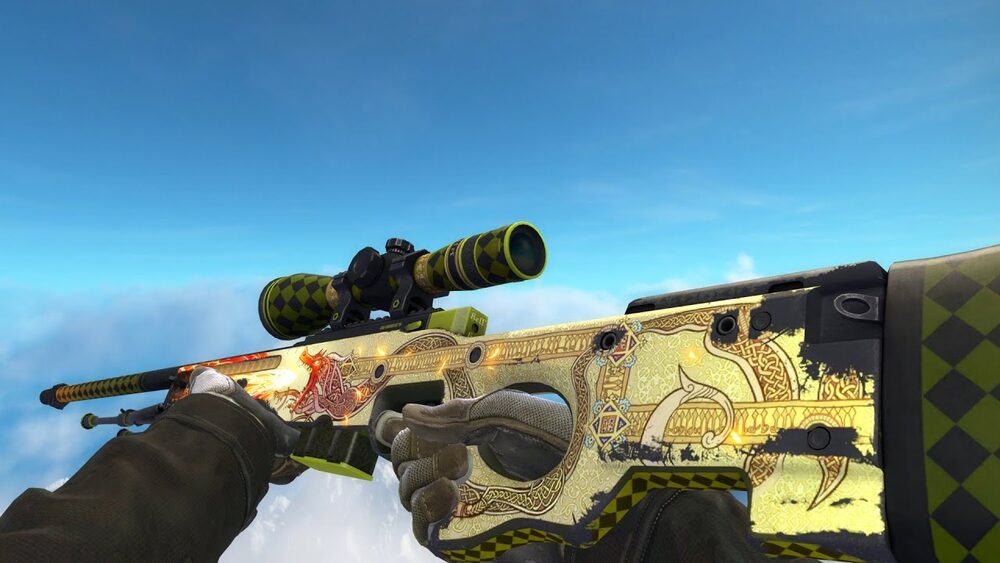
Every market has one item that non-participants have heard of. For CS2 that's the Dragon Lore — and its price is less about the dragon than about a map that stopped dropping packages in 2018.
Born in a souvenir package
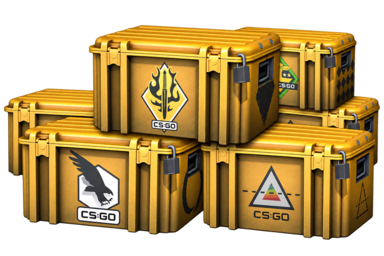
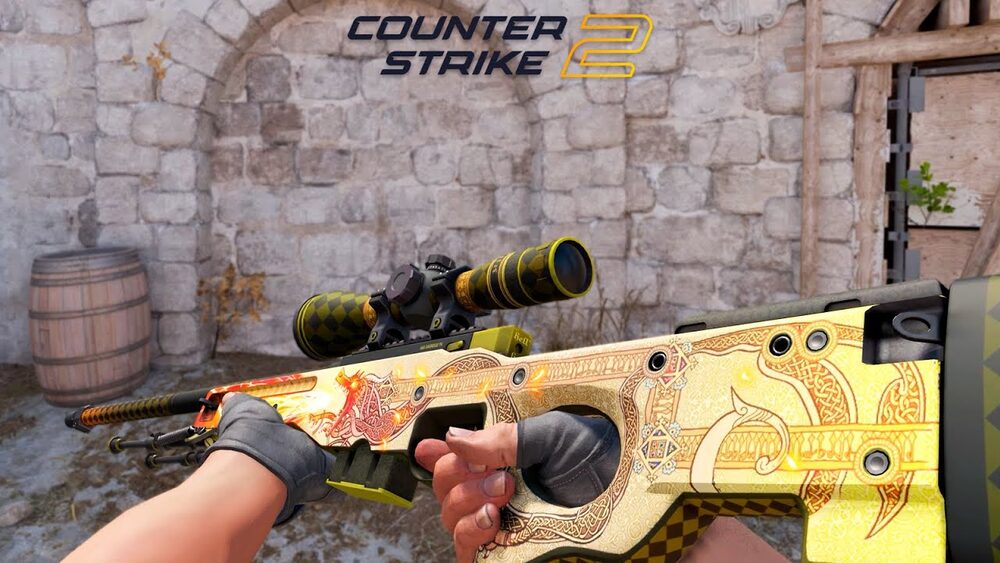
The Dragon Lore arrived in July 2014 as the crown of the Cobblestone Collection, introduced in the Operation Breakout era. It was never in a case. The only faucet was the souvenir package: watch a Major, get a random chance at a package from the map being played, and if that map was Cobblestone, the package had a minuscule chance of containing a Dragon Lore — stamped with the event, the teams, and gold player stickers.
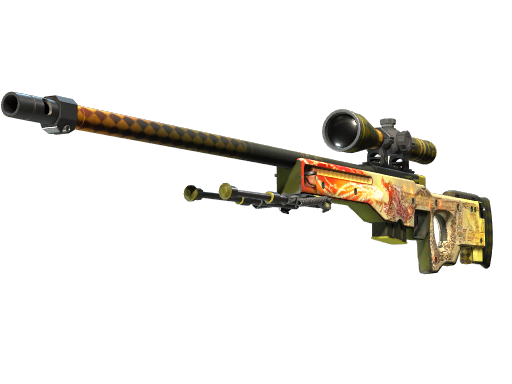
That distribution model did three unusual things at once. It tied supply to tournament calendars instead of unbox volume. It gave every souvenir unit a provenance record — which Major, which match, which players — that collectors would later treat the way art buyers treat auction history. And it kept the total population microscopic: souvenir drops were rare, Cobblestone was one map among seven, and the Dragon Lore was the rarest outcome inside the package.
The faucet closes
Cobblestone rotated out of the competitive map pool, and after 2018 it stopped appearing at Majors — which means Cobblestone souvenir packages stopped dropping. No packages, no new Dragon Lores. The souvenir system has since changed shape repeatedly, but none of it reopened this faucet. Every Dragon Lore that will ever exist already exists, and the population only decays: locked accounts, scams, abandoned inventories.
This is the same one-way supply mechanic behind the M4A4 Howl, with one refinement: Dragon Lore supply is stratified. A non-souvenir Dragon Lore (obtainable from the collection pre-freeze) is rare. A souvenir one is rarer. A souvenir from an early Major, with gold stickers of era-defining players, is a museum piece — the Cologne 2014 units being the canonical example.
The $61,000 education
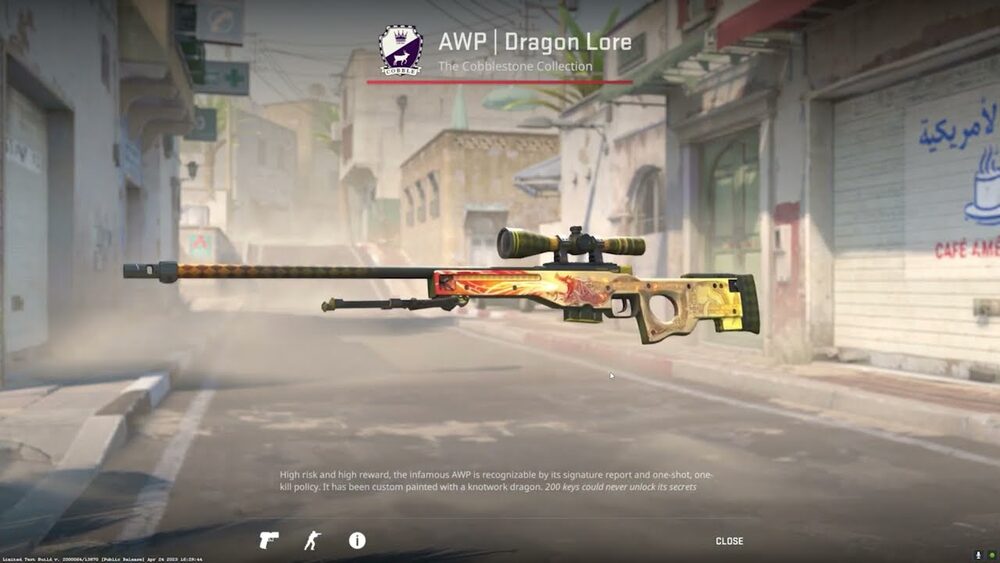
In January 2018, Cloud9 won the Boston Major — the first NA Major title — with Tyler "Skadoodle" Latham on the AWP. Days later, a souvenir Dragon Lore from that event, carrying Cloud9 gold stickers including Skadoodle's own, sold for around $61,000. At the time it was the highest publicly known price ever paid for a CS item, and it did more for mainstream awareness of the skin economy than any chart ever has.
The buyer wasn't paying $61k for a texture. They were paying for a specific, verifiable intersection of history: the map, the event, the champion, the player — fossilized in one item that can never be minted again.
Since then, comparable items have reportedly changed hands privately for substantially more, though private-sale numbers in this tier resist verification and are best treated as folklore with error bars. What's documented is the direction: every public benchmark since Boston has been higher.
The price ladder, as of mid-2026
Numbers in this tier drift, but the structure of the ladder is stable:
| Tier | Rough level (mid-2026) | What you're paying for |
|---|---|---|
| Non-souvenir, Battle-Scarred | Low five figures | Entry ticket to the name |
| Non-souvenir, Factory New | High five figures | Condition scarcity on a frozen float pool |
| Souvenir, worn | Five figures and up | Provenance: event and sticker set |
| Souvenir FN, grail stickers | Reportedly mid-to-high six figures | The full intersection — condition, event, legends |
Two forces stratify that ladder. Float, because the wear distribution was fixed the day packages stopped and Factory New examples can never be replenished. And stickers, because gold-sticker combinations from specific Majors put a hard identity on each unit — the same provenance logic that drives Katowice 2014 craft culture.
The trajectory that built the ladder is worth a sentence of its own. Dragon Lores traded in the hundreds of dollars in 2015 — expensive for the era, unremarkable in hindsight. The supply freeze after 2018 turned a rare item into a strictly finite one, and each subsequent demand wave — the 2020–21 boom, the CS2 announcement run in 2023 — repriced the whole population upward with almost no sellers to absorb it. An item whose faucet is closed doesn't mean-revert the way live-supply skins do; it ratchets.
Famous, not liquid
The honest caveats, because Dragon Lore discourse is usually all dragon and no market:
- Exit friction is enormous. The buyer pool at five and six figures is thin, deals are negotiated off-book, and the gap between appraisal and realized cash is the widest in the game — liquidity is the tax on fame.
- It's a trust-intensive trade. Items this valuable are scam magnets; high-tier deals run through middlemen, escrow, and reputation networks rather than open listings.
- It's not even the scarcest AWP. The Medusa and Gungnir both have thinner supply. The Dragon Lore's premium over them is a demand phenomenon — recognition compounding for a decade — not a supply one.
There's also platform risk that fame doesn't hedge. A Dragon Lore lives in a Steam inventory under Valve's terms of service like any $2 case does; the difference is that a mispriced policy change, a compromised account, or a botched trade costs six figures instead of lunch money. Serious holders treat these items less like trading stock and more like uninsured art — held long, moved rarely, documented obsessively.
That last point about Medusa and Gungnir is the real lesson of the Dragon Lore. Scarcity sets the floor, but the Mona Lisa effect sets the ceiling: the most famous item attracts the marginal collector, the content creator, the whale who wants the one skin their audience recognizes. Fame, it turns out, compounds like supply shrinkage — and the Dragon Lore has both engines running at once.