The Cologne 2014 Souvenir Dragon Lores
Every Dragon Lore is scarce. A handful of them are also twelve years old, stamped with the logos of teams that no longer exist. That second layer is where the real money lives.
Why "oldest" is a price tier of its own
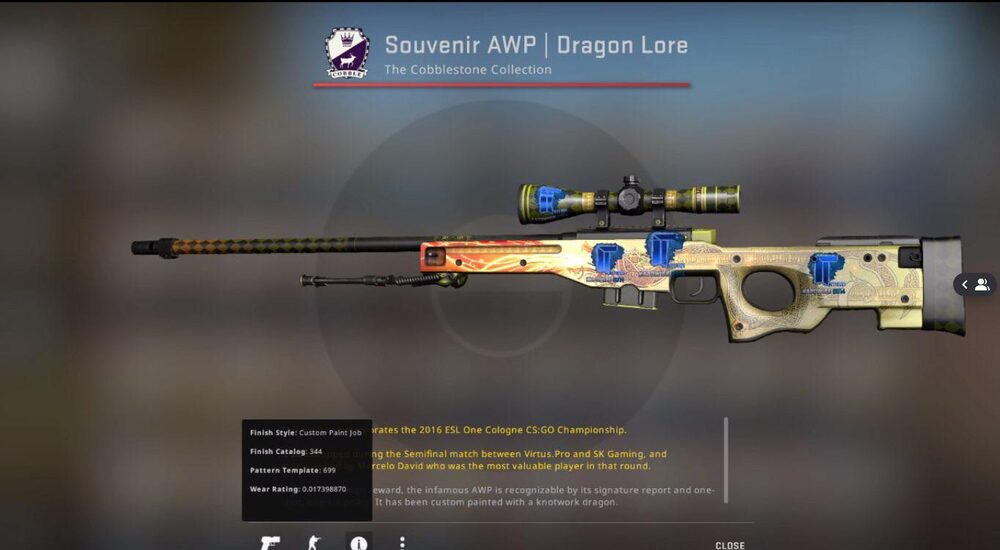
The AWP Dragon Lore already sits at the top of the souvenir hierarchy: it only ever entered the game through Cobblestone souvenir packages, and those packages stopped dropping years ago. But within the Dragon Lore population there's a sub-hierarchy that most price guides flatten away — the event stamped on the item. ESL One Cologne 2014 was the second CS:GO Major and one of the first events to run the souvenir system Valve had introduced at EMS One Katowice 2014 a few months earlier. The Cobblestone Collection itself had only shipped in July 2014 with Operation Breakout, weeks before the Cologne playoffs. The intersection of those two facts is the whole story: Cologne 2014 packages are the first souvenir packages that could contain a Dragon Lore, which makes Cologne 2014 Dragon Lores the oldest Dragon Lores in existence.
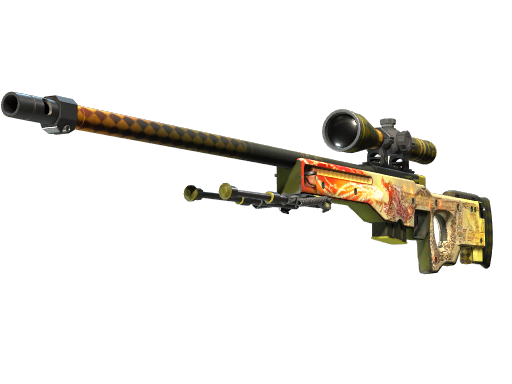
Age matters here for the same reason a first-edition print matters. The item is mechanically identical to a 2016 or 2018 souvenir Dragon Lore — same finish, same float mechanics, same gold-tinted scope. What differs is provenance, and in the grail tier of this market, provenance is most of the price.
How few could exist
Souvenir packages in 2014 dropped to viewers watching the event, map by map. A Cobblestone package only dropped when Cobblestone was actually played, to an audience that was a fraction of today's Major viewership — CS:GO in August 2014 was a game still climbing out of its niche. From that already-small package population, the Dragon Lore is the rarest outcome inside the package. Stack the probabilities and you get a supply measured in dozens, not thousands. Nobody has an authoritative census; third-party trackers can only count items that have surfaced on markets or in public inventories, and grail-tier items move privately more often than publicly.
- Short window. Cobblestone had existed for roughly a month when Cologne 2014 ran. Later Majors had bigger audiences and more Cobblestone maps played.
- Attrition. Twelve years of abandoned accounts, bans, and scams have permanently removed an unknown share of the original drops from circulation.
- No refills, ever. Cobblestone left the active souvenir rotation long ago. The 2014 population can only shrink.

The sticker layer: team golds, not autographs
Here is the detail that separates people who know this corner of the market from people who don't. Player autograph stickers didn't exist until Katowice 2015 — so a Cologne 2014 souvenir carries gold event and team stickers, not player signatures. That sounds like a downgrade until you look at which teams were in that rotation: Titan, the pre-ban iBUYPOWER roster's era, Fnatic, NiP — the founding cast of CS:GO esports, several of them stamped onto items months before scandal or dissolution made their logos collectible in their own right.
The market already prices dead-team scarcity aggressively in the sticker world — the Titan Holo and iBUYPOWER Holo from Katowice 2014 are the two most expensive stickers in the game. A souvenir Dragon Lore that happens to carry a gold Titan or iBUYPOWER team sticker fuses two grails into one item. Those combinations are the ones that get screenshotted, catalogued in collector spreadsheets, and named after their owners.
What they trade for
Public reference points are scarce, which is itself informative. The most famous souvenir Dragon Lore sale remains Skadoodle's Boston 2018 example, which sold for roughly $61,000 shortly after that Major — and that was a new souvenir whose value came from a storyline, not age. Cologne 2014 examples surface far less often, and when they do, the deals are mostly private and the numbers reported secondhand. As of mid-2026, the honest summary is:
| Tier | What defines it | Market reality |
|---|---|---|
| Any souvenir Dragon Lore | Cobblestone package provenance | Five figures, wear-dependent |
| Cologne 2014 event | Oldest possible Dragon Lore | Significant premium; thin, mostly private market |
| Cologne 2014 + grail team golds | Titan / iBP-era sticker sets, low float | Reportedly negotiated case-by-case; no reliable public comps |
Valuing one is closer to appraising art than pricing a liquid skin: the last comparable sale may be years old, the buyer pool is a short list of known collectors, and the bid-ask spread can be a five-figure number by itself. That illiquidity cuts both ways — spectacular headline offers, and genuine difficulty exiting at the headline number.
Verification, at least, is trivial compared to physical collectibles. The event name is written into the item itself — inspect any souvenir and the tournament, teams, and final score of the match it dropped from are part of its metadata. There is no forgery risk, no grading service, no dispute about authenticity. What collectors argue about instead is condition ranking within the tiny population: which of the known Cologne 2014 examples has the best float, which still carries a full sticker set, and which combination of the two deserves the top of the private bid list.
What this corner teaches the rest of the market
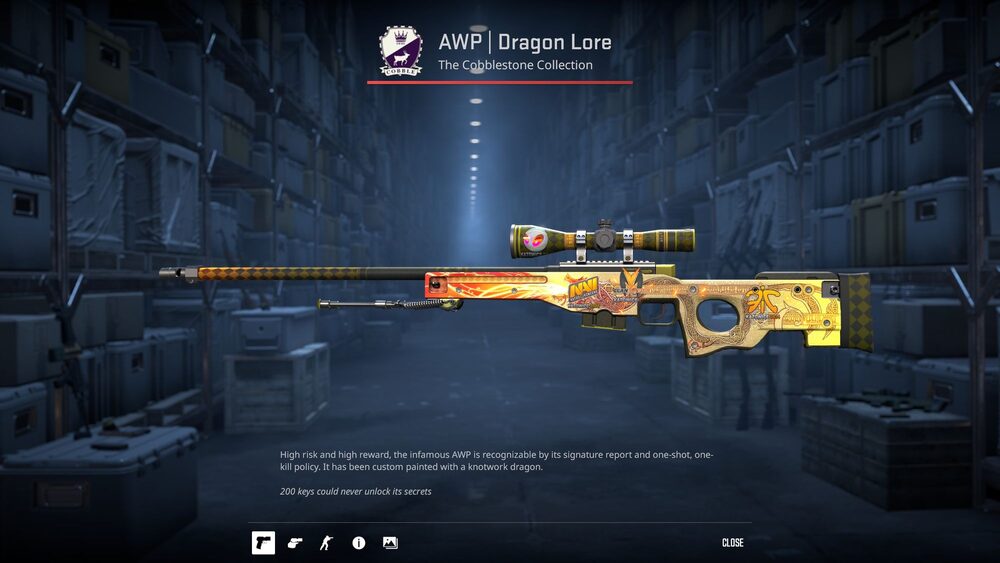
The Cologne 2014 Dragon Lores are the purest demonstration of how CS2's economy manufactures antiques. Valve never designed a "first edition" mechanic; it emerged from the collision of the souvenir system, a map collection that happened to launch weeks before a Major, and a drop regime that was later shut off. Everything that gives these items value — event stamp, dead-team stickers, frozen supply — was an accident of timing. The lesson for anyone building positions further down the price ladder is that provenance layers compound: an item's ceiling isn't set by what it is, but by every scarce attribute it accumulates that can never be reproduced.