The Souvenir System: A History of Tournament Drops
Souvenirs are the only CS2 items with a timestamp, a map, and a match baked into them. That provenance — who was playing when your package dropped — is why the oldest ones trade like relics.
DreamHack 2013: items as attendance records
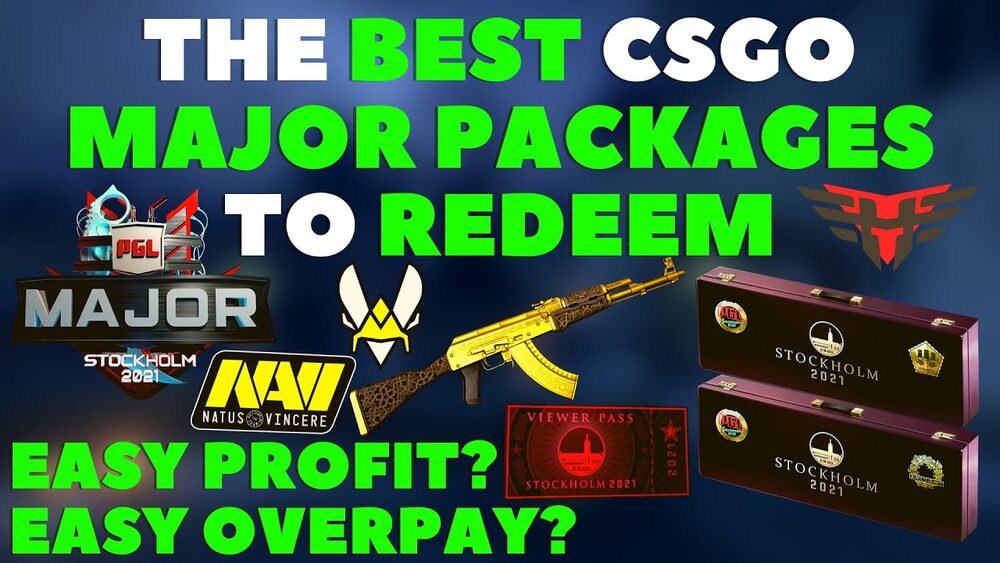
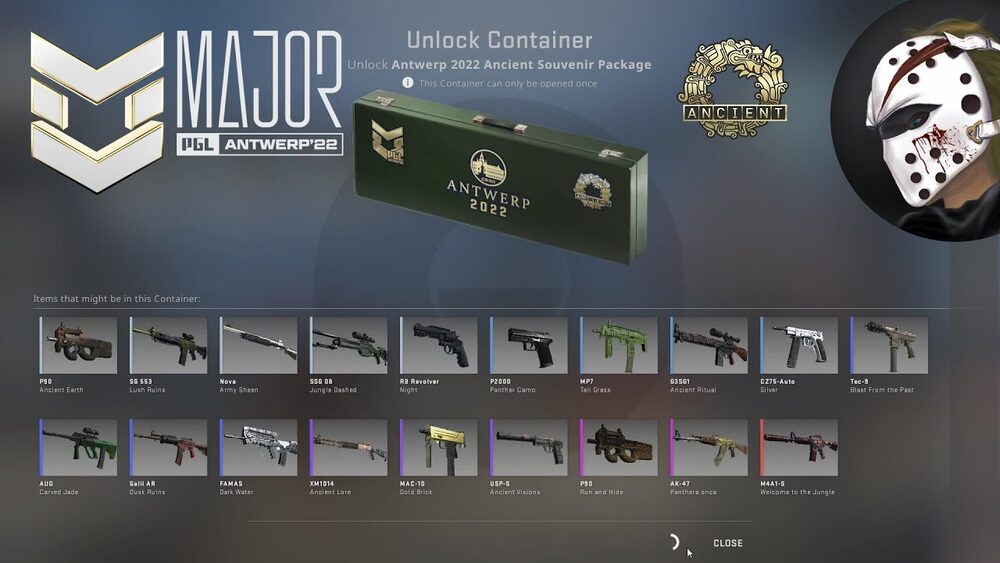
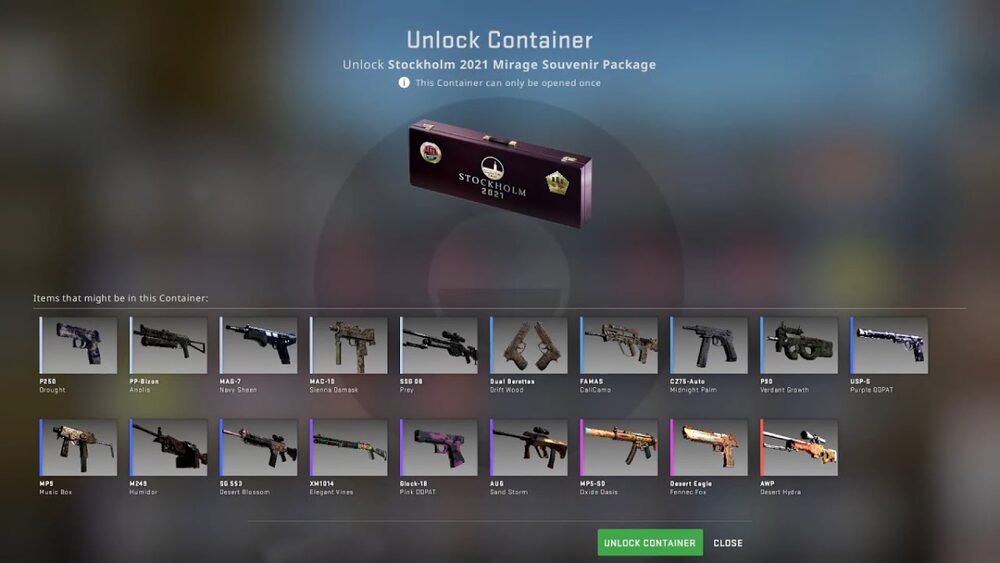
The souvenir system debuted at DreamHack Winter 2013, the first CS:GO Major. The mechanic was novel: watch the tournament live — in the game client via GOTV or through linked streams — and you had a random chance of receiving a Souvenir Package stamped with the event, the map, and the teams of the match you were watching. Inside: a skin from that map's collection, in souvenir quality, decorated with gold stickers of the event and teams (player autographs joined later as the sticker ecosystem matured).
Two design choices made souvenirs unlike anything else in the economy. First, supply was a function of live viewership during a specific window — no drop pool, no reprints, no way to mint more after the event ended. Second, each package carried provenance: a Cologne 2014 Cobblestone package is not interchangeable with a Katowice 2015 one, even if the skin inside is identical. Counter-Strike had accidentally invented graded, event-stamped collectibles years before "provenance" became an asset-world buzzword.
The Cobblestone accident
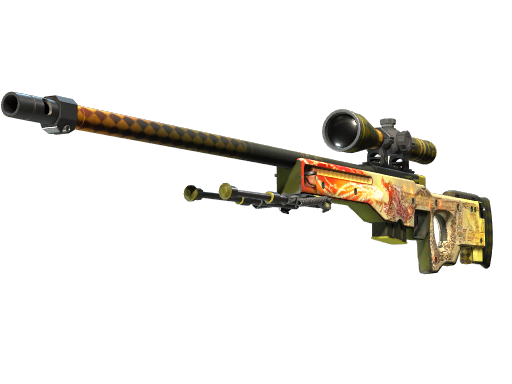
No one at Valve set out to create a six-figure item class, but the ingredients aligned on one map. Cobblestone's collection contained the AWP Dragon Lore and M4A1-S Knight — souvenir-only outside of the Dragon Lore's non-existent alternatives — and Cobblestone was a Major-pool staple through the mid-2010s. Then the map left the competitive rotation in the late 2010s, and with it, Dragon Lore minting stopped entirely. Every souvenir Dragon Lore in existence dropped during a finite set of tournaments to viewers who happened to be watching the right map.
The consequences compounded into the modern grail market: the Dragon Lore became the most famous skin in the game, the Cologne 2014 packages became the collector-tier vintage, and the Skadoodle souvenir Dragon Lore sale after Boston 2018 put souvenirs into mainstream gaming news. The full mechanics of what's inside a package are covered in our souvenir packages explainer.
From lottery to loyalty program
The drop system itself evolved steadily, and each change reshaped supply:
- 2013–2015: the open lottery. Watch on GOTV or a linked stream, get lucky. Low friction, but farmable — idle accounts "watching" streams for drops were endemic, inflating supply during the biggest events.
- 2016–2018: authentication tightening. Valve progressively required linked and authenticated viewing (client viewing, Steam-linked streams) to qualify, cutting down bot farming and thinning drop counts per event.
- 2019 onward: the viewer-pass era. Berlin 2019 introduced paid Viewer Passes: souvenir tokens earned through engagement, redeemable for packages from a match of your choosing. Drops went from random windfall to purchased loyalty reward — more predictable, better for Valve's revenue, and much less romantic.
- CS2 Majors (2023–present). The pass-and-token model carried into the CS2 era's Majors, with souvenirs remaining tied to event windows and pass ownership. Details vary per event; the constant is that free random drops to passive viewers are long gone.
What souvenirs teach about this market
Souvenirs are a minority of trading volume but a disproportionate share of the market's lessons:
- Provenance creates tiers within identical items. Same skin, same float — different event stamp, different price. The market pays for story, not just scarcity.
- Mechanic changes are supply events. Every tightening of the drop system retroactively made older souvenirs rarer relative to the future. The same logic drives capsule economics around Majors, covered in how Majors move skin prices.
- Map-pool decisions are monetary policy. A map leaving rotation halts its collection's souvenir minting — Valve's roster choices double as supply schedules, the way sticker capsule windows did for the 2014 grails.
- Illiquidity cuts both ways. High-end souvenirs trade rarely and mostly off-Steam; spectacular headline sales coexist with long waits to actually exit a position. A souvenir grail is a museum piece with a bid-ask problem — the price you read about and the price you can realize on a deadline are different numbers.
There's also a quieter pricing lesson in the wrapper itself. Unopened souvenir packages trade as their own asset class — a probability distribution with an event stamp — and the decision to open one is irreversible: crack a Cologne 2014 Cobblestone package and you've converted a sealed lottery ticket with collector value into one specific outcome. The sealed-versus-opened calculus that case investors know well applies here with the added twist that the package's provenance premium survives only while it stays closed.
As of mid-2026, the souvenir system is a mature, monetized machine — passes, tokens, predictable windows. The romance lives in the back catalog: packages that dropped to some viewer at 3 a.m. during a 2014 group stage, sat forgotten in inventories, and turned out to be lottery tickets that had already won. Every era of this economy has one asset class like that — a corner where luck, timing, and neglect quietly minted grails. Souvenirs were the first, and their supply story will never be repeated.