Souvenir Packages: Where Dragon Lores Come From
Every souvenir item is a certificate that a specific match happened. That provenance layer is why souvenirs occupy the auction-house tier of the CS2 economy.
The mechanics: drops you can't buy your way into
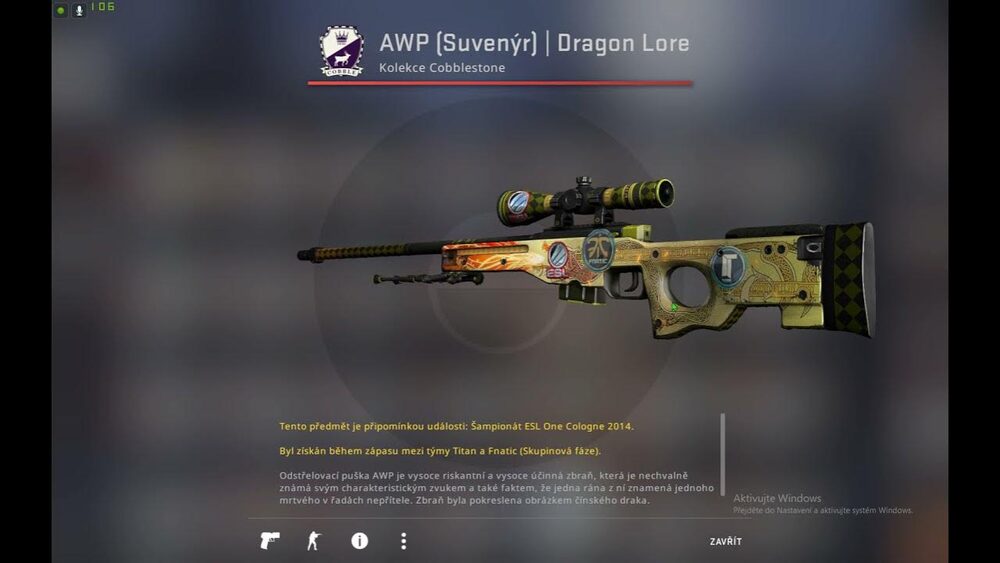
Souvenir packages exist only because Majors exist. During Valve-sponsored events, viewers watching the games (in-client or through linked accounts, with the details evolving over the years — the souvenir system's history is a story of its own) are eligible for package drops tied to the specific map being played. Each package records its provenance: the event, the map, and the match. Open it and you get a souvenir-grade skin from that map's collection, stamped with gold stickers referencing the event and the teams — and in later eras, a player — from that game.
Three properties make this the strangest supply schedule in Counter-Strike:
- Issuance is event-bound. Packages drop only during the tournament. When the event ends, that event's packages are done being minted, forever — the same hard cutoff that powers tournament capsule economics, but with far smaller volumes.
- Issuance is map-bound. A collection only mints souvenirs while its map is in competitive rotation at Majors. Remove the map, and every existing souvenir from it becomes a closed edition.
- Contents are collection-locked. Souvenir skins come from map collections, not cases — finishes that often exist nowhere else in souvenir form, at any wear, with the stickers frozen in.
Cobblestone: the case study that defines the category
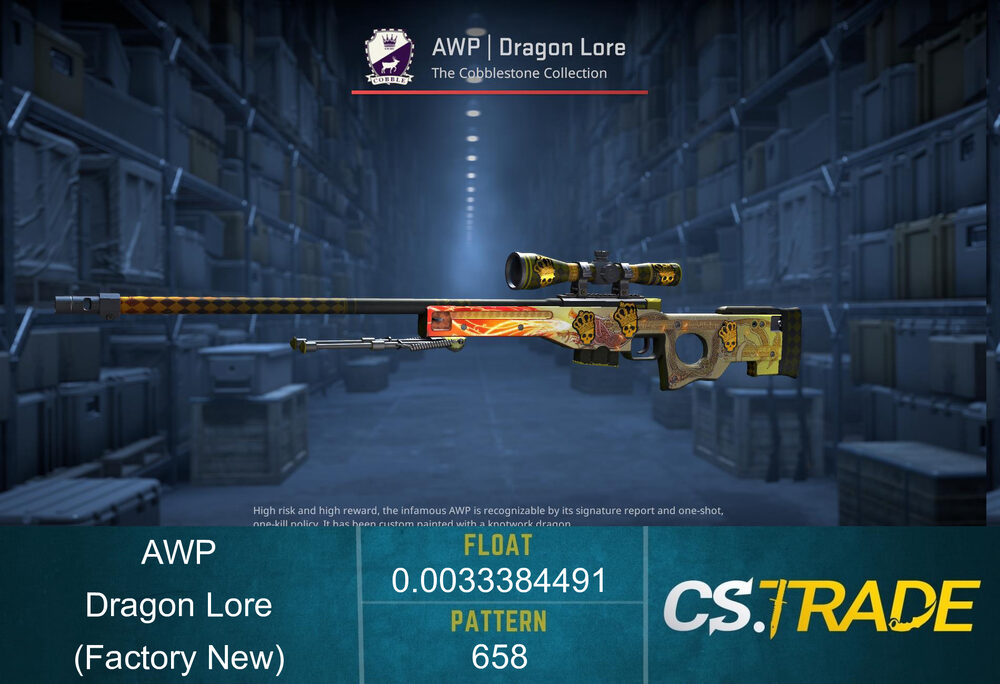
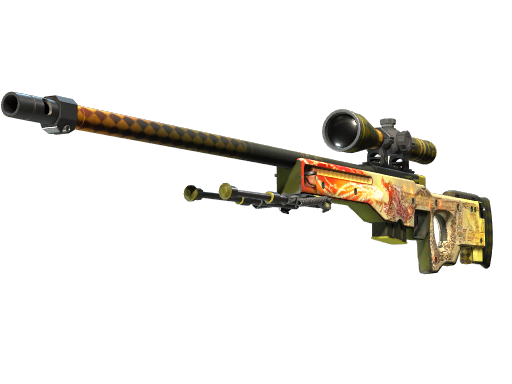
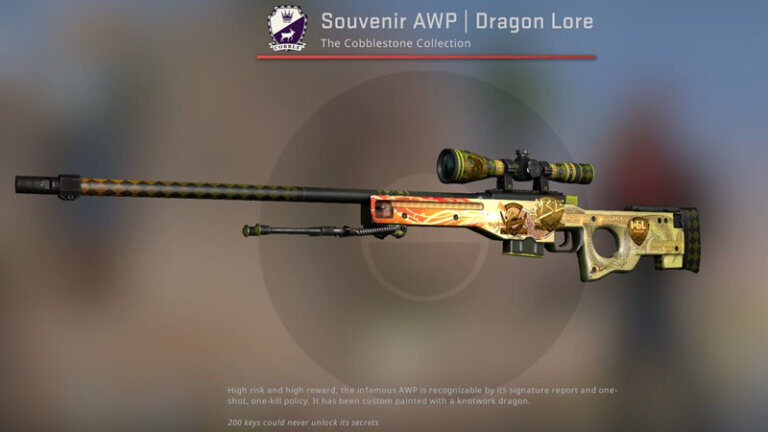
The souvenir system's flagship accident is Cobblestone. The Cobblestone collection contains the AWP Dragon Lore, and souvenir packages were the only way new Dragon Lores ever entered the game. When Cobblestone left the Major map pool in the late 2010s, Dragon Lore minting simply stopped. Every Dragon Lore in existence traces back to a package dropped during a specific match at a specific event — and the market prices that pedigree: the Skadoodle-stickered Boston 2018 souvenir Dragon Lore famously sold for around $61,000 shortly after that Major, per contemporary reporting, and comparable pieces have traded far higher since. The oldest packages, like the Cologne 2014 Cobblestone drops, are the category's founding relics.
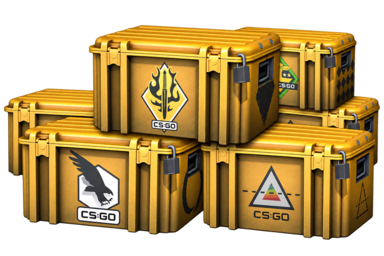
Unopened Cobblestone packages became grails in their own right — sealed lottery tickets whose jackpot is a fresh Dragon Lore with era-specific gold stickers. As of mid-2026, surviving packages from the mid-2010s trade for thousands of dollars each, per third-party listings, with the usual thin-market caveats.
The sealed-package market deserves its own note, because it inverts normal case logic. With a case, opening is a negative-EV entertainment purchase; with a Cobblestone package, the opening decision is a genuine gamble between two collectibles — the sealed package's certainty versus the contents' lottery. Streams of high-stakes package openings became their own genre precisely because both outcomes are financially serious. Rational holders mostly keep them sealed: the package's provenance is guaranteed, the pull is not, and the population of sealed packages only ever shrinks as gamblers take the other side.
Why souvenirs price like collectibles, not commodities
A souvenir AWP and its normal counterpart are functionally identical in-game. The premium — sometimes multiples, sometimes orders of magnitude — is pure provenance and scarcity, which puts souvenirs closer to the art market than to the case market:
- Multi-axis rarity. Wear tier × sticker combination × event era × collection. A specific float with specific team stickers from a specific final can be literally unique — the same one-of-one culture explored in the pattern economy.
- No replenishment lever. Valve can re-issue a case through a drop pool or the Armory. It cannot re-run Cologne 2014. Dead-event supply is the hardest scarcity in the game.
- Thin, lumpy liquidity. High-end souvenirs trade by negotiation, not order book. Entry and exit take patience and carry real spread — the auction-house tier in behavior as well as price.
Where souvenirs fit for a case-focused holder
Souvenirs are the opposite instrument to bulk cases: minimal liquidity, maximal provenance, and pricing driven by collector psychology rather than measurable supply burn. For most portfolios they're a small satellite holding — a way to own hard, dead-event scarcity that no Valve update can inflate away, sized to survive the months-long exits the tier demands. The core compounding engine remains the boring one: sealed containers accumulated on schedule. Souvenirs are where some of the profits retire — the trophy shelf, not the engine room. Treating them otherwise means holding your least liquid asset as your largest position, which is how good collections become bad portfolios.
But understanding them matters even if you never buy one, because souvenir supply explains several of the market's largest prices — and because every Major that passes without a map's collection minting is quietly closing another edition. In a market obsessed with what Valve might add next, souvenirs are the corner where value comes from what can never be added again.