Sticker Capsule Economics: Small Items, Huge Returns
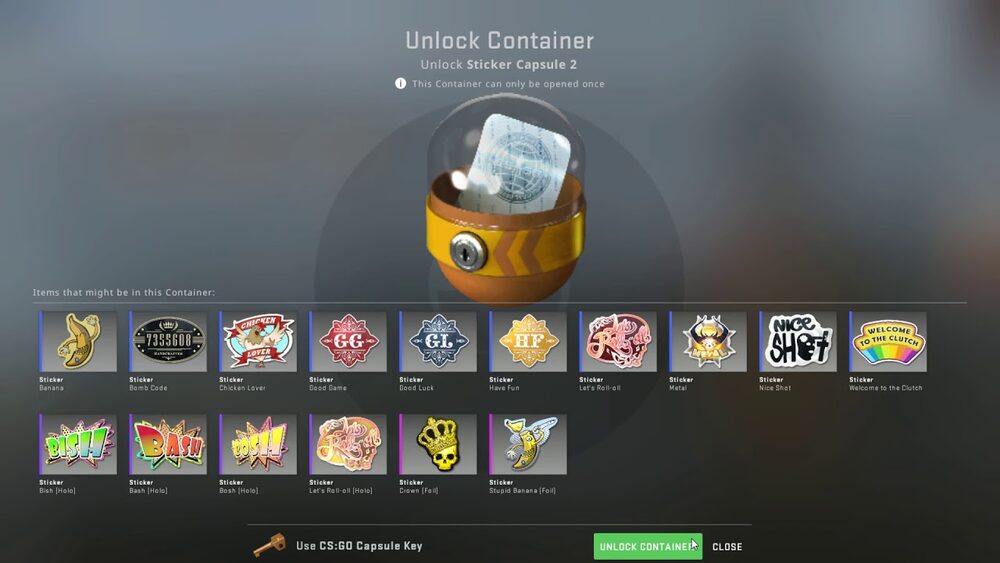
Cases get the headlines, but the best documented returns in Counter-Strike collectibles came out of capsules. The reason is a supply schedule even harsher than the case burn.
Capsules are not small cases
A sticker capsule looks like a case's little sibling: cheaper, simpler odds, less exciting contents. Economically it's a different instrument, because of how supply enters and exits the system. Cases in the active pool are minted continuously by tens of millions of weekly drops. Tournament capsules — the Major-linked ones that produced the famous returns — are minted only while their event window is open. When the Major ends, issuance stops. Permanently. There is no drop pool, no rare rotation, no long tail. The float on day one after the event is the largest that capsule's supply will ever be.

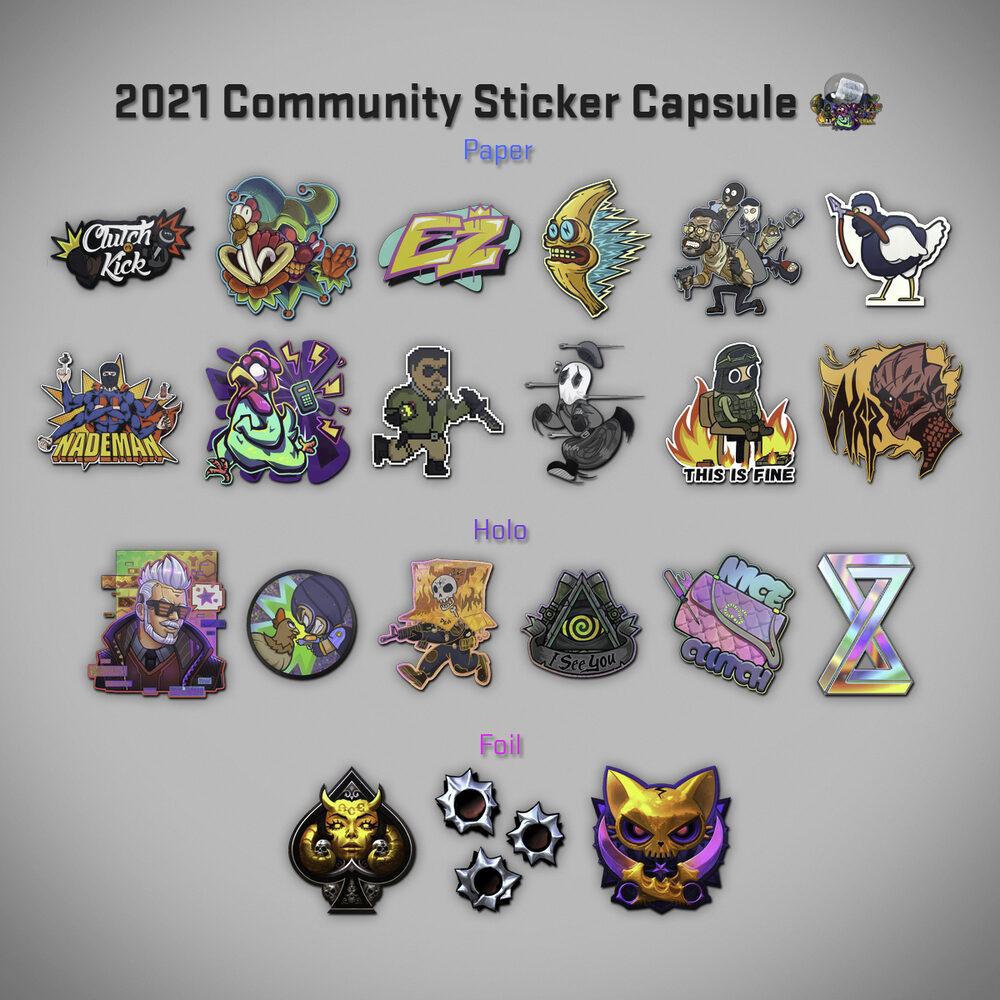
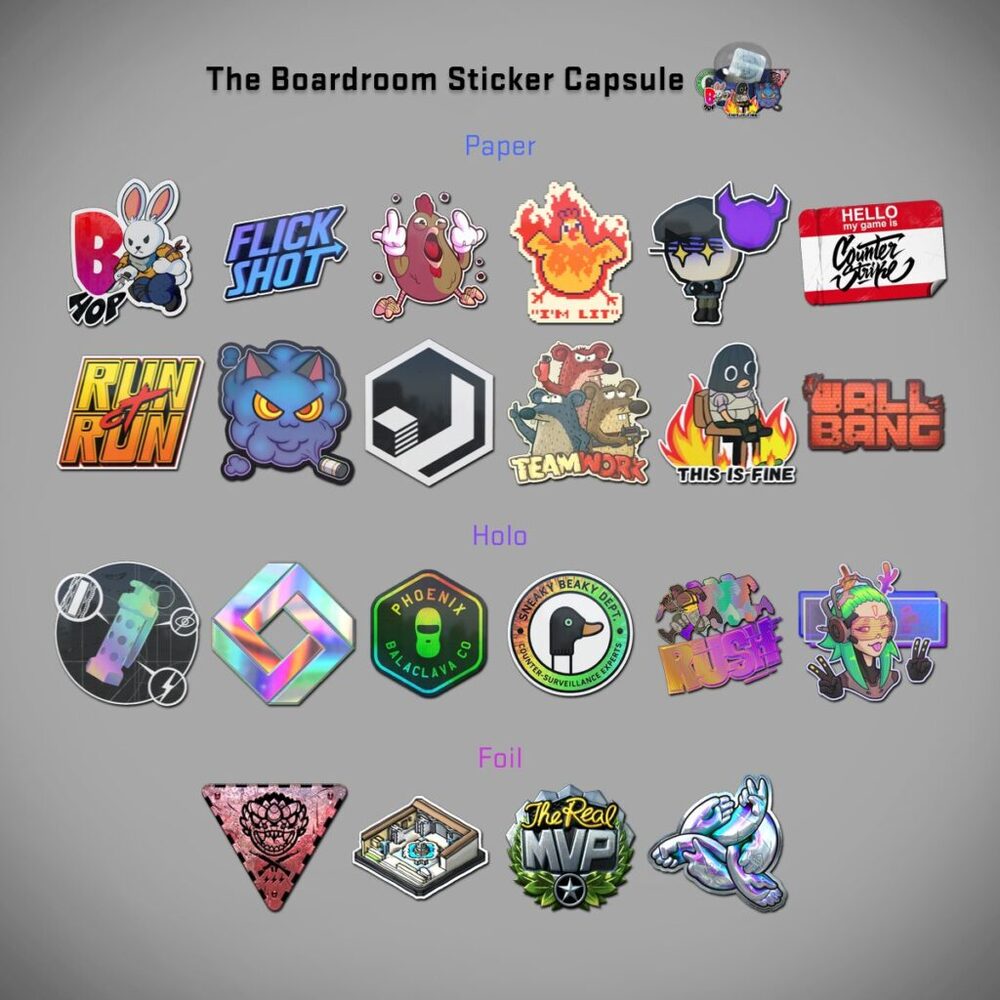
The distinction between capsule types matters here. Regular community capsules (the numbered community series and themed sets) behave more like cases — Valve can and does keep them purchasable or droppable for extended periods, so their supply schedules are softer. The hard-cutoff economics belong to tournament capsules: team stickers, autographs, and event sets tied to a specific Major. Those are the instruments this article is about, because a fixed issuance date is what turns a sticker from a consumable into a vintage.
From the moment a tournament capsule's window closes, the mechanics run one direction:
- Opening burns capsules — same as cases, but capsules are cheap to open, so casual destruction runs high while attention is low.
- Applying burns stickers. This is the layer cases don't have. A sticker scraped onto a skin is consumed; craft culture — the Katowice-craft economy explored in the Crown Foil story — permanently destroys the very supply collectors later want sealed.
- Nobody is watching. Capsules are a low-attention corner of the market. Supply quietly disappears for years before demand shows up, which is exactly the setup that produced the monster charts.
The historical evidence
The canonical example is Katowice 2014: capsules sold for well under a dollar during an event most of the market ignored, and a decade later the surviving contents anchor six-figure inventories — the Titan Holo being the extreme case. Katowice 2015 followed a gentler version of the same curve. On the community side, Community Sticker Capsule 1 (2014) produced the Crown Foil, a five-figure sticker from a capsule that once cost pocket change. These aren't cherry-picked anomalies so much as the purest expressions of the capsule supply schedule meeting delayed demand.
The honest counterweight: for every Katowice 2014 there are many event capsules that went nowhere for a decade and counting. Per third-party trackers, most post-2019 tournament capsules still trade within a low multiple of their issue price. The distribution of capsule outcomes is savagely right-skewed — a few legends, a long tail of flat lines. Anyone buying Major stickers as investments is buying a lottery on future nostalgia, not a bond.
What determines which capsules age well
| Factor | Why it matters | Katowice 2014 reading |
|---|---|---|
| Issue-window sales | Sets the initial float — small events with low sales mint tiny supplies | Tiny; 2014 audience was a fraction of today's |
| Craft/application rate | Applied stickers leave the sealed pool forever | High — nobody treated them as collectibles |
| Nostalgia surface | Teams, players, and eras people later canonize | Maximal: the founding era of CS:GO esports |
| Aesthetic/craft demand | Stickers that look good on meta skins get bought to be destroyed | Holos that define craft culture to this day |
Modern capsules score structurally worse on the first factor: Majors now sell to audiences orders of magnitude larger, per public viewership figures, so initial floats are enormous. The 2014 setup — tiny float, total indifference — is arguably unrepeatable, which is precisely why the survivors are priced like relics.

Capsules in a case-heavy portfolio
For someone whose core position is cases, capsules play a specific role: they're the concentrated-variance sleeve. A sensible structure treats them accordingly:
- Small allocation, long horizon. The winners took five to ten years to reprice. Capsule money is money you won't touch until the era they commemorate becomes history.
- Buy sealed, hold sealed. The capsule (or the unapplied sticker) is the asset. Every application is someone else burning supply on your behalf.
- Mind liquidity. Capsule books are thin next to case books — exits move prices, and liquidity risk is the tax on the upside. Sizing that ignores this turns paper gains into slippage.
- Remember who gets paid. Tournament capsule revenue is shared with teams and players — the sticker-money economy — so capsule buying during events is also the market's mechanism for funding the scene it's betting on.
One last structural point: capsule demand is downstream of esports health in a way case demand isn't. A case's openers are players; a capsule's eventual buyers are fans of a specific competitive era. That makes the capsule sleeve an implicit bet on Counter-Strike's tournament scene staying culturally central for another decade — a bet the viewership trend has supported so far, but a real dependency worth naming before you size the position.