The Crown (Foil): A $5 Sticker That Became a Crown Jewel
No tournament, no team logo, no scandal. A community artist drew a crown in 2014, and a decade of burn mechanics did the rest.
The most ordinary origin in the grail tier
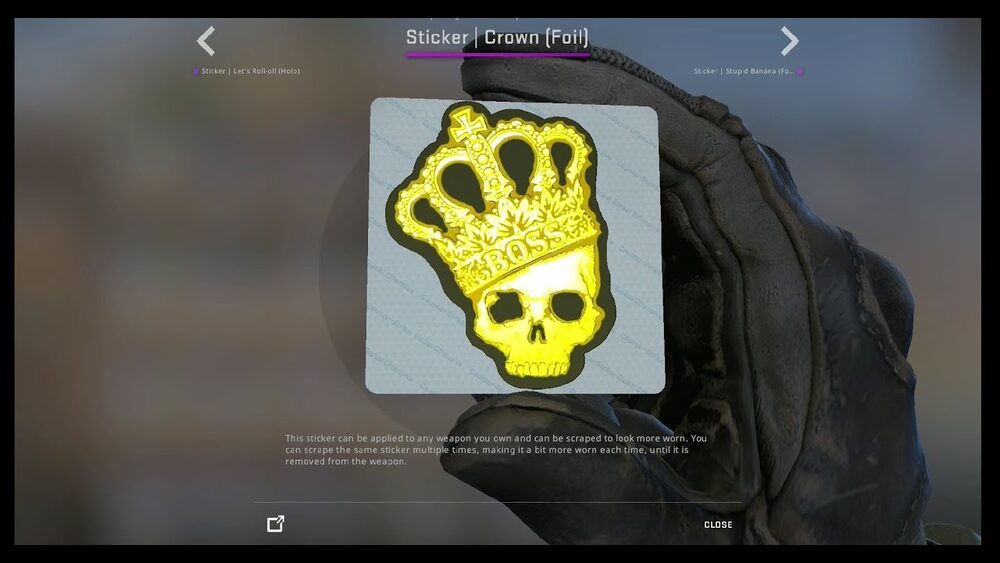
Almost every high-value sticker in Counter-Strike derives its price from an event: Katowice 2014 from a Major, the iBUYPOWER Holo from a scandal, the Howling Dawn from a DMCA takedown. The Crown (Foil) has no event. It came out of Community Sticker Capsule 1 in 2014 — a capsule of community-made designs sold openly on the store — and its foil tier was simply the rarest pull in the box.
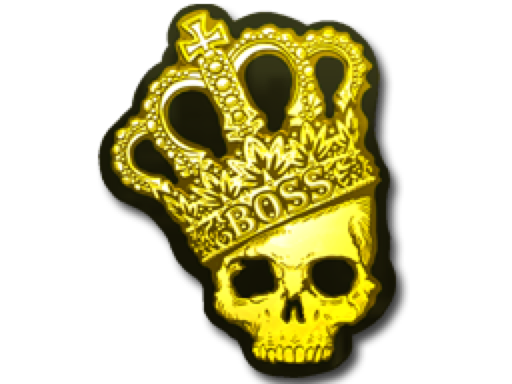
That ordinariness is exactly what makes it the cleanest experiment in the whole sticker market. Nothing about the Crown's price is explained by lore. It's explained by two mechanical facts: the capsule stopped selling, and stickers burn.
How a store item becomes a fixed-supply asset
While Community Sticker Capsule 1 was on sale, the Crown Foil was worth a few dollars — the price of enough capsule pulls to hit a foil, roughly. When the capsule left the store, the printing press stopped. From that day forward, the Crown's supply curve has only one direction, for the same reasons that drive all of capsule economics:
- No new units, ever. Unlike weapon cases, retired capsules don't linger in drop pools. The population was fixed the day sales ended.
- Application is destruction. Every Crown scraped onto a rifle leaves the tradable supply permanently. Scrape it off later and it's gone entirely.
- Attrition compounds. Banned accounts, abandoned inventories, and lost logins quietly retire units every year, a decade running.
Cases share this burn logic — it's the engine behind shrinking case supply — but capsules run a more extreme version. A case that gets opened at least yields a skin that keeps trading. A sticker that gets applied becomes a decoration on someone else's asset. The burn is total.
The price path, decade by decade
The Crown Foil's chart is the sticker market's compounding story in miniature. The figures below are directional — early-era pricing is reconstructed from community records, and top-end sales increasingly happen off-market.
| Era | Rough price zone | What was happening |
|---|---|---|
| 2014–2015 | Single-digit dollars | Capsule on sale; foils common enough to be a flex, not an asset |
| 2016–2019 | Tens to low hundreds | Capsule retired; craft culture forms; supply burn begins to bite |
| 2020–2023 | High hundreds to four figures | Skin-market bull run; stickers rerated as the thin-supply corner |
| As of mid-2026 | Four figures, top sales reportedly higher | Clean unapplied units scarce; most price discovery via crafts and private deals |
From a few dollars to four figures is a return that embarrasses nearly every conventional asset over the same window — the same pattern, at smaller scale, that made Katowice 2014 capsules the most famous trade in the game's history. The difference is that Katowice supply was tiny from day one. The Crown started with a real population and burned its way to scarcity.
Worth noting for anyone reading the chart today: the steepest repricing didn't come during the burn years, when supply was actually shrinking fastest, but during the 2020–2023 bull run, when attention arrived. Scarcity accrues silently for years and then gets priced all at once — a pattern that repeats across nearly every retired item class in this market.
Craft culture: where Crowns go to die
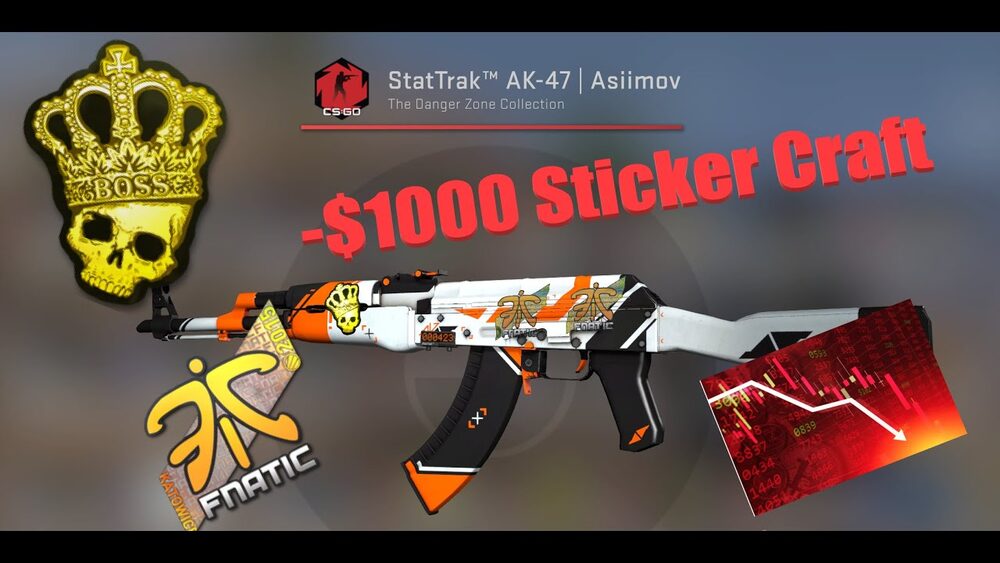
The Crown's demand side is inseparable from crafting. A gold crown is aesthetically neutral in the best way — it reads as wealth on almost any finish — and so "Crown crafts" became a genre of their own: four Crown Foils applied to a single rifle as a statement piece. Each one of those crafts destroys four units of supply in a single trade-up of vanity.
The paradox of grail stickers: the thing that gives them value — being applied to skins people admire — is also the thing that removes them from circulation. Demand doesn't just consume supply here; demand is the burn mechanism.
This creates a two-tier market. Unapplied Crowns trade as the scarce raw material. Crafted skins carrying four of them trade as one-of-a-kind collectibles, priced by negotiation rather than order books — some reportedly changing hands well above the sum of their parts, though such sales are private and hard to verify. Anyone valuing a craft should treat the sticker markup with the skepticism the valuation basics demand: crafts are illiquid, and the last sale is not the next bid.
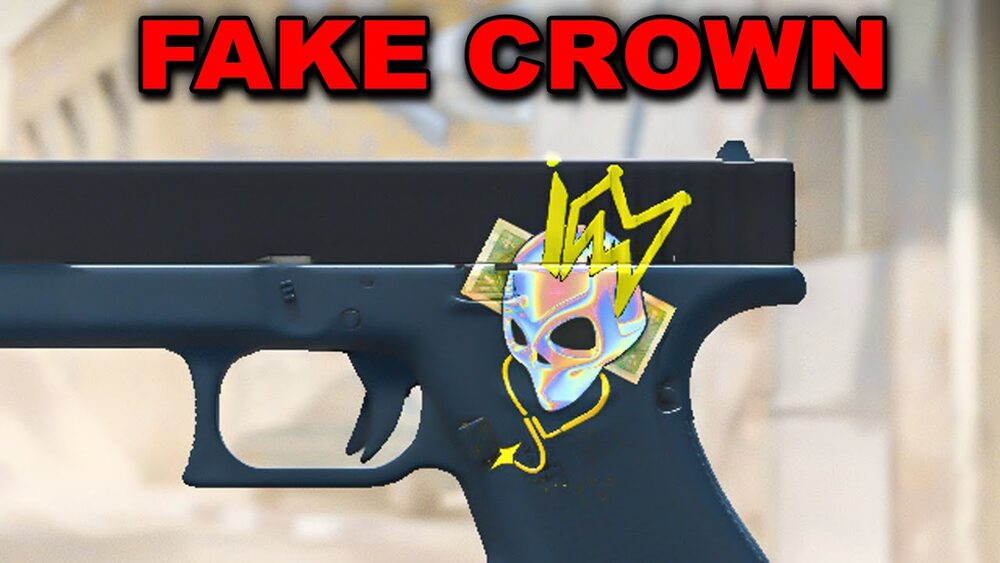
What the Crown teaches about the whole market
Strip away the specifics and the Crown Foil is a proof: in this economy, fixed supply plus steady burn plus a growing player base is sufficient for extraordinary returns. No esports moment required, no scandal, no artificial removal. Just arithmetic running for twelve years.
That's worth internalizing, because the same arithmetic is running right now in less glamorous corners — retired capsules nobody discusses, discontinued cases trading for pocket change. Not all of them will be Crowns. But every Crown started as something the market ignored at $5.
It also teaches restraint about extrapolation. The Crown's twelve-year chart is survivorship in its purest form: Community Sticker Capsule 1 shipped alongside plenty of designs nobody writes articles about, and most retired stickers from the era still trade for lunch money. Fixed supply is necessary, not sufficient — the Crown also had the aesthetics to become a craft staple, and it's the crafting demand that kept the burn running. Anyone scanning today's retired capsules for the next Crown is forecasting taste as much as supply, and taste is the harder variable.