The Titan Holo Katowice 2014: A Six-Figure Sticker
The org died in 2016. The logo became the most expensive sticker in Counter-Strike. The Titan Holo is what happens when the scarcest supply in the market meets a story that can never be rerun.
A dead org's immortal logo
Titan was the French organization built from the ashes of VeryGames — at the time, the second-best team in the world and the only serious rival to NiP. They played EMS One Katowice 2014, which put their logo into the first Major sticker capsules ever sold. Then reality intervened: in November 2014, days before DreamHack Winter, Valve VAC-banned Titan's star KQLY (the "sm0kes" ban wave that also hit Epsilon), knocking the team out of the Major and gutting its competitive standing. The org never recovered its footing and shut down in early 2016.

That collapse is quietly load-bearing for the price. A living org's logo appears on new capsules Major after Major — modern team stickers compete with their own future reprints. Titan's holo exists in exactly one vintage, from the one Major cycle where almost nobody bought capsules, for a team that ceased to exist before the market understood what it had. There will never be another Titan sticker. Collectors are pricing a closed set of one.
Why this holo out of all of them
Every Katowice 2014 holo is scarce. The Titan Holo became the sticker for a stack of reasons that compound rather than merely add:
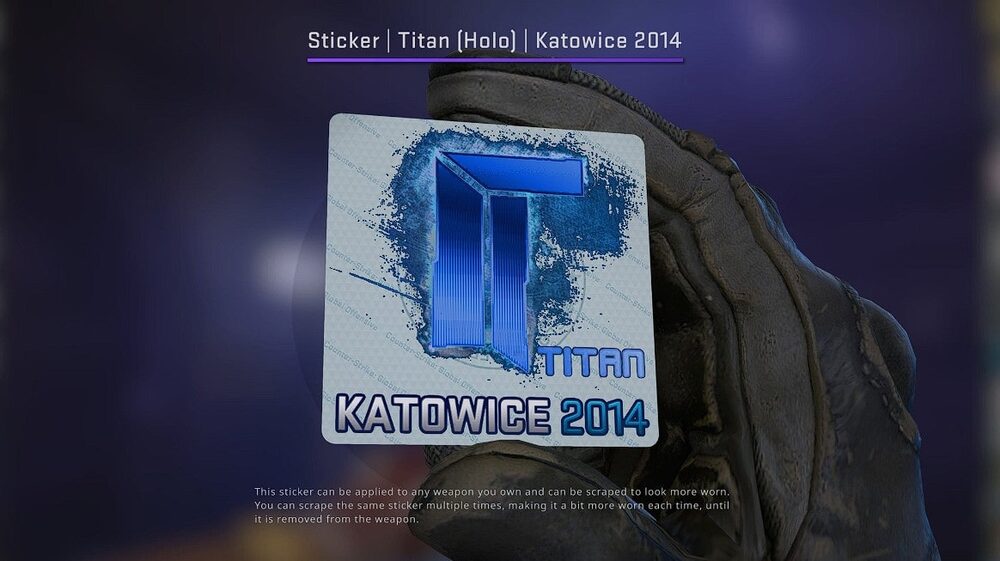
- The look. The pale, prismatic holo effect on Titan's minimal logo is widely considered the best-looking sticker in the game. Craft culture runs on aesthetics, and Titan tops nearly every "best holo" ranking.
- Craft demand. The sticker's popularity as a craft is self-cannibalizing: every Titan Holo applied to an AK or M4 permanently leaves tradable supply, and a scrape destroys it. Applied demand has been burning the float for a decade.
- Thin base supply. Katowice 2014 capsules sold in tiny numbers during a roughly two-week window in March 2014, with holos the rare pull. The unapplied survivors are a rounding error.
- Trophy convergence. Once an item becomes "the most expensive X," it attracts buyers who specifically want the most expensive X. The label sustains itself.
What it trades for — and how to read those numbers
As of mid-2026, a pristine unapplied Titan Holo Katowice 2014 reportedly trades well into six figures, and it has held the title of most expensive sticker in Counter-Strike for years. The word "reportedly" is doing necessary work. The Steam Community Market caps sales at $2,000, so no real Titan Holo transaction has touched Valve's rails in a decade. Everything at this tier settles privately or on third-party venues, between a tiny set of counterparties, often with items rather than cash on one side of the trade.
A Titan Holo doesn't have a price. It has a spread between what the last holder says they refused and what the next buyer says they offered — and both have reasons to exaggerate.
That's not a criticism of the item; it's the microstructure of every ultra-thin market, from art to watches. Liquidity, not rarity, is what separates a price from an estimate — and at the grail tier, estimates are all anyone has. The same caution applies across the whole top shelf of the market, from blue gems to souvenir AWPs.
What can be said with confidence is the trajectory. Titan Holos traded in the tens of dollars in 2015, crossed into four figures as craft culture matured, cleared five figures during the 2020–2021 boom, and have been quoted in six ever since the CS2 transition confirmed that every item — and every applied sticker — would carry over into the new client. Each leg up also thinned the float further, as holders who might have sold at $500 became museums at $50,000.
Crafts: where Titan Holos go to die
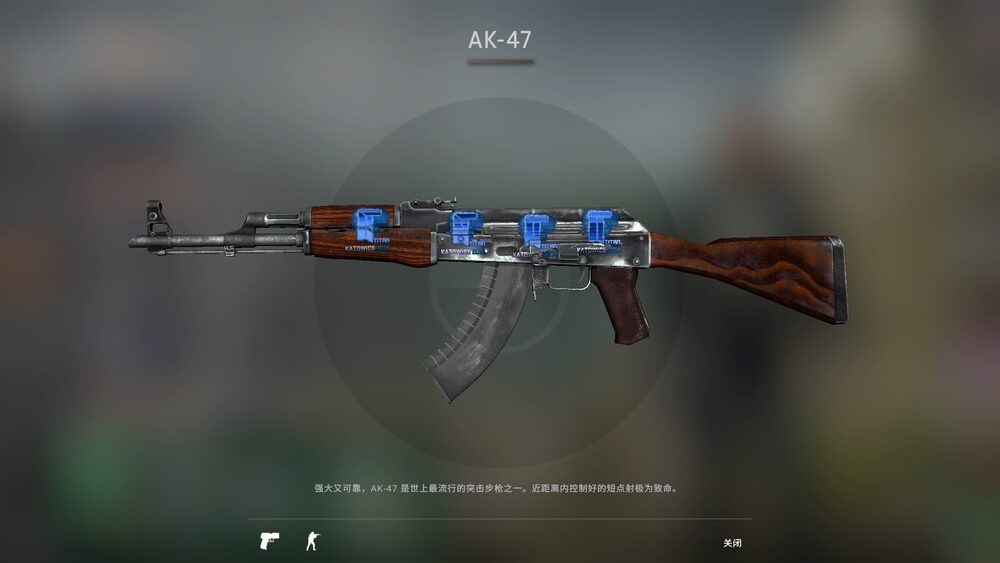
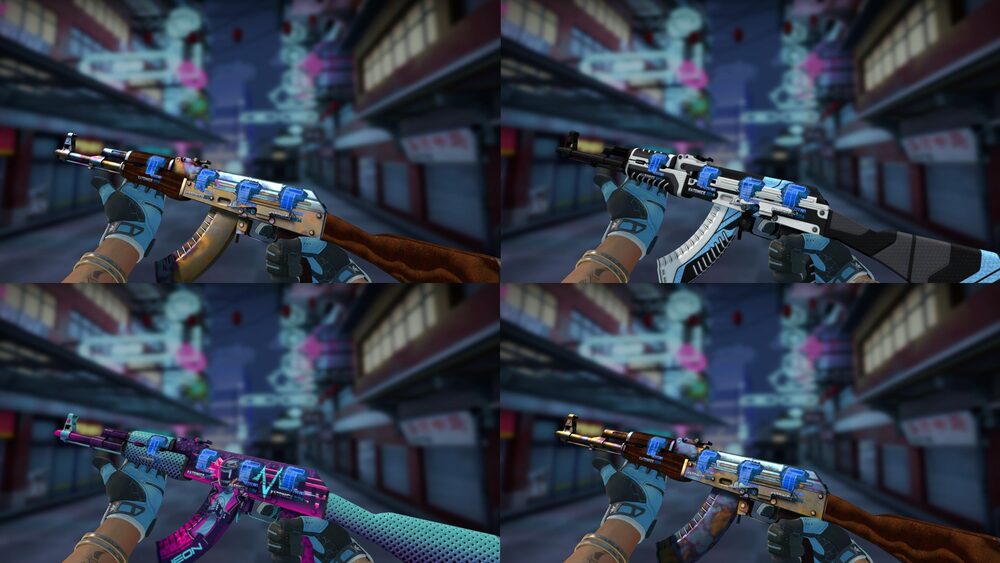
The other half of the Titan story is written on rifles. Quad Titan Holo crafts — four stickers on one skin — are the most extravagant flex in CS2, and each one removed four holos from circulation forever. Famous crafts on grails like the AK-47 Fire Serpent occupy a strange double position: they destroyed supply of the sticker while becoming grails themselves, priced beyond the sum of their parts to the right buyer and below it to everyone else.
The uncomfortable investment lesson
The Titan Holo is a magnificent collectible and a terrible role model. Its return depended on a sequence no one could have planned: buy a novelty item in a two-week window, have the team implode so supply stays a closed set, watch craft culture burn the float, and hold through years when selling at a 95% discount to today's estimates looked smart. None of that is a strategy — it's a lottery ticket that happened to be attached to genuinely sound supply mechanics.
Those mechanics — fixed sale windows, permanent burn, demand growing with the game — are the transferable part, and they exist today in modern capsules and discontinued cases at prices with actual liquidity underneath them. The market still manufactures scarcity on a schedule. It just doesn't announce in advance which items get the story — and by the time a story is obvious, it's in the price. The Titan Holo's premium was unknowable in 2014 and unpayable by 2024. Everything investable sits between those two moments.