Major Stickers as Investments: A Sober Guide
Everyone knows someone whose Katowice capsules paid for a car. Nobody talks about the Berlin 2019 paper stickers still sitting at pocket change. Both stories are the asset class.
The mechanic that makes the trade exist
Major capsules have one property that separates them from every case: a hard supply window. Capsules are sold in the client only while the event store is open — a few weeks around the tournament — and are never minted again. No drop pool, no re-issue, no Armory route. From the moment the store closes, supply can only shrink: every capsule opened is destroyed, every sticker applied to a skin is (economically) consumed, every scrape is a burn. Cases lean deflationary over years as drops slow and openings accumulate; capsules are born deflationary on day one. The mechanics are covered in depth in sticker capsule economics — this guide is about whether the trade actually pays.

The winners everyone extrapolates from
The canonical successes are real. Katowice 2014 capsules sold for cents to a tiny audience and now anchor six-figure inventories; Katowice 2015 followed a gentler version of the same curve; scarce early-era items like the Crown Foil compounded for a decade. The pattern behind all of them: tiny minted supply (small audience, weak demand at sale time) meeting massively larger future demand.
The second tier of winners is more instructive than the legends. Cluj-Napoca 2015 capsules — the last of the small-mint era — appreciated strongly without ever being lottery tickets, and select items from 2016–2018 events did well where a specific craft meta or a beloved lineup created durable demand. The gradient is consistent: returns fall as mint size grows, and mint size grew with every year of the game's popularity.
That's precisely the setup that no longer exists. The reason to study the winners is not to expect a repeat — it's to understand which variable did the work. It was never the sticker; it was the mint size.
Why most capsules go nowhere
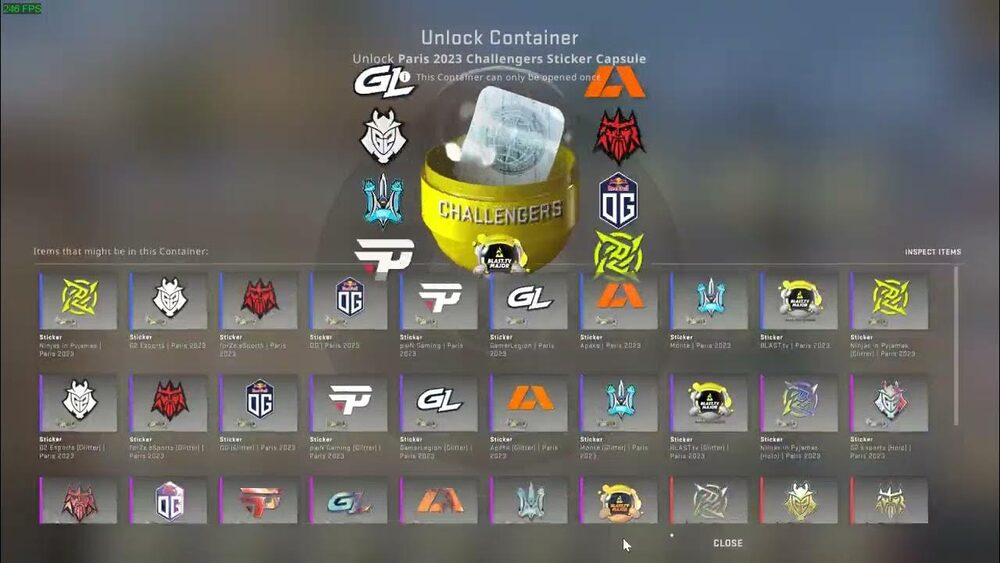
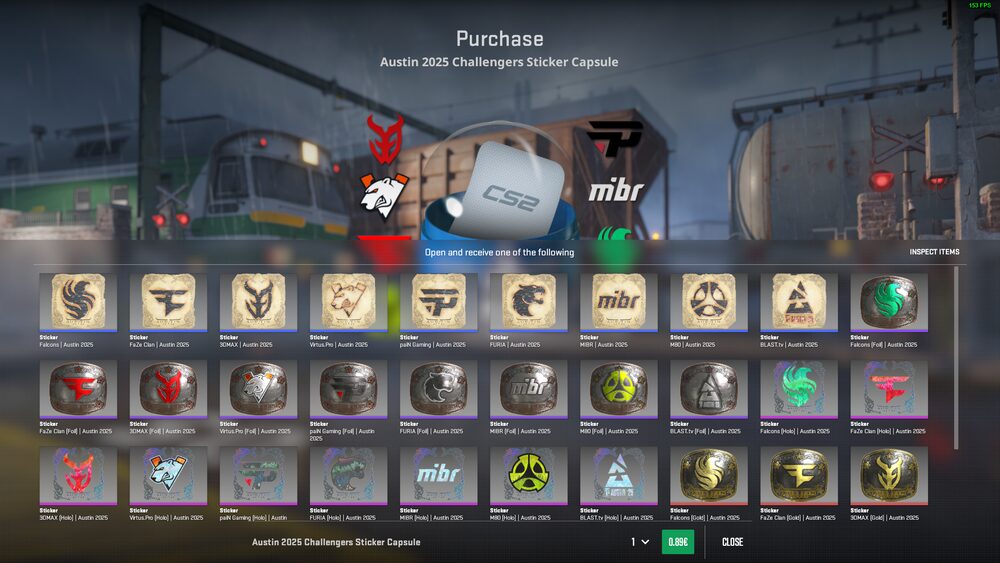
- Everyone learned the trade. Since roughly 2019, capsule "investing" is mainstream. Enormous quantities are bought and vaulted during every window, which front-loads decades of supply into strong hands. A crowded trade with hoarded float has structurally capped upside.
- Mint size is invisible. Valve publishes nothing. You are buying into a supply number you cannot know, at the exact moment it's being inflated by people with the same idea.
- Team risk cuts both ways. A roster imploding can kill craft demand for its autographs — or, in the perverse Titan / iBUYPOWER pattern, org death can freeze a logo into a relic. You cannot predict which.
- The payoff is a decade away. Post-window capsules typically dip once event hype fades, then flatline for years. The Katowice curve took most of a decade to go vertical.
A framework, if you still want exposure
None of this makes capsules untouchable; it makes them a satellite position, not a core. A defensible approach looks like this:
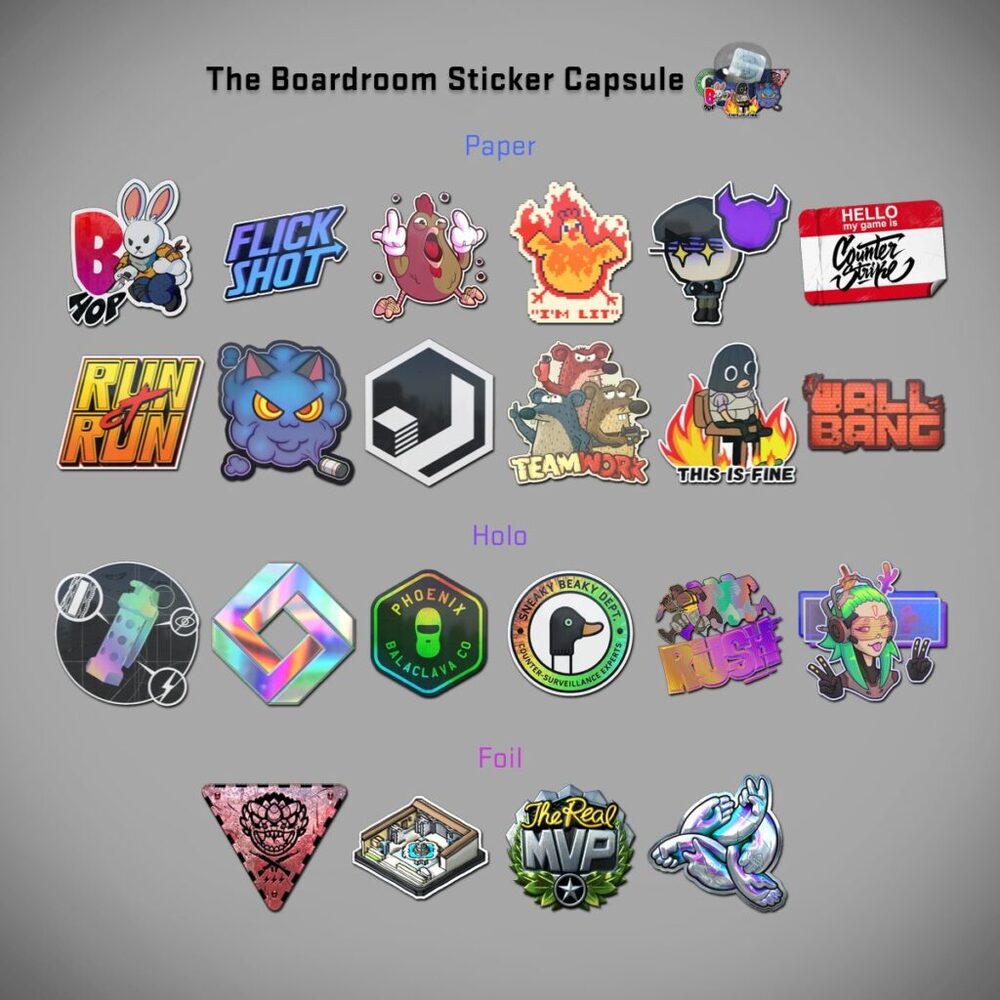
- Prefer quality over quantity. Holo and gold variants, legend-team capsules, and autographs of era-defining players carry the craft demand that funds the scene and drives long-run premiums. Paper stickers of forgettable challengers are the flatline zone.
- Buy the boredom, not the window. Historically, the cheapest prices often come in the months after the store closes, when hype sellers capitulate — the tail end of the Major price pattern.
- Size it like a lottery-adjacent asset. A common structure: capsules as a single-digit percentage of a portfolio that's otherwise built on discontinued cases and liquid items — the diversification logic is in our portfolio guide.
- Underwrite with time, not narrative. If you're not comfortable holding through five flat years, the historical winners say you won't be holding when it matters.
Capsules or singles?
One execution question deserves its own paragraph: whether to hold sealed capsules or the stickers themselves. Sealed capsules are the index bet — you own a slice of every team and variant, unopened supply is what the long-run scarcity story is actually about, and they stay maximally liquid. Buying specific stickers is the active bet: you're paying today's market for a view on one team's legacy or one autograph's craft appeal, with wider spreads and thinner books, especially on holos. The historical winners reward both, but the failure modes differ — a bad capsule vintage merely flatlines, while a bad single (wrong team, dead craft meta) can underperform the capsule it came from. If you don't have a specific, articulable edge on a team or player's long-term demand, the sealed capsule is the humbler and usually better instrument.

The verdict
Major stickers are a real, structurally scarce asset with a genuinely great origin myth and a mediocre modern base rate. Treat them as a small, patient, quality-weighted bet on Counter-Strike's long memory — not as the next Katowice. The people who made fortunes on 2014 capsules weren't geniuses; they were early. The honest edge available today is discipline, and discipline is portable to the rest of the market.