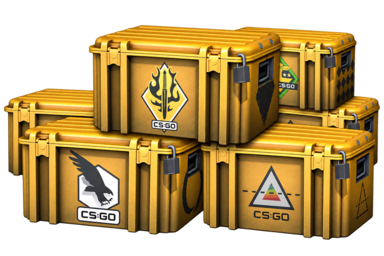
AK-47 Fire Serpent: Bravo's Crown Jewel
Thirteen years after Operation Bravo, one hand-drawn serpent is still the picture people reach for when they want to explain what a grail AK is. That's not nostalgia — it's supply math.
An accident of the 2013 design language
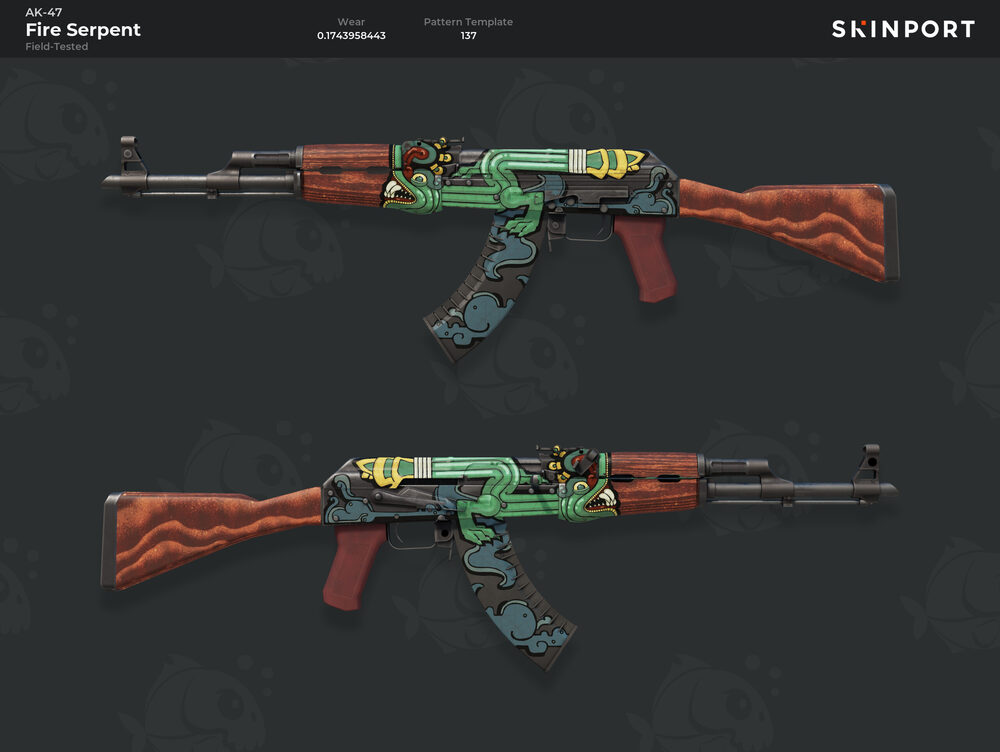
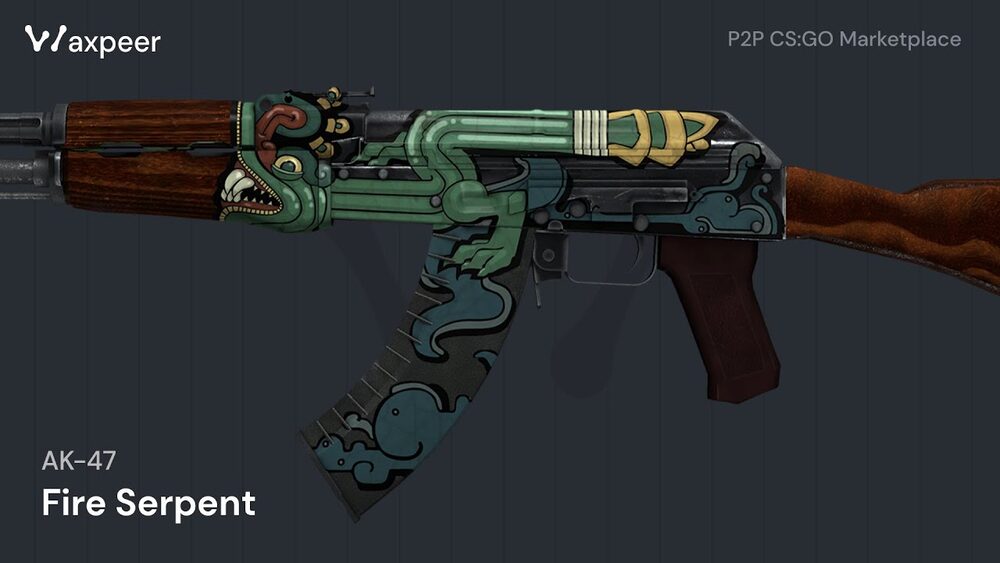
The Fire Serpent shipped in September 2013 inside the Operation Bravo Case, back when Valve's finish catalog was still small enough that a loud, hand-illustrated serpent coiling down the receiver didn't have to compete with much. By modern workshop standards the art is almost crude: flat colors, visible linework, a green-and-orange palette nobody would greenlight today. That's exactly why it aged well. Later AKs chase detail; the Fire Serpent reads instantly from across a screen, in a killfeed thumbnail, in a 240p highlight clip. Recognizability is the raw material of grail status, and no rifle skin has more of it.
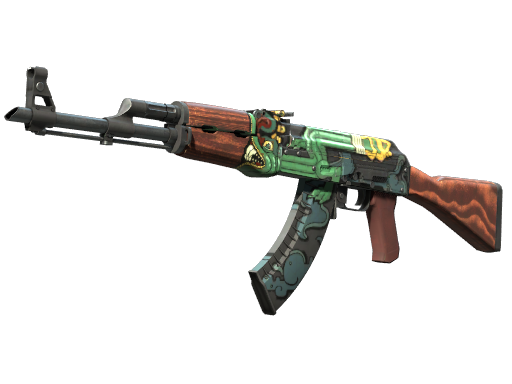
It also occupies the Covert slot on the single most-played weapon in the game. Grail hierarchies are demand-side phenomena as much as supply-side ones: an equally rare finish on the SG 553 would be a curiosity, not an icon. The AK's cultural position does a lot of quiet work in the Fire Serpent's price.
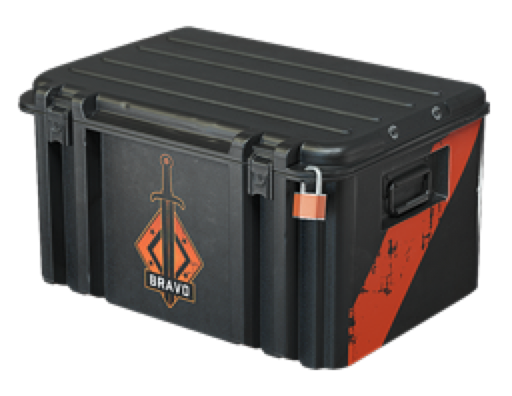
The supply spigot is the Bravo case itself
What separates the Fire Serpent from merely-expensive Coverts is where new units come from. Bravo cases dropped only to operation pass holders during Operation Bravo's few-month window in 2013–2014. When the operation ended, the spigot closed permanently. Every Fire Serpent that will ever exist is either already unboxed or still sleeping inside one of the remaining sealed cases — and those cases are themselves one of the thinnest-supplied, most expensive containers in the game, sitting near the top of any supply-ranked list of rare cases.
That creates an unusual feedback loop:
- Opening is expensive. With the case plus key running far above the price of most skins, opening Bravos is only rational for gamblers or content creators. New Fire Serpent supply trickles in at a rate set by the case price itself.
- The case hedges the skin. If Fire Serpent prices spike, opening becomes marginally more attractive, more cases get cracked, and a little supply arrives. The case price and the skin price are loosely tethered — a structural feature covered in the economics of discontinued cases.
- Float distribution is frozen. The wear distribution of unboxed Fire Serpents was set by 2013-era openings. Factory New examples were rare then and are proportionally rarer now, since high-float units churn through the market while clean ones get vaulted. Float does more work on this skin's price ladder than on almost any other AK.
What it trades for
Pinning exact numbers on a thin market is a mug's game — the top of the Fire Serpent ladder trades in private deals and on venues with unreliable public records. But the shape of the ladder is well established as of mid-2026:
| Tier | Character | Rough territory |
|---|---|---|
| Battle-Scarred / Well-Worn | The liquid entry point; still unmistakably a Fire Serpent | Four figures |
| Field-Tested / Minimal Wear | Where most collectors actually live | Low-to-mid four figures and up |
| Factory New | Genuinely scarce; sales make news | Reportedly well into five figures |
| Kato 14 crafts | A different asset class entirely | Reportedly six figures for the top combinations |
Treat every figure above as a region, not a quote. Items at this tier have wide spreads, months-long time-to-sale, and prices that depend heavily on which side of the trade is more patient — the standard problems described in how liquidity works in this market.
The craft layer: where six figures live
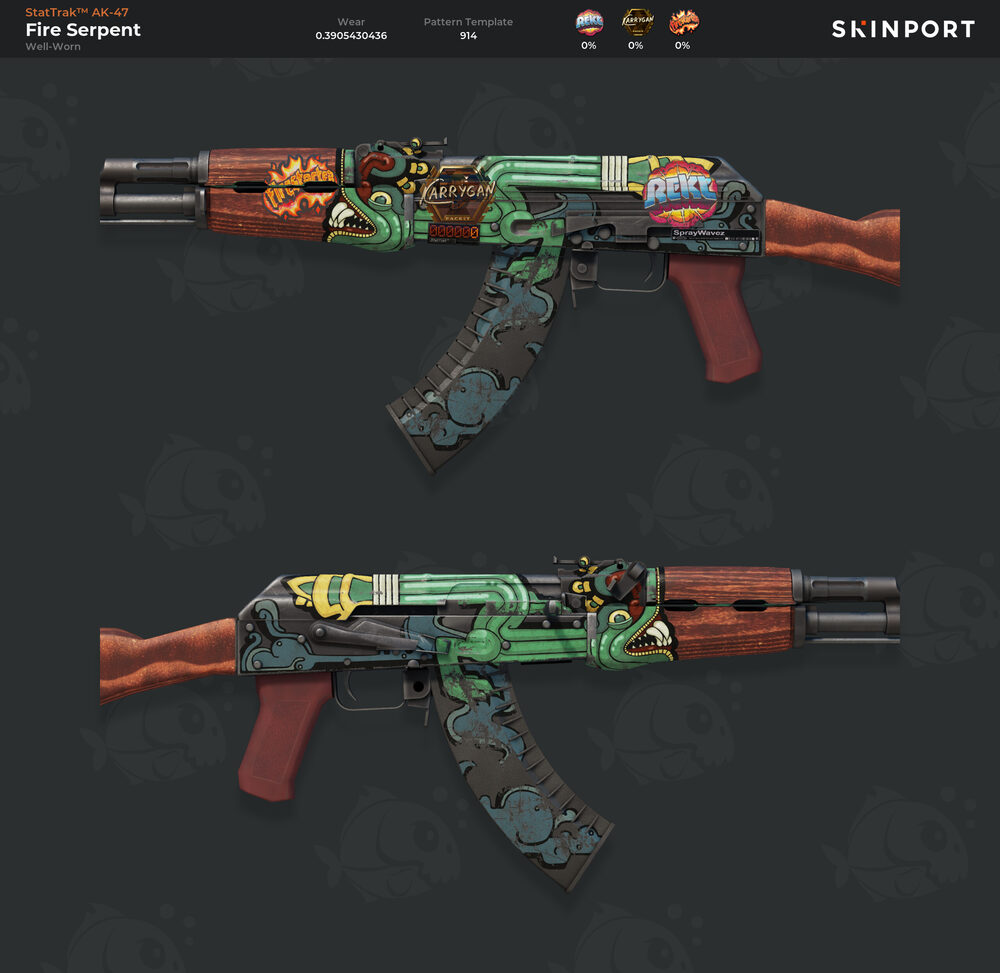
The Fire Serpent is the canonical canvas for the most expensive sticker crafts in Counter-Strike. Apply four Katowice 2014 holos to a clean Fire Serpent and you've destroyed five-figure stickers to create a one-of-a-few object — Titan Holo and iBUYPOWER Holo quads on Fire Serpents are among the headline items in any most-expensive roundup. The logic is pure collectible-culture: the stickers are consumed on application, so the craft is provably irreversible scarcity stacked on top of an already-scarce base.
The Fire Serpent didn't become the craft canvas because it's the rarest AK. It became the canvas because when you're burning six figures of stickers, you put them on the skin everyone will recognize.
For valuation purposes, crafts detach from the base skin almost completely. A Kato 14 Fire Serpent prices off the sticker market, collector provenance, and position placement — the underlying rifle is almost a rounding error.
What the Fire Serpent teaches about this market
Strip away the mystique and the Fire Serpent is a clean case study in the three forces that create durable value here: a permanently closed supply channel, placement on the highest-demand weapon, and instant visual identity. Newer grails — the Wild Lotus, the Gold Arabesque — get measured against it because it defined the template. Notice what's absent from that list: complexity, realism, technical polish. The market has never paid for effort; it pays for recognition and scarcity, in that order.
The uncomfortable corollary for buyers: at grail tier you are not buying market exposure, you're buying a specific, illiquid object whose exit depends on finding one counterparty. That's a collector's trade. The investable expression of the same story has always been the sealed Bravo case — same closed spigot, radically better liquidity, divisible into units a normal budget can accumulate.
As of mid-2026 the split is visible in plain numbers: Bravo cases change hands daily on every major venue, while clean Fire Serpents surface a few at a time and price by negotiation. Both are bets on the same 2013 supply decision. One of them you can enter, size, and exit like a position; the other you marry.