Howling Dawn: The Sticker Sibling of the Howl
The M4A4 Howl got the Contraband tag and the fame. The sticker that shared its artwork — and its takedown — became a quieter grail with even harsher supply math.
One takedown, two grails
In the summer of 2014, Valve received a DMCA complaint: the snarling wolf artwork on the newly released M4A4 Howl had been lifted from another artist's work without permission. What happened next created the most famous removal story in the game — Valve pulled the Howl from its case, reworked its art, and stamped existing units with the one-off Contraband rarity. That story is told in full in the Howl's own article.
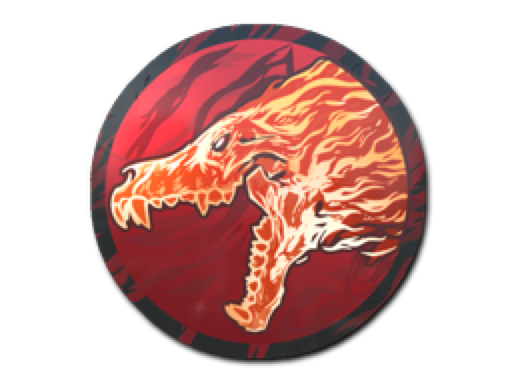
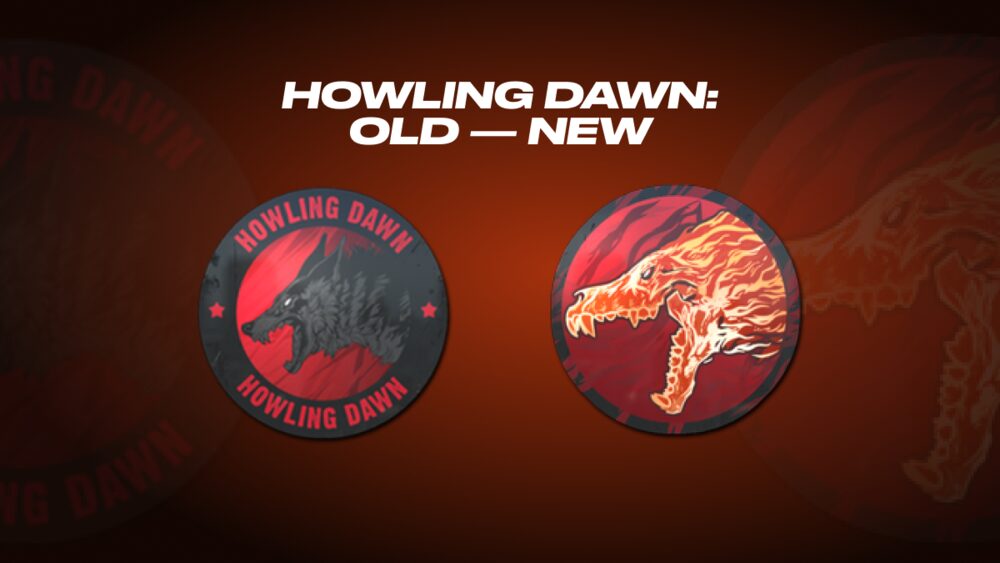
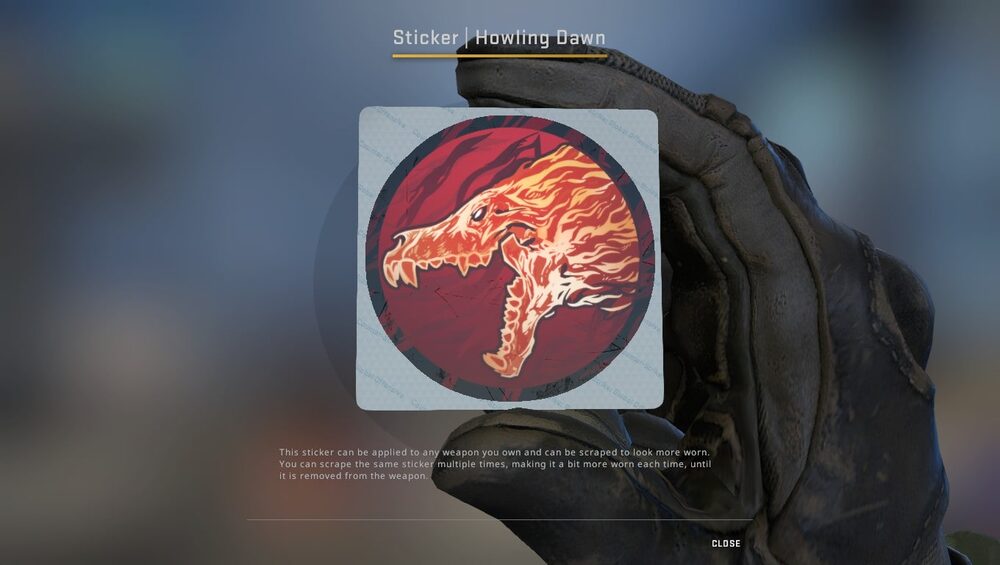
What gets forgotten is that the same artwork existed twice. The Howling Dawn sticker carried the same wolf, shipped in the same 2014 window, and fell in the same takedown. New distribution stopped; the sticker vanished from capsules for good. Units already sitting in inventories stayed there — and instantly became the only supply that would ever exist.
The 2014 saga, compressed
The timeline matters because it explains how thin the window was:
- Mid-2014: The Howl skin and the Howling Dawn sticker enter circulation alongside Operation Breakout-era content.
- Weeks later: The art-theft complaint lands. Valve removes the Howl from its case and the sticker from distribution.
- The fork: The Howl's art was reworked and existing skins were preserved under the new Contraband tier. The sticker's fate was blunter — distribution simply ended. (Accounts differ on exactly how existing sticker units were handled visually; what's undisputed is that no new ones ever entered the pool.)
A few weeks of drops in 2014 is the entire population, forever. For comparison, even Katowice 2014 capsules were at least sold openly during their event window. The Howling Dawn's supply wasn't designed to be scarce — it was amputated.
Frozen supply meets sticker burn
From that point the Howling Dawn has run the standard sticker-market physics, described at length in capsule economics, but starting from an unusually tiny base:
- Applications burn units. Every Howling Dawn crafted onto a skin leaves the tradable pool permanently. On a population this small, single crafts move the scarcity needle.
- Attrition never stops. Twelve years of bans, lost accounts, and dead inventories have been eating a fixed number the whole time.
- No re-issue risk, arguably. Valve reactivating an old case is a live risk for case holders. Re-issuing artwork it was legally forced to pull is about as close to impossible as this market gets.
The price path and where it trades now
Early on, the Howling Dawn traded in the range of ordinary rare stickers — single to low double digits, cheap enough that plenty were casually scraped onto skins by players who had no idea what they were destroying. As the Howl's legend grew through the late 2010s, the sticker rerated alongside it: collectors assembling "Howl lore" inventories wanted the complete set, and the sticker was the scarcer half.
As of mid-2026, clean unapplied units trade in the four-figure range, with standout sales reportedly higher — though at this population size, "market price" mostly means the last negotiated deal. Order books are a rounding error; the real price discovery happens in collector circles and on third-party venues, the same thin-liquidity regime that governs every item where holders outnumber sellers a hundred to one.
Crafts add a second dimension. A Howling Dawn applied to the right skin — especially anything Howl-adjacent — trades as a provenance piece, priced by story rather than spreadsheet. As with all grail crafts, those numbers belong in the hedged, "reportedly" column of market history.
One practical caveat for buyers: at this rarity tier, authentication is the work. Listing screenshots and third-party price histories matter more than any aggregator quote, because a single mispriced or misrepresented sale can distort the visible record for months. The handful of Howling Dawns that surface publicly each year are events, not data points.
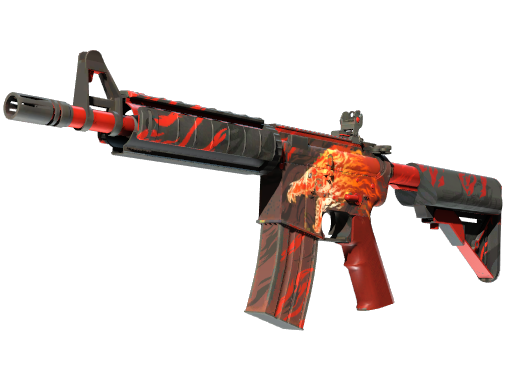
The sibling dynamic
The Howl and the Howling Dawn make a natural pair trade in collectors' heads, but they aren't symmetric assets:
| M4A4 Howl | Howling Dawn | |
|---|---|---|
| Post-takedown status | Contraband tier, art reworked | Distribution ended outright |
| Supply decay | Slow — skins persist once owned | Active — every application burns a unit |
| Fame | The market's flagship removal story | Known mostly to sticker collectors |
| Price tier (mid-2026) | Five figures and up by float | Four figures, reportedly higher for standouts |
The asymmetry is the thesis. The Howl's fame is fully priced; it is the textbook example everyone cites. The sticker shares every structural property that made the Howl a grail — same art, same takedown, same frozen 2014 supply — plus a burn mechanic the skin doesn't have, at a fraction of the price. Whether that gap closes is the open question; that it exists is just the market pricing fame over mechanics.
None of which makes the sticker a straightforward buy. An asset that publicly trades a handful of times a year cannot be exited on your schedule, and a thesis that takes a decade to resolve ties up capital the liquid half of the market keeps compounding. The Howling Dawn is best understood the way most grails are: a collector's position with an investor's story attached — and the story is only worth what the next negotiated deal says it is.