M4A4 Howl: The Only Contraband Skin in CS2
One DMCA notice in June 2014 froze a skin's supply forever and forced Valve to invent a rarity tier it has never used again. The Howl is what happens when legal risk becomes a market mechanic.
A month of normal life
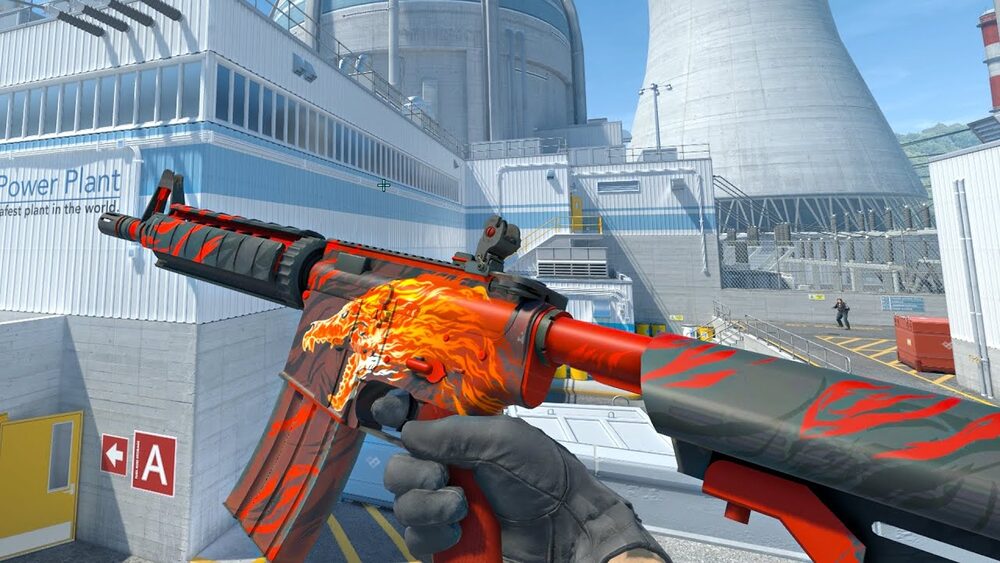
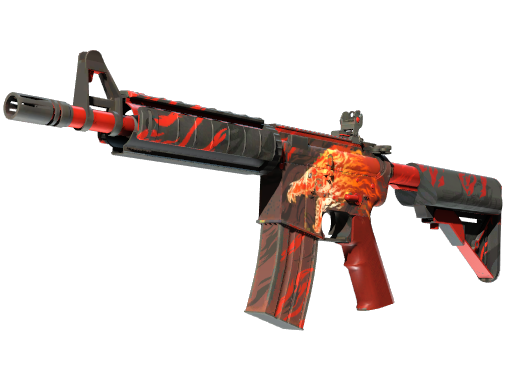
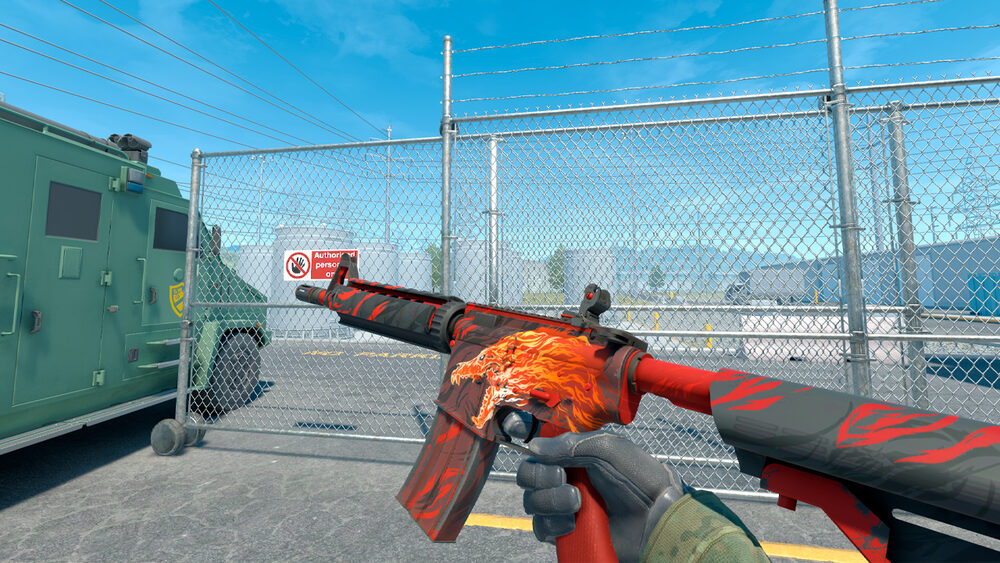
The M4A4 Howl entered the game on May 1, 2014, inside the Huntsman Weapon Case — a red-tier drop featuring a snarling wolf on the receiver, submitted through the community workshop. For about six weeks it lived the life of any desirable Covert: unboxed by the thousand, traded in the double digits, nothing structurally special. The workshop pipeline that produced it was young, high-volume, and — as it turned out — under-audited.
In June 2014, a DMCA takedown landed on Valve. The wolf artwork had been plagiarized: the submitters had lifted it from "Howling Dog Alpha," a piece by the DeviantArt artist CanisAlbus, who had never been asked and never paid. For a company distributing that artwork for money inside a commercial product, this was not a community drama — it was legal exposure.
Valve's three-part fix
Valve's response set the template for every workshop IP incident since, and each part had a distinct market consequence:
- It pulled the Howl from the Huntsman Case drop pool. From that day, no new Howl could ever be unboxed. Supply was capped at whatever existed in inventories in June 2014 — and it only shrinks from there, through banned accounts and abandoned inventories.
- It redrew the artwork in-house. Existing Howls weren't deleted; their finish was replaced with a Valve-made wolf, legally distinct from the stolen original. Owners kept a different-looking version of what they'd unboxed.
- It reclassified every existing Howl as "Contraband." A brand-new rarity tier, above Covert, created specifically for this event. No weapon skin has entered it in the twelve years since.
The same takedown also hit two stickers with plagiarized art: the Howling Dawn — the sticker version of the same wolf — and the King on the Field. Both were pulled from circulation the same way, freezing two more supply pools that have since become grails in their own right.
The mechanics of a frozen asset
Most CS2 grails are rare by odds — a knife is a ~0.26% unbox, a good pattern is a lottery inside a lottery. The Howl is rare by decree, which makes its economics cleaner than almost anything else in the game:
- Supply is strictly monotonic downward. No new unboxings, no trade-ups into it, no souvenir stream. Every Howl locked in a banned or dormant account is gone forever.
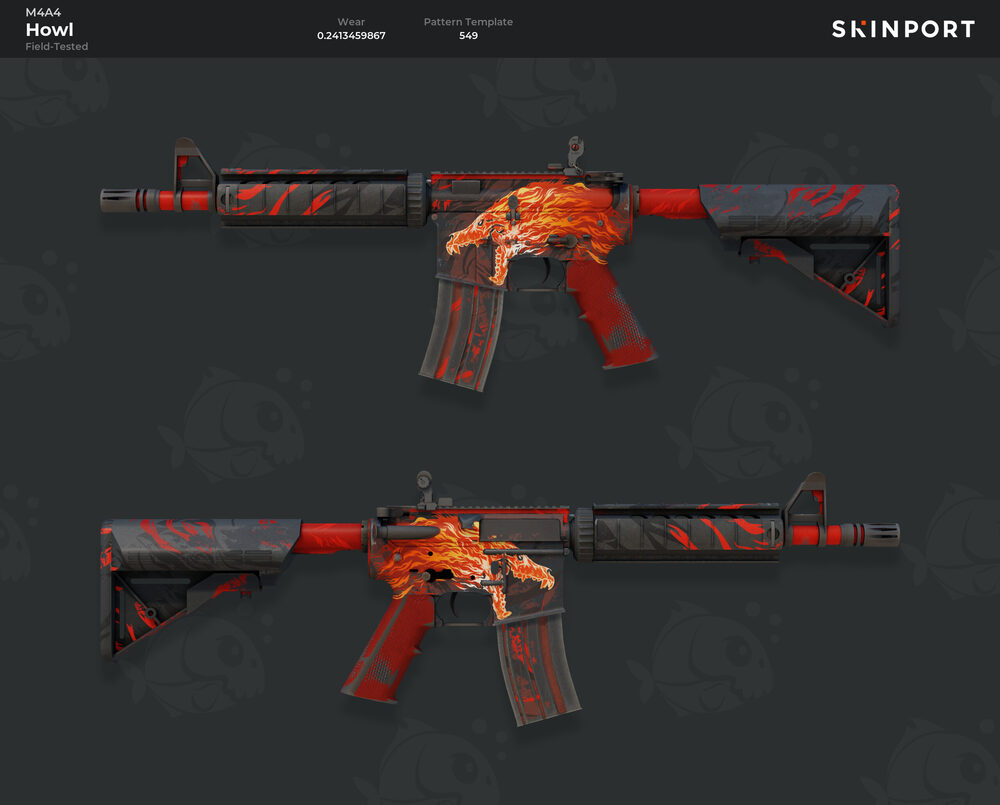
- The float distribution is fossilized. Whatever the wear spread was in June 2014 is the spread forever. High-float and low-float extremes can never be replenished, so condition premiums are steeper than on live-supply skins.
- StatTrak is fossilized too. The StatTrak subset was minted at ~1-in-10 of six weeks of unboxings and then sealed. StatTrak Factory New Howls are counted in handfuls, and units with Katowice 2014 crafts applied have reportedly traded well into six figures in private deals.
As of mid-2026, even a Field-Tested Howl — the workhorse condition — costs five figures, and Factory New examples trade several multiples above that. Precise numbers age badly on an item this thin; what doesn't age is the direction. The Howl has spent a decade doing one thing: grinding upward as its float ladder loses rungs. It's a fixture of every most-expensive-items list for structural reasons, not sentimental ones.
A decade of price history in one paragraph
Pre-takedown, Howls traded like any fresh Covert — tens of dollars, drifting down as the Huntsman Case flooded. The Contraband announcement repriced them within days into the hundreds, as traders worked out what a hard supply cap meant. From there the chart is a staircase: the 2016 gambling boom pushed clean examples past four figures, the 2020–21 pandemic bull run put Factory New units into five, and the CS2 announcement wave in 2023 lifted the whole ladder again. Each market-wide correction knocked the Howl down less than the index, and each recovery carried it higher — the classic profile of an asset where sellers are structurally scarcer than buyers.
Liquidity is the catch
The honest caveat: the Howl is a textbook illiquid asset. The order book at five and six figures is a handful of collectors who mostly know each other, sales are negotiated rather than listed, and the spread between a quick sale and a patient one can be brutal — the standard problem of high-tier liquidity, at maximum strength. A Howl marks up beautifully on an inventory screenshot and exits slowly in cash. Anyone modeling skins as an asset class should treat Howl "price" as an appraisal, not a quote.

Why there's never been a second Howl
Valve learned the actual lesson: audit before shipping, not after. Workshop submissions now go through IP screening, and subsequent art disputes have been settled quietly before items entered cases. Contraband was designed to be a tier of one — which is precisely why it works. The moment a second weapon skin entered it, "the only Contraband skin in the game" would stop being a sentence collectors pay a premium to say.
That places the Howl in a small family of assets priced by catastrophe: the iBUYPOWER holo (a scandal froze it), tradable pre-2019 keys (a policy change froze them), Cobblestone souvenirs (a map-pool decision froze them). In every case the market converged on the same verdict, written up across a decade of skin history: nothing appreciates like supply that ended by accident.