
AWP Gungnir: The Norse Grail From a Forgotten Collection
Dragon Lore had a decade of Majors building its legend. Medusa had Gods and Monsters mystique. The Gungnir showed up in a November 2019 patch note almost nobody read — and joined them anyway.
A grail without a launch event
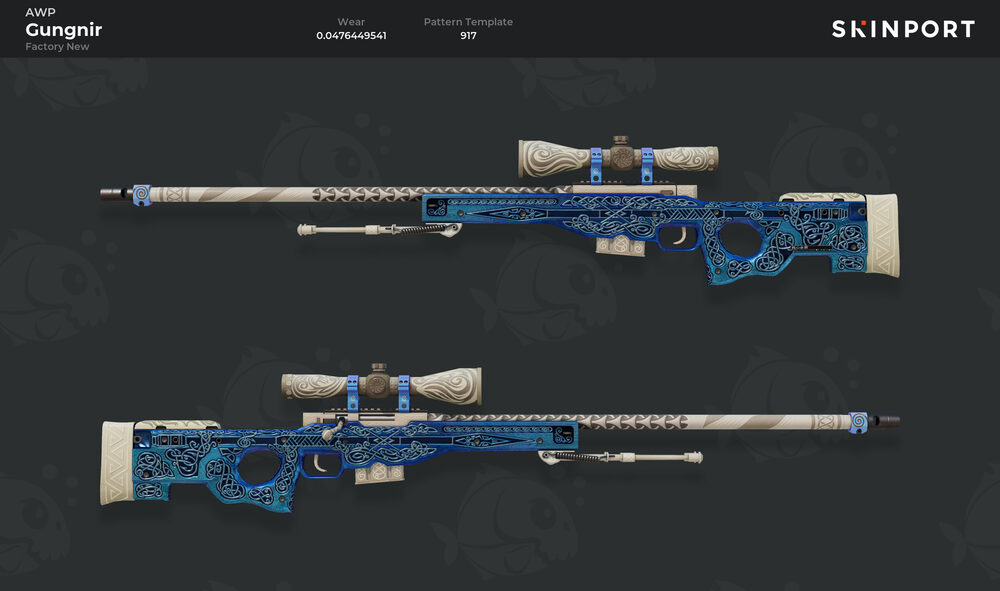
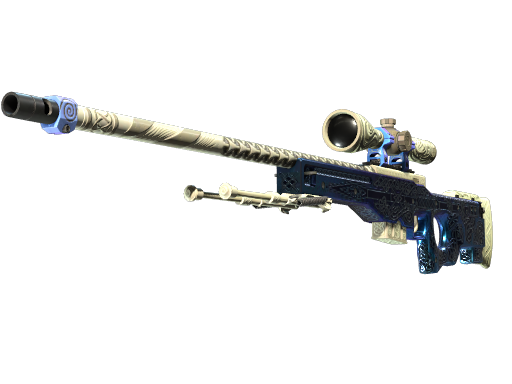
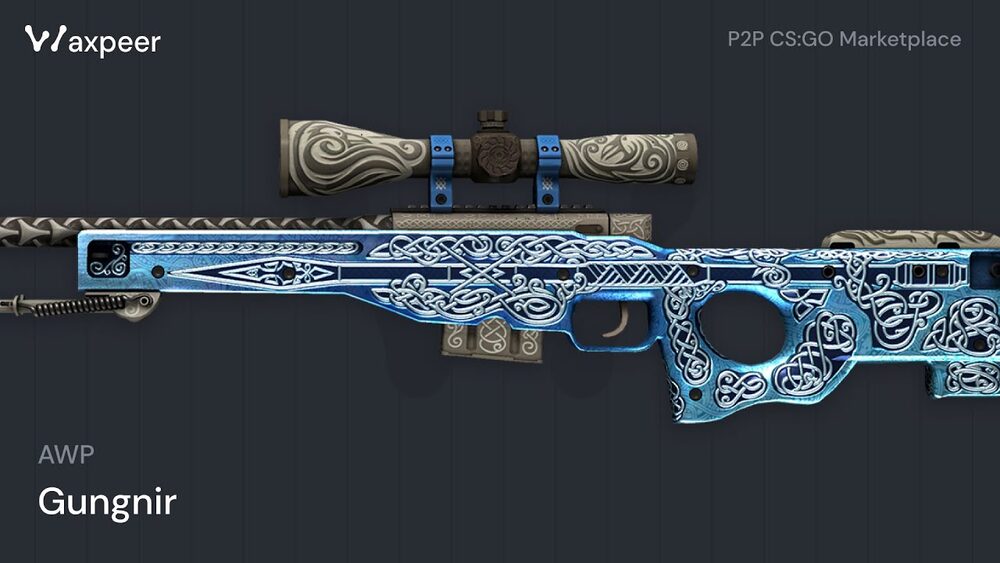
The Gungnir arrived on November 18, 2019 as the Covert of The Norse Collection, one of two collections Valve added that day alongside the St. Marc set that produced the Wild Lotus. There was no case, no capsule, no operation branding, no key revenue — just a quiet catalog addition. The finish itself is anything but quiet: Odin's spear rendered as pale blue-and-white knotwork running the full length of the AWP body, a design confident enough to leave most of the canvas near-monochrome. In a catalog full of maximalist AWPs, restraint became the identity.
Grails usually accrete status over years. The Gungnir compressed that process into months, because the market read the supply mechanics correctly on day one.
The thinnest spigot Valve ever built
What makes the Gungnir structurally different from case Coverts is the entry mechanism. Norse Collection items never came from a purchasable container. Supply entered through an extremely narrow drop channel tied to that era of the game — and the collection has long since left circulation entirely. The exact accounting of how many units entered the pool was never published, and community estimates vary; what's not in dispute is the order of magnitude. This is a supply profile closer to souvenir-tier provenance items than to anything a case ever produced.
The consequences follow mechanically:
- No supply response. With case grails like the Fire Serpent, a price spike pulls new units out of sealed cases. The Gungnir has no such valve. Higher prices cannot summon more supply — ever.
- Float scarcity stacks on unit scarcity. The already-tiny population is spread across the wear spectrum. Factory New examples are a fraction of a fraction, which is why float gaps on this skin translate into price gaps measured in thousands.
- Price discovery is anecdotal. Weeks can pass between arm's-length sales. Any listed ask is a negotiation opener, not a market price — the textbook illiquidity problem covered in how CS2 liquidity actually works.
The AWP trinity
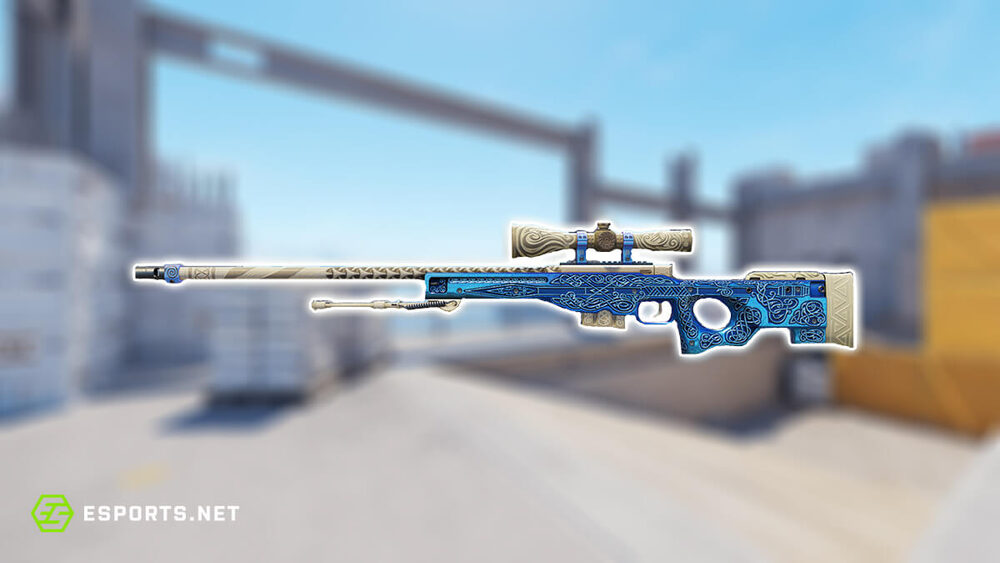
As of mid-2026, serious collectors talk about three AWPs in the same breath, and the Gungnir's seat at that table is no longer contested:
| AWP | Origin | Supply character |
|---|---|---|
| Dragon Lore | Cobblestone collection, 2014 | Souvenir-only since packages stopped; provenance culture |
| Medusa | Gods and Monsters, 2015 | Ultra-limited collection, long out of circulation |
| Gungnir | Norse Collection, 2019 | Thinnest entry channel of the three; youngest population |
The Dragon Lore carries the cultural crown — the Skadoodle souvenir story alone guarantees that. But on pure supply mechanics, a case can be made that the Gungnir is the scarcest of the trinity, and the market has increasingly priced it that way: high grades reportedly trade well into five figures, with Factory New examples reportedly commanding the steepest premiums. Treat those as regions. Public sale records at this tier are sparse, private deals dominate, and quoted prices routinely mix cash venues with Steam-wallet numbers that aren't real dollars.
Trajectory since 2019
The Gungnir's price path has been unusually one-directional for this market. It debuted expensive — the supply read was obvious immediately — and then kept re-rating as the drop channel receded further into history and each year's newcomers discovered the skin existed. Public trackers show the familiar grail signature: long flat stretches punctuated by step-changes whenever a visible sale resets the anchor. Even the 2025 trade-up shock, which crushed knife and glove floors overnight, barely registered here; collection grails have no trade-up exposure and their holders don't panic-sell into a Tuesday patch. That insulation is part of the appeal — and part of the illusion, because an asset that never prints a downtick on thin volume isn't stable, it's just unmeasured.
What the 2019 collections proved
The Norse and St. Marc drops were a natural experiment: could Valve mint a grail on demand, with no esports lore, no operation, no decade of history? The answer was yes — provided the supply channel was genuinely, verifiably thin. The market didn't need a story; it needed scarcity it could audit. That lesson echoes forward: it explains why discontinued containers re-rate the moment their drop channel closes, and why collectors treat "how does supply enter" as the first question about any item, ahead of art, ahead of hype.
It also exposed the grail-tier trade-off with unusual clarity. The Gungnir has appreciated enormously since 2019 by all public accounts — and nearly all of that return was unrealizable for most holders at most moments, because exiting a five-figure AWP means finding one counterparty with five figures of conviction. Scarcity giveth returns; scarcity taketh away exits.
For everyone not playing at that table, the honest takeaway isn't "buy a Gungnir." It's that closed supply channels are the single most reliable value engine this market has — and they exist at every price point, all the way down to cases that cost less than a coffee.
That's also the right lens for reading Gungnir headlines. Every reported sale is a single data point from a tiny population, relayed by parties with an interest in big numbers. Respect the asset, discount the print — and remember that the supply mechanism behind it is the one part of the story anyone can actually own.