
AWP Medusa: The Gods and Monsters Grail
Dragon Lore gets the headlines. Medusa quietly has the harder scarcity story — a four-month drop window in 2015, then nothing, forever.
A collection with no case and no souvenir
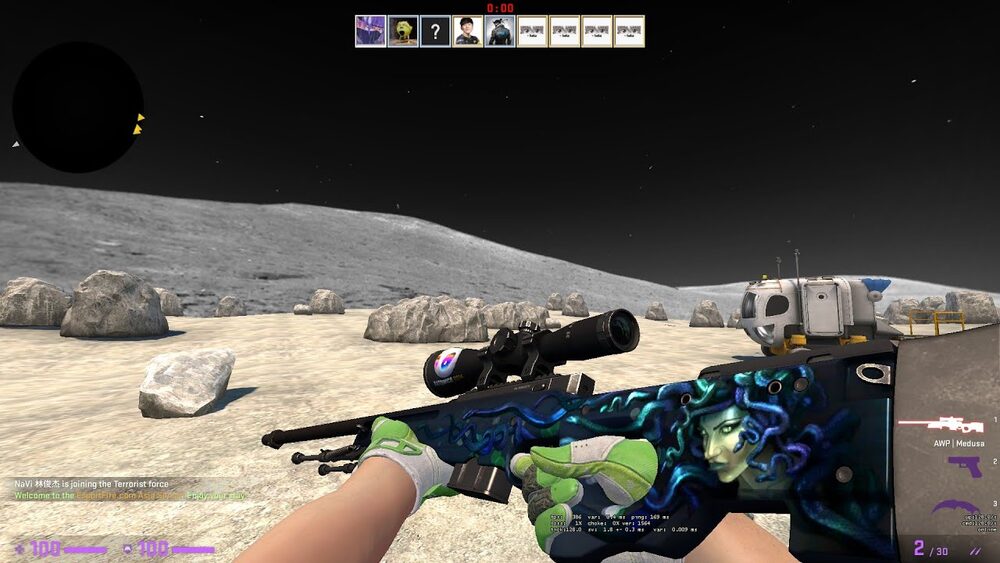
Most expensive skins have a supply valve somewhere. Case skins keep trickling in as long as anyone opens the case. Souvenir skins stopped, but at least their packages sit in inventories waiting to be opened. The Gods and Monsters Collection has neither. It shipped in May 2015 with Operation Bloodhound as a rare-drop collection: no case to buy, no souvenir packages, no trade-up path in from outside the collection's own tiers. The only way a Medusa ever entered the game was as a map drop to an active Bloodhound pass holder during the operation's window.
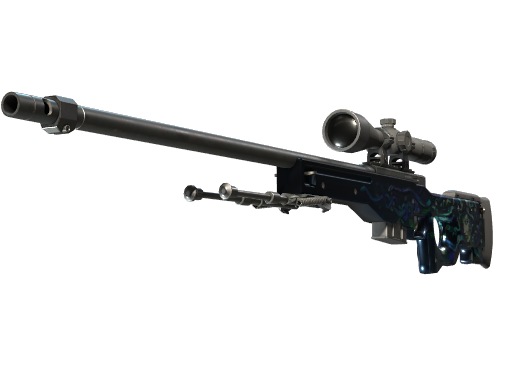
That window closed in September 2015. Roughly four months of drops, from a player base a fraction of today's, at drop rates tuned for a Covert in a rare collection — and then the tap was welded shut. Every Medusa that will ever exist has existed for over a decade — and attrition from banned, abandoned, and scammed accounts has been quietly shrinking that number the whole time. It is the same supply logic that governs discontinued drops everywhere in this market, taken to its endpoint.
The finish itself
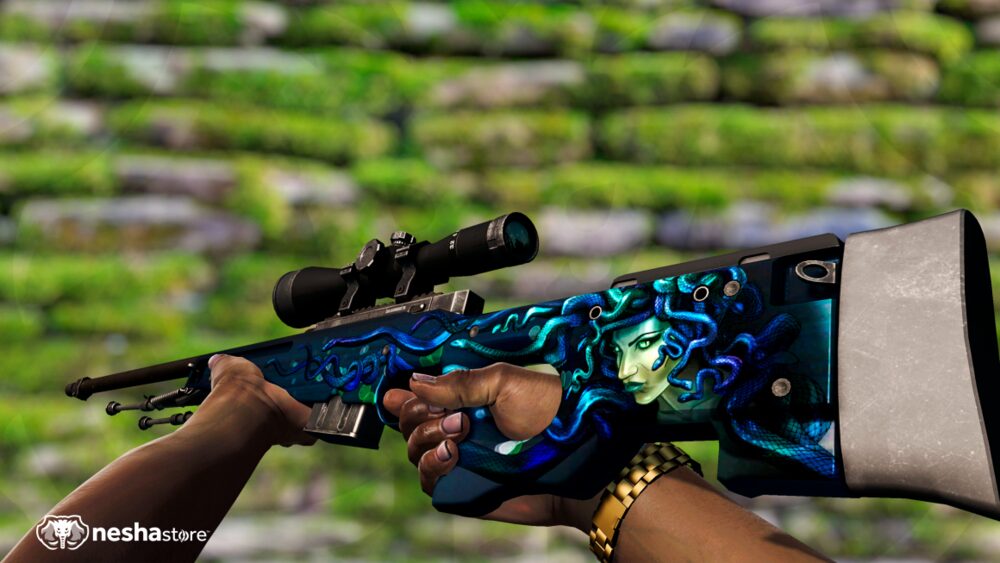
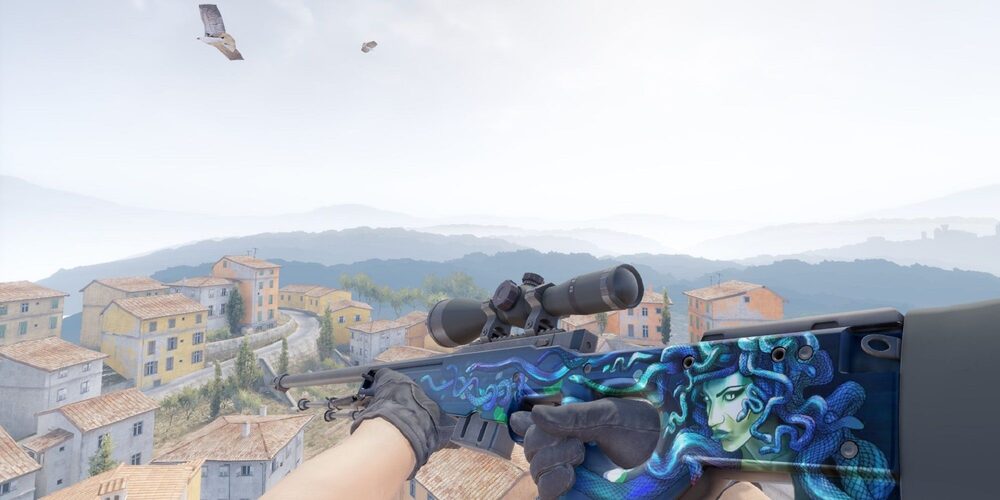
It helps that the art earns the price. Medusa is a Valve-made finish — Gods and Monsters was an in-house Greek-mythology collection, not a workshop submission — and it reads like it: a pale gorgon's head rendered across the receiver in engraved-metal style, snakes coiling down the body over a deep green base. It is instantly identifiable at range in a way very few AWPs are, which matters for a skin class where the weapon spends most of the round scoped in someone's hands on stream. Unlike pattern-dependent grails, every Medusa looks the same; there is no seed lottery, no blue-percentage debate. The only axis of differentiation is wear — which concentrates the entire collector conversation onto float, and makes the top of the float ladder disproportionately valuable.
The float problem stacked on the supply problem
Scarcity alone doesn't explain Medusa's price structure; the wear distribution does the rest. Drops in 2015 rolled floats across the full range, and the population that resulted skews heavily toward Field-Tested and worse. Factory New examples are a rounding error of an already tiny population. The result is one of the steepest float ladders of any AWP:
- Battle-Scarred and Well-Worn examples are the "entry" tier — still five figures as of mid-2026, because there is no cheap Medusa.
- Field-Tested is where most of the surviving population sits and where most public sales happen.
- Minimal Wear examples are scarce enough that individual listings get discussed by name in collector circles.
- Factory New is unicorn territory: single-digit-visible supply on public trackers, with sales that are mostly private, reported secondhand, and best treated as rumors until an inventory screenshot confirms the item moved.
The same operation produced the M4A4 Poseidon, Medusa's sibling grail — same frozen supply mechanics, lower price, because rifle demand at the grail tier runs a distant second to AWP demand.
Medusa vs Dragon Lore: the demand asymmetry
By raw census, Medusa is arguably the scarcer skin. Public inventory trackers consistently surface fewer Medusas than Dragon Lores, and Dragon Lore supply at least grew for years while Cobblestone souvenir packages kept dropping. Yet Dragon Lore trades higher, tier for tier. The gap is a clean lesson in what actually prices grails:
| AWP Dragon Lore | AWP Medusa | |
|---|---|---|
| Source | Cobblestone souvenir packages | Bloodhound map drops, May–Sep 2015 |
| Supply status | Frozen (packages remain unopened) | Frozen since 2015, hard stop |
| Provenance layer | Event stamps, gold stickers, pro lore | None — every Medusa is just a Medusa |
| Cultural footprint | The face of CS skins | Connoisseur's grail |
Dragon Lore has an entire provenance economy layered on top of the finish — souvenir event stamps, sticker combinations, famous owners. Medusa has no souvenir variant, no StatTrak, no sticker lore of consequence. It competes on art and scarcity alone. Markets pay for stories, and Medusa's story is quieter — which is exactly why some collectors prefer it: nothing about its price depends on hype cycles around Majors or streamers. Alongside the Gungnir, it completes the AWP grail trinity, and it's the member with the longest track record of doing nothing but slowly appreciating.
Dragon Lore is the skin people outside CS have heard of. Medusa is the skin Dragon Lore owners want next.
What the market looks like as of mid-2026
Medusa's market is thin in the way all grails are thin: a handful of public listings at any time, wide spreads, and price discovery that happens in private negotiations more than order books. Listings can sit for months not because demand is absent but because the buyer pool at five figures is a short list, and every buyer knows the seller has no liquid exit either. Realized prices step upward in coarse jumps — a visible sale resets the anchor, then nothing trades for a while.
For anyone modeling it as a position rather than a trophy: the bull case is the cleanest supply freeze in the game plus slowly compounding collector demand; the bear case is pure illiquidity and the fact that a single motivated seller can reprice the whole visible market for a season. It is the opposite profile of the case market — no daily volume, no smooth curve, just a decade-long staircase. Most portfolios are better served treating grails as the museum tier and doing their actual compounding in liquid, boring instruments.