
Trade Holds: Why Your Purchases Arrive Late (and That's Fine)
New automated buyers all send the same worried message eventually: "The ledger says I bought five cases Tuesday — why aren't they in my Steam inventory?" Nothing is wrong. Between "paid for" and "sitting in your inventory" lives a waiting room called the trade hold, and once you understand whose delay it is and why it exists, you can file it where it belongs: under plumbing.
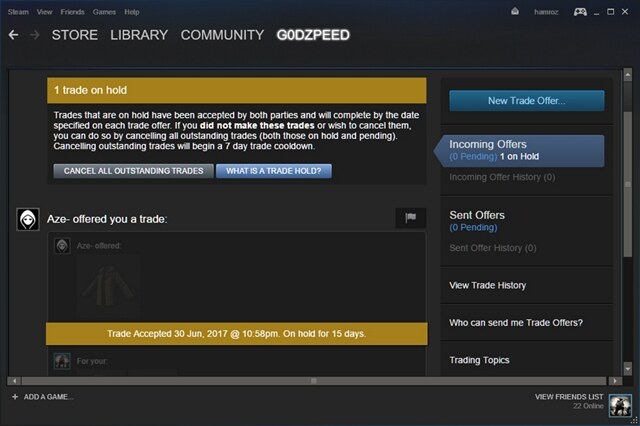
Why delays exist at all
Skins move between Steam accounts through trade offers, and stolen accounts can send trade offers too. A hijacker who empties an inventory in minutes leaves Valve and every marketplace holding the fraud. So the ecosystem's defense, built up over a decade of incidents, is friction: delays between a transaction and the item's free movement, long enough for a real owner to notice and scream. Valve's own week-long holds on trades without mobile confirmation arrived in 2018, over enormous community protest, and the 2025 Trade Protection update layered reversibility on top. The direction of travel has been one way for years: more protection, more waiting.
Marketplaces inherit and add their own versions. The result is that "I bought it" and "I can touch it" are different dates almost everywhere — and the gap varies by venue in ways worth knowing concretely.
What the delay looks like, venue by venue
The two cash marketplaces cs2stack compares illustrate the two main models:
- DMarket: custody first, withdraw later. Purchases land in your DMarket account balance-of-items immediately, but withdrawal to Steam has come with trade locks observed at roughly two to seven days in our own buying. The item is unambiguously yours — it's just resting in the venue's custody until the lock expires and a bot sends the trade offer.
- SkinBaron: direct delivery. Purchases arrive as direct Steam trade offers from the seller (or the platform's bots), so delivery is typically quick once the offer fires — but the underlying item may itself carry a Steam-side hold from its recent history, and offer timing depends on sellers and bot queues.
- Steam Community Market: for contrast — instant to your inventory, but you paid with wallet funds that can never become cash again, plus the ~13–15% fee. The hold you avoid is priced in elsewhere.
Numbers here are observations, not contracts: venues tune their protection systems continuously, and per-item history matters. The practical takeaway isn't a precise table — it's that every venue trades off delivery speed against something else (price, fees, cash-out ability), which is the same triangle covered in the marketplace comparison.
Whose problem is a hold, really?
Holds are a genuine cost to exactly one kind of market participant: anyone whose strategy depends on reselling quickly. A flipper arbitraging a price gap eats days of price risk between buy and sell; for them, hold length is a first-order input, and cross-venue speed differences are half the game in multi-marketplace arbitrage.
Now ask what a case stacker loses. Your plan is to hold for years — the entire thesis runs on multi-year supply attrition, and six months is barely a data point on stacking time horizons. Against that clock, a seven-day delivery lag changes: nothing. Your cost basis was fixed at purchase time. Your exposure to the case's price began at purchase time. The only thing the hold delays is which shelf the item sits on — and an item you won't sell until 2029 can spend its first week in a marketplace's custody without your strategy noticing. A stacker upset about a trade hold is a landlord upset that the deed took a week to arrive in the mail.
There's even a mildly contrarian upside: the friction that annoys you also suppresses churn across the whole market. Every barrier to instant flipping nudges the ecosystem's inventory toward patient hands — and patient hands are the demand side of your eventual exit.
What actually needs managing
"Fine" doesn't mean "ignore." Three real tasks come out of holds, all cheap:
- Reconciliation. Your books must distinguish bought from delivered, or you'll double-count or panic. The purchase ledger records the buy on the day money moved; delivery is a separate, later event. Tracking that pipeline — paid, locked, withdrawable, delivered — is its own small discipline, covered in where are my cases?. Once reconciled, park delivered cases properly: storage units exist for exactly this.
- Exit lead time. The one moment holds genuinely bite a stacker is the exit. If your plan says "sell a tranche when X," remember that recently-moved items may not be instantly sellable — so begin positioning before you need the liquidity, not the morning of. Bake a week of slack into any exit strategy and holds never surprise you again.
- Venue risk awareness. An item in a marketplace's custody is, for those days, exposed to that marketplace's solvency and security — counterparty risk in its purest form. For a few cases a week this is a small, acceptable exposure; it's still worth withdrawing on a routine cadence rather than letting months of purchases pool in a venue account.
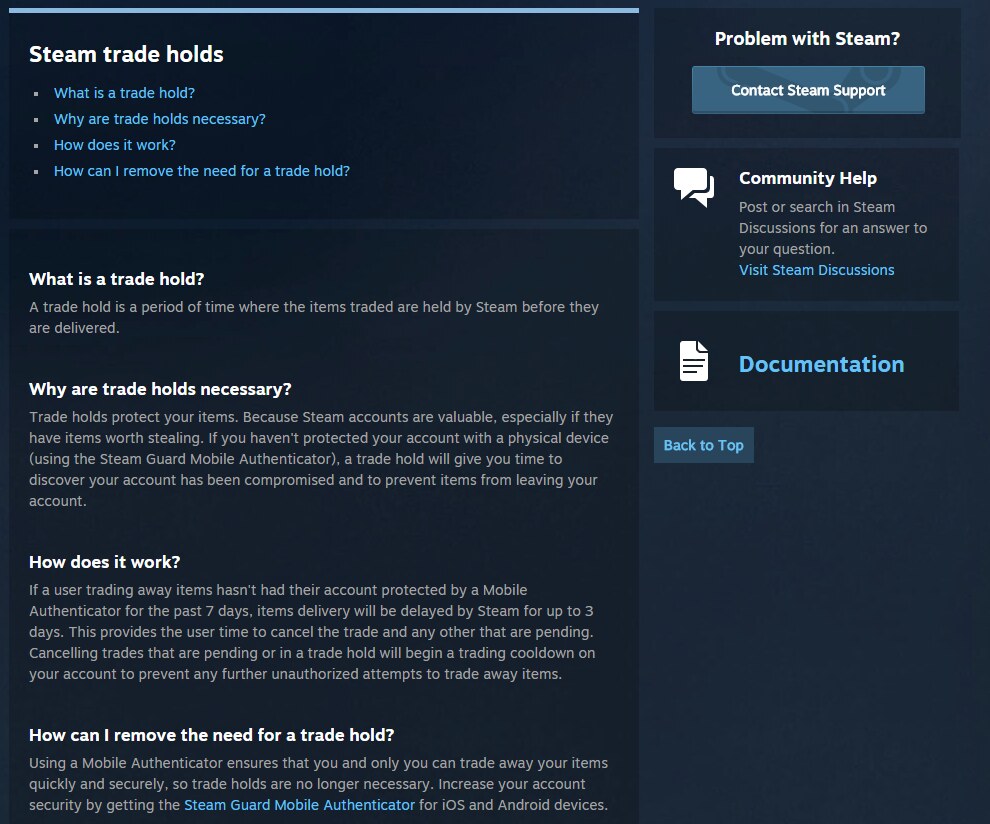
The reframe
Automation helps here in a way that's easy to miss: bots don't feel impatience. A human who buys a case and can't touch it for five days experiences friction; a bot experiences a state field. cs2stack's reports simply show what was bought and what it cost — the holds resolve themselves in the background, and the founder's $20/day account has run through hundreds of held-then-delivered purchases without one of them mattering to the strategy. The hold is real, the cost to a stacker is approximately zero, and the correct amount of attention to pay it is a weekly glance at the withdrawal queue.
Buy on schedule, record on purchase, reconcile on delivery, plan exits with slack. That's the entire trade-hold playbook. The waiting room is part of the building — and you were never in a hurry anyway.