
Open or Hold? The Only Case Question Normies Ask
Tell someone outside the scene that you buy CS2 cases and their first question is always the same: "so what have you unboxed?" Nothing. That's the point. Opening and holding are opposite trades on the same object, and the math splits them cleanly — one is entertainment you pay for, the other is the party's quiet landlord.
What opening a case actually costs
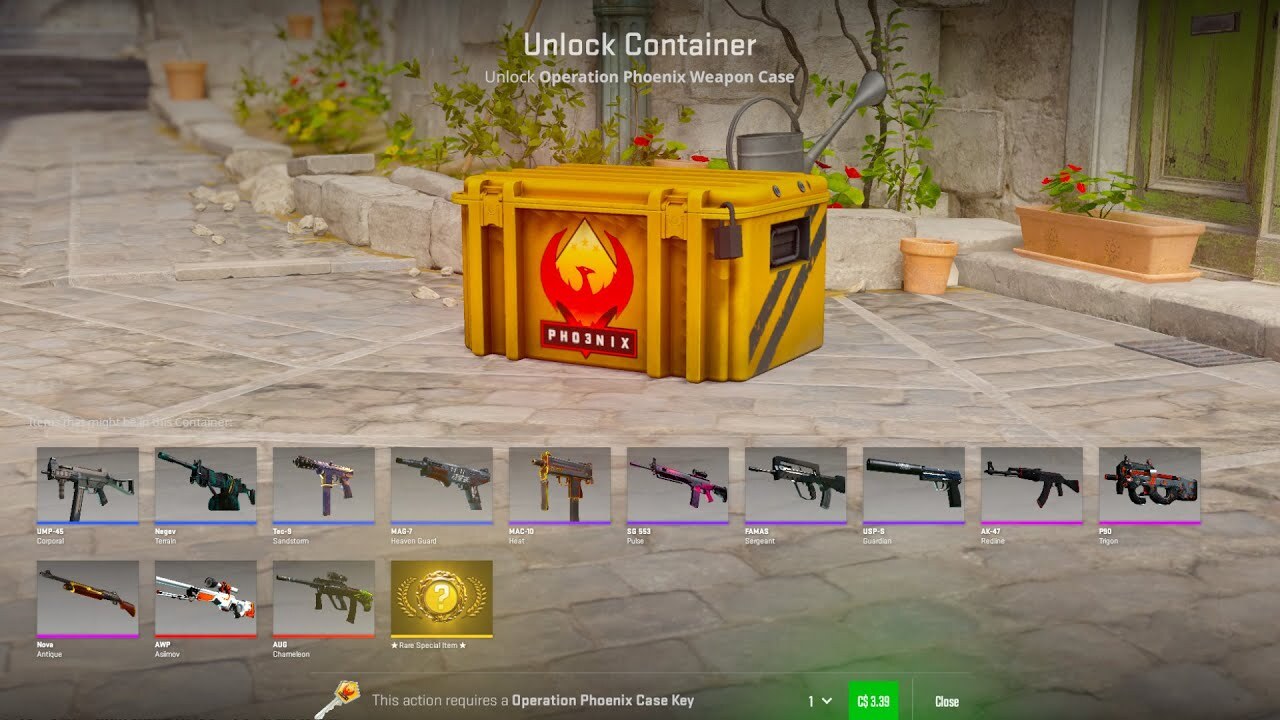
Every case needs a key, and Valve sells keys at a fixed $2.49. So the true cost of an opening is case price plus $2.49 — for a sub-dollar case, the key is the overwhelming majority of the spend. What you get back is drawn from published odds:
- Mil-Spec (blue): 79.92%
- Restricted (purple): 15.98%
- Classified (pink): 3.2%
- Covert (red): 0.64%
- Rare special — knife or gloves: 0.26%
Four openings in five land a blue, and most blues resell for pennies against the ~$3+ all-in cost. The rare outcomes are real — someone genuinely does pull the knife — but the expected value (the average return per opening if you ran it thousands of times) sits well below the cost of playing for nearly every case, per community EV trackers. The key is the drag that no lucky streak amortizes away: it's a fixed toll on every pull, paid to the house. The full arithmetic, including why buying a skin outright beats gambling for it, is in opening vs buying the skin, with the venue-by-venue EV picture in case EV scanning.
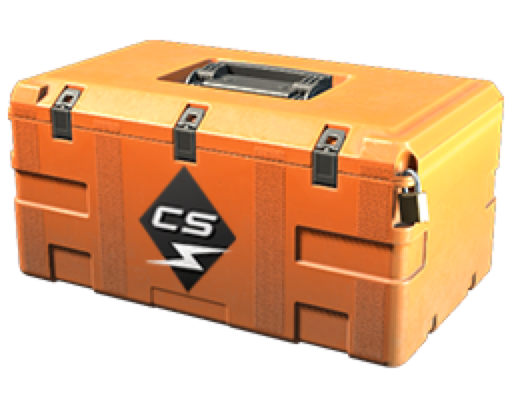
None of this makes openers stupid. It makes them customers. Unboxing is a lottery ticket stapled to a slot-machine animation, and lotteries are legitimately fun — the Kilowatt Case's kukri chase kept half of CS2 clicking through 2024. The error isn't opening; it's opening while telling yourself it's investing.
What holding actually earns
The holder takes the other side of that exact trade. Every opening destroys a sealed case forever, while new supply of older cases dwindles to whatever the drop system trickles out — the one-way attrition detailed in why case supply shrinks. Demand, meanwhile, is generated continuously by the openers, who need a case for every pull at the knife lottery. The knife pool is the engine; the sealed case is the ticket booth.
Historically, per third-party price trackers, discontinued cases have been among the best-performing corners of the whole skin market over multi-year holds — the track record examined soberly in case stacking returns. No individual case is guaranteed anything, and update risk can reprice the whole shelf overnight. But the structural direction of sealed supply is down, and the structural direction of cumulative openings is up, and holders are long that gap.
The house always takes the key
One more way to see the opener's math: the case price can be anything, but the $2.49 key never scales down with it. On a $0.50 case, the key is 83% of the cost of every pull — meaning the market could double that case's price and the opener's economics barely move, while the holder's position doubles outright. The cheaper the case, the more lopsided the comparison gets, which is exactly the tier where most impulse unboxing happens.
The same $50, both ways
Concrete but illustrative: take $50 and a ~$1 case. Opening gets you roughly 14 pulls after keys (~$3.49 each) — on the published odds, expect eleven blues, two or three purples, and a memory. Community trackers typically put the average return of such a session in the vicinity of a third of the outlay; the fun is real and the money is mostly gone. Holding gets you ~50 sealed cases. If the case follows the historical pattern of discontinued cases, patience gets paid; if it doesn't, you still hold 50 liquid items rather than a pile of pennies-apiece blues. The downside asymmetry is the quiet argument nobody makes in unboxing videos.
Who should open, honestly
- Open if it's entertainment paid from a fun budget, if you make content (the audience subsidizes the EV), or if the animation genuinely brings you joy worth $3.49 a pull. Set the budget the way entertainment-money budgeting prescribes, and never open the stack you're holding — mixing the two accounts is how investors become gamblers one "just one" at a time.
- Hold if your goal is for the money to come back with friends. That means sealed cases, boring cadence, multi-year horizon — the practice defined in what case stacking is.
- Both, separately, is fine and common: a stack that's never touched, plus a small explicit opening budget. The discipline is in the wall between them.
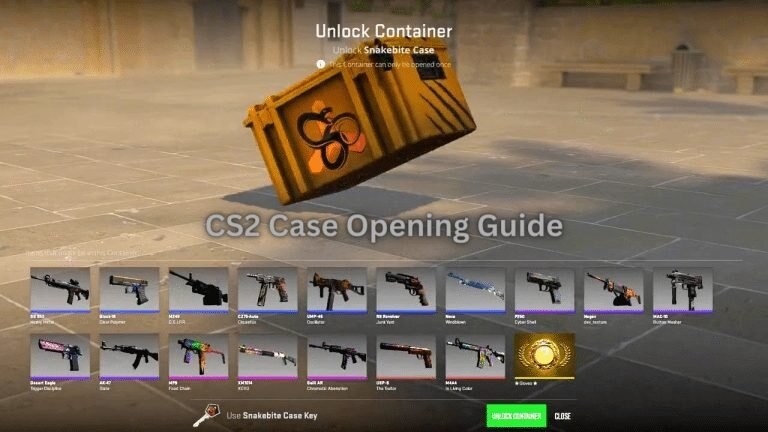
The stacker's edge is mechanical, not moral
It's tempting to frame this as gamblers versus investors, but the relationship is symbiotic. Openers fund the entire case economy — no unboxing demand, no case price. Stackers just choose the seat with positive structural drift: they sell scarcity to future openers instead of buying variance from present ones. The trade requires no timing skill, only the ability to keep buying small and regularly and to not open the vault — which is exactly the kind of repetitive, temptation-adjacent job that's better delegated to software with a budget cap than to willpower. The daily mechanics of that delegation are covered in the DCA guide.
So: open for fun, with fun money, eyes open about the odds. Hold for return, with rules. And whichever you choose, know which one you're doing before the animation starts.