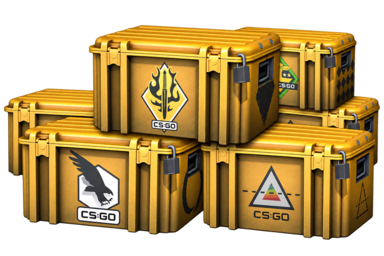
The Knife Pool: Why It Anchors Every Case's Value
Open a thousand cases and you'll see a knife or gloves maybe two or three times. Yet that sliver of outcomes is why the other 997 opens happened at all — and why a sealed case is worth anything to the person who'll never open it. To understand case prices, start at the bottom of the odds table.
The odds, and what they hide
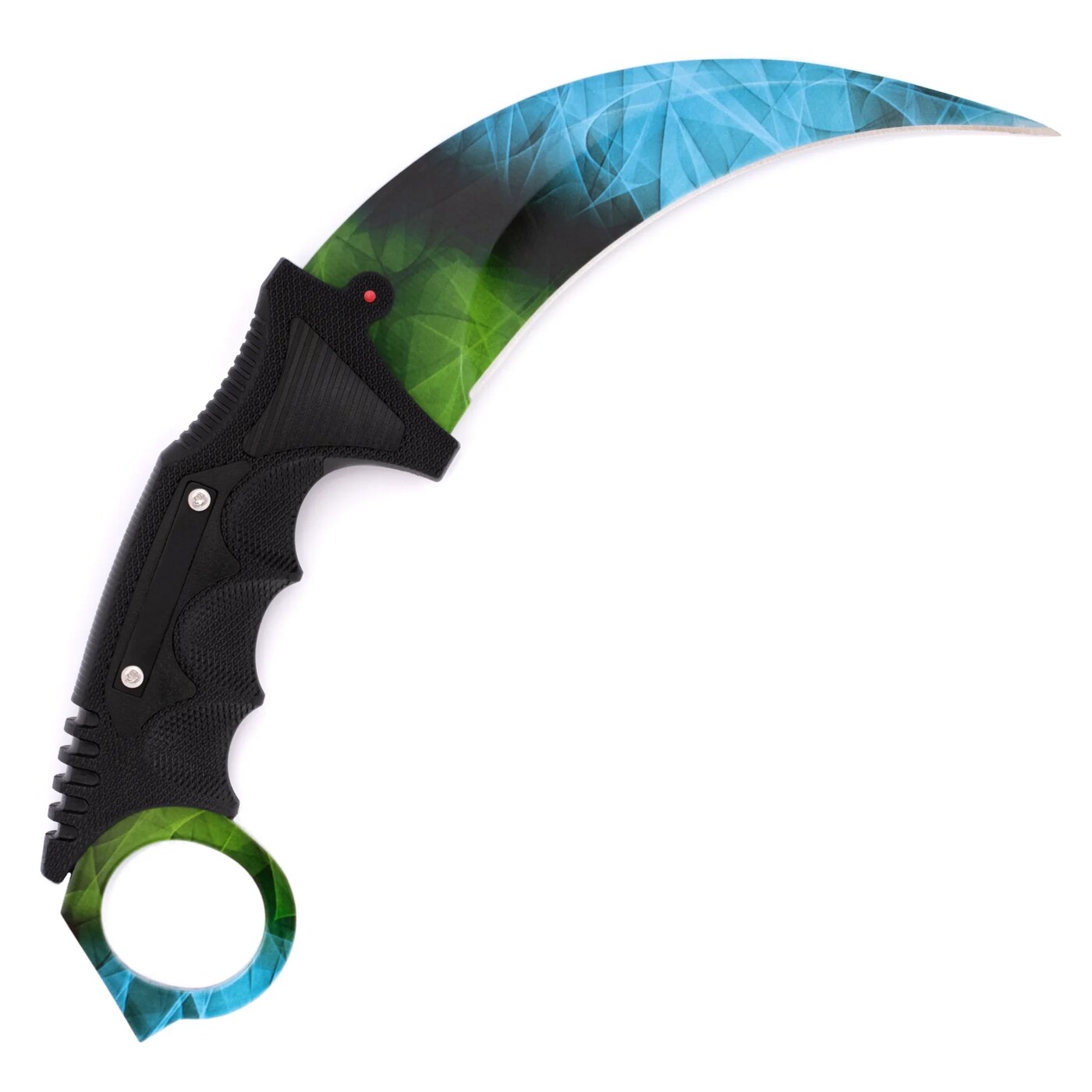
Case odds are public and identical across standard weapon cases: Mil-Spec 79.92%, Restricted 15.98%, Classified 3.2%, Covert 0.64%, and a rare special item — knife or gloves — at 0.26%. Read naively, that table says a case is a machine for producing cheap blue skins. Read economically, it says the opposite: the bulk outcomes are so common they're nearly worthless, so the case's expected value concentrates violently in the thin end. The 0.26% (plus, to a lesser degree, the 0.64% Coverts) carries most of what a case open is worth. Run the arithmetic on any real case and the pattern repeats: multiply each tier's odds by typical resale in that tier and the everyday drops contribute cents, while the rare pool — a four-in-a-thousand-ish shot at items worth hundreds or thousands — contributes the meat of the EV. (Illustrative, and it still sums to less than the open costs; the house keeps its edge. See the math nobody wants.)
EV — expected value — is the average payout per open if you could open infinitely many: each outcome's value weighted by its probability.
Why unboxing survives negative EV
If opens lose money on average, why do millions happen? Because unboxing isn't purchased as an investment — it's a lottery ticket with theater. And what people are buying a ticket to is the knife pool. Nobody records a reaction video for a Mil-Spec pistol skin; the entire culture of unboxing, from the first bayonets that broke the community's brain onward, is organized around the 0.26%.
This is the anchor mechanism, and it runs through the key. Opening any case costs a fixed $2.49 for the key, so an unboxer's decision is roughly "is a shot at this case's rare pool worth ~$2.49 plus the case?" When the rare pool is desirable, the answer stays yes across a wide range of case prices — which means demand for opens, and therefore the burn that shrinks case supply, is a function of how much people want the knives. A case with a coveted rare pool keeps getting opened, keeps burning supply, keeps supporting its price. A case whose rare pool nobody wants stops being opened — and a case nobody opens is a scarcity story with no scarcity engine.
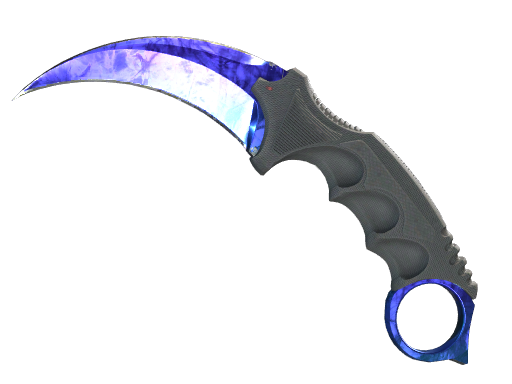
History bears this out at both extremes. The Chroma cases stayed relevant for a decade largely because Doppler and Marble Fade knife finishes never went out of style; newer cases like Kilowatt launched their entire identity on a new knife (the Kukri). The knife pool isn't a detail of a case — over the long run, it more or less is the case.
October 2025: the anchor theory's live experiment
If the rare-and-chase content really drives case value, then anything that changes access to that content should reprice cases overnight. On October 23, 2025, Valve delivered the experiment: an update allowing five Covert skins to be traded up into a knife or glove from an input's collection. Suddenly Coverts — the 0.64% tier — became knife tickets, and their prices jumped on announcement. The repricing rippled straight into the containers: cases with desirable knife pools and strong Covert slots were revalued through this new path, while knife prices themselves took the other side of the shock. The episode, covered in the day knife prices crashed, was the clearest demonstration in years that a case's value is a derivative of its chase content — change the chase, and the case moves within days.
It also carried a sobering lesson: the anchor is Valve's to move. A patch note redefined what the bottom of the odds table was worth. That cuts both ways for stackers and belongs in every risk assessment.
What this means for picking cases
- Evaluate the rare pool like it's the product — because it is. Before stacking a case, ask what the 0.26% pays and whether people still show it off. Iconic knife models and finishes age well; gimmicks age fast.
- Watch the Covert tier too. Post-2025, Coverts are trade-up inputs to the rare pool, so a strong Covert slate now feeds the same anchor.
- Prefer opened cases over admired ones. A case is only deflationary while people burn it. Rare-pool desirability is the best available proxy for future burn rate — and it's filter three of the selection checklist.
- Track EV as a sanity gauge, not a signal to open. Rising case EV relative to price tends to attract unboxers, which accelerates burn — useful context when scanning which cases look cheap. It is not an invitation to open them yourself; the key toll almost always wins, which is the whole open-or-hold answer.
The stacker's paradox, resolved
There's a pleasing irony at the center of case stacking: the stacker never opens a case, yet everything they own is priced by people who do. You are, in effect, long the world's appetite for knives without ever gambling on one — holding tickets to a lottery you refuse to play, sold eventually to someone who will. That only works while the prize stays worth wanting. So when you evaluate a case, don't start with its price chart. Start with the knife pool, because that's where its future burn rate — and therefore its future scarcity — is decided.