
How to Choose Which CS2 Cases to Buy
There are dozens of cases on the market and most of them are fine — which is precisely the problem. Case selection isn't about finding a secret winner; it's about running every candidate through the same four filters and only stacking what passes. Here's the checklist, filter by filter, with the reasoning attached.
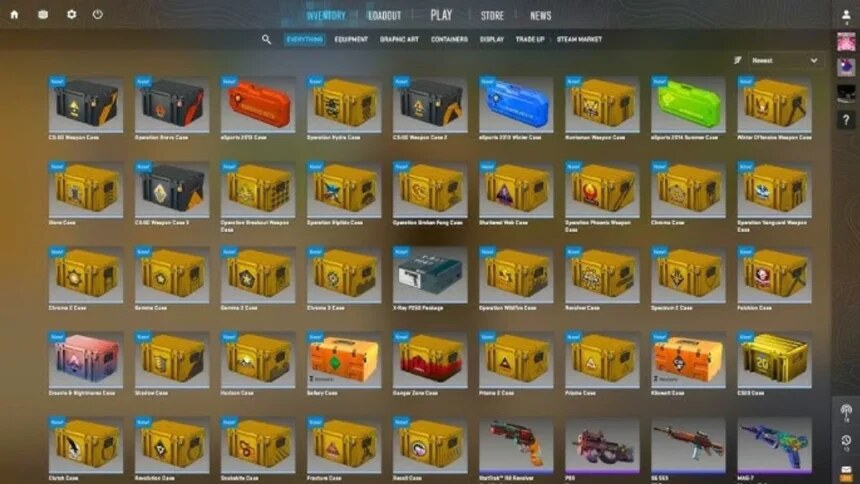
First, lower the stakes
A comforting truth before any analysis: cases are much more forgiving to select than skins. Every case shares the same engine — supply burns down as people open them, demand persists as long as people unbox — so you're choosing between expressions of one thesis, not between winners and losers. The filters below exist to avoid the few genuine traps (illiquid, oversupplied, or dead-chase-content cases) and to match each pick to a role in your plan. Get the filters right and the specific names matter less than beginners fear.
Filter 1: Liquidity — can you get in and out?
The first filter is the least exciting and the most disqualifying. A case you stack is a case you'll eventually sell in quantity, so ask: does this case trade in volume, daily, on multiple venues, with a tight gap between what buyers bid and sellers ask? High-volume cases absorb a 100-unit exit without you moving the price against yourself; thin ones don't — your own size becomes your cost.
Liquidity also determines whether automation can even work: a daily buyer needs listings available every day at fair prices on the venues it shops, or it just skips. If a case fails this filter, nothing else about it matters. That's argued at length in liquidity first.
Filter 2: Drop status — where is it in its supply life?
Every case sits somewhere on a one-way conveyor: actively dropping (supply still growing, price low and flat), rare or removed from the active pool (supply growth choked while burn continues), and discontinued-legacy (pure burn-down, the scarcity phase). Where a case sits determines what you're buying: active cases are a flow play — accumulate cheaply now, wait for the conveyor — while discontinued ones are a scarcity play with the appreciation mechanism already switched on, priced accordingly. The full lifecycle, with historical examples, is in case supply mechanics.
Neither end is "correct." The barbell of both is a deliberate strategy — see cheap active cases vs discontinued classics — but you should always know which bet a given case represents, because it sets your time horizon and your downside.

Filter 3: The knife pool — is the chase content worth chasing?
Cases exist to be opened, and people open them for the rare special items — the knives and gloves that land 0.26% of the time. That chase content is the demand engine: a case whose rare pool contains finishes people covet (fades, dopplers, iconic knife models, sought-after gloves) keeps attracting unboxers for years, while a case whose pool has aged badly loses its reason to be opened — and unopened cases don't burn supply. When evaluating a case, look at what the 0.26% actually pays out and whether anyone still brags about unboxing it.
The October 2025 trade-up update — which let five Covert skins convert into a knife or glove from the input collection — was a live demonstration of this filter: Covert prices jumped on announcement, and the market repriced cases substantially through their chase content. The full argument is in the knife pool as value anchor.
Filter 4: Price floor mechanics — what's the downside?
Cases have an unusual property for a speculative asset: a soft floor. Opening a case requires a key that costs a fixed $2.49 from Valve, and that fixed toll anchors the economics of unboxing — for very cheap cases, the case itself is a small fraction of the cost to open, so demand from unboxers barely flinches when the case price wobbles. Meanwhile drops onto the market slow as a case ages out of the active pool. The result: established liquid cases have historically been sticky near their lows, though a floor is a mechanic, not a guarantee — Valve can change the rules with a patch note, and has.
The filter question: is this case cheap because it's early on the conveyor (fine), or cheap because supply is still flooding in faster than burn (fine if you can wait), or "cheap" at a multiple of its floor after a hype run (the actual risk)? Price floors covers the mechanics.
The checklist in one place
- Liquidity: daily volume on multiple venues, tight spread, exits won't move the market. Fail = stop.
- Drop status: know which phase you're buying — flow (active) or scarcity (discontinued) — and price your patience accordingly.
- Knife pool: chase content people still want; a dead rare pool means dead burn rate.
- Floor: understand where the downside support comes from, and how far above it you're paying.
Run every candidate through all four. A case that passes three brilliantly and fails one is a pass — the filters are conjunctive, not a scorecard.
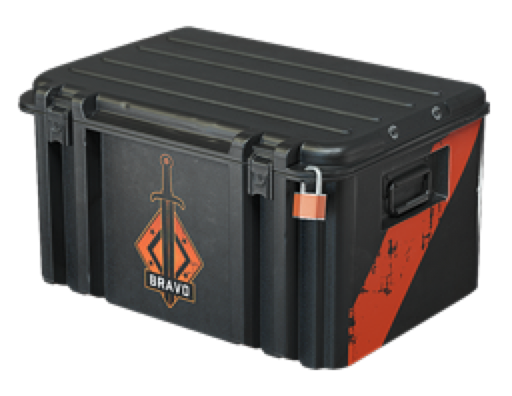

From shortlist to plan
The filters typically leave you with a shortlist of several liquid, structurally sound cases across different lifecycle stages. From there it's portfolio construction, not selection: how many to hold (one case or five works the example), in what mix, on what budget. A common shape — and the one this site's founder runs publicly at $20/day — is a handful of cheap-to-mid cases bought daily plus one discontinued classic on a weekly standing order.
One boundary worth stating plainly, because it's cs2stack's own boundary too: a tool can automate the buying — same list, every morning, cheapest venue, capped prices — but it cannot and should not run this checklist for you. The filters are judgment calls about demand, downside, and your own horizon. Automation doesn't pick winners; it just executes your picks with more discipline than a human at 6 a.m. can. Choose slowly, once. Then let the boring machinery repeat your choice.